₹2.11 lakh crore. India’s gross GST collections have hit that mark in July 2026, up 15.4 per cent from the same month of the previous year.
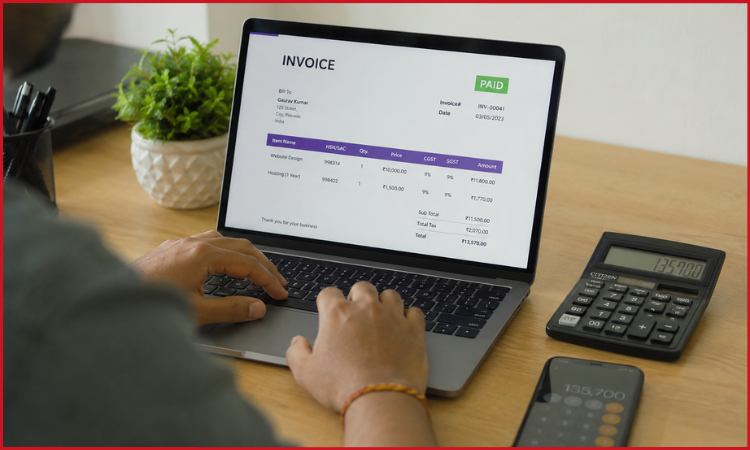
Each rupee is an invoice that is cut by shopkeepers, freelancers, even small manufacturers, most of whom don’t have a full-time accountant in their employ.
For this crowd, hunting down the best free GST billing software in India 2026 is survival admin, not a weekend research project. As of now, more than 7.83 crore enterprises are registered on the government’s Udyam portal, and most of them need a GST invoice generator that won’t erode thin margins (IBEF, 2026).
If your turnover goes over the e-invoicing threshold, then the billing app cannot be called “free”. There are lots of tools on the market that will begin charging without you realising.
This list covers ten free GST billing software India options that founders and finance teams actually run in 2026, from offline apps built for kirana counters to cloud platforms that scale with a growing startup.
How We Ranked the Best Free GST Billing Software In India
This ranking isn’t based on user count or downloads alone. We looked at each tool’s overall usefulness for Indian MSMEs and freelancers, how generous and genuinely free its free tier actually is, how well it handles GST-specific needs like e-invoicing and GSTR-ready reports, offline capability for low-connectivity users, and how widely it’s been adopted across different business types. We also factored in the different segments these tools actually serve, from offline-first retail billing to freelancer invoicing, digital ledgers, and full GST filing platforms.
Because these tools don’t all compete in the same lane – some are built for a shop counter, others for a solo consultant, others for pharma distributors running full ERP – this list is best read as an overall comparison rather than a strict ranking by downloads or revenue. The aim is to spotlight the free GST billing tools having the biggest impact on how small businesses and founders manage invoicing and compliance in India in 2026.
Quick Glance
| S. no. | Name | Founded | Sector / Focus | Key Metric |
| 1 | Vyapar | 2016, Jaipur | Offline-first billing for retail & SMEs | 1 million+ users |
| 2 | myBillBook | 2019 (FloBiz), Bengaluru | GST billing & accounting for MSMEs | 1 crore+ businesses |
| 3 | Zoho Invoice | 1996 (Zoho Corp), Chennai | Free invoicing for freelancers, small firms | Millions of users globally |
| 4 | Clear (ClearTax) | 2011, Bengaluru | GST filing & billing SaaS | 6 lakh+ businesses |
| 5 | Refrens | Bengaluru-based | GST invoicing for startups & agencies | 3 lakh+ users |
| 6 | Swipe | 2021 (YC S21) | Fast GST invoicing & POS | 25 lakh+ businesses |
| 7 | Khatabook | 2018, Bengaluru | Digital ledger with GST billing | 5 crore+ downloads |
| 8 | ProfitBooks | India (CA-led) | Free accounting & GST software for founders | 75,000+ businesses |
| 9 | GoGSTBill | 2017, Ahmedabad | Lifetime-free GST billing | 1 lakh+ users |
| 10 | Marg ERP | 1992, Delhi | GST billing, inventory, Pharma/FMCG ERP | 10 lakh+ users |
1. Vyapar
Vyapar started in Jaipur in 2016, built by founder Sumit Agarwal around a family business that kept records by hand. It now serves more than a million users with offline-first billing, so a shop in a low-connectivity town can still generate GST invoices and sync later. The free Android version covers essentials; desktop and multi-user access sit behind a paid plan starting under ₹2,000 a year.
Best for: Offline-first shopkeepers and retailers in low-connectivity towns.
Key feature: Offline billing with automatic cloud sync.
2. myBillBook
Bengaluru-based FloBiz launched myBillBook in January 2020 and has since pulled in over 1 crore businesses across 4,000-plus Indian cities. It flexes across retail, distribution, and manufacturing, with GSTR-ready reports baked in. Plans begin under ₹350 a month once you outgrow the free tier. Founder Rakesh Yadav’s team markets it as India’s number-one GST billing app, and adoption numbers back that up.
Best for: Multi-city retail, distribution, and manufacturing MSMEs.
Key feature: GSTR-ready reports across business types.
3. Zoho Invoice
Zoho Corporation, founded in Chennai in 1996, made Zoho Invoice permanently free in 2022 — no invoice caps, no user limits, no subscription. That alone makes it one of the more generous entries in any accounting software with GST comparison. As a registered GST Suvidha Provider, Zoho pushes e-invoices straight to the government’s Invoice Registration Portal, though heavier inventory needs eventually pull users toward paid Zoho Books.
Best for: Freelancers and small firms wanting a truly free, permanent plan.
Key feature: Unlimited invoicing with no subscription fee.
4. Clear (ClearTax)
Archit Gupta built ClearTax in 2011 after watching his father struggle with a clunky income-tax portal, and by June 2017 the Bengaluru company had shipped a full GST billing tool. Around six lakh businesses and 60,000-plus tax professionals now run filings through it. Its Tally Connector lets accountants import data in one click instead of re-keying it. As the e-invoicing mandate has tightened over the years, Clear has kept pace with each threshold cut.
Best for: Businesses and CAs that need GST filing and billing together.
Key feature: One-click Tally data import via Tally Connector.
5. Refrens
Refrens is younger and leaner than most names here, but it has already collected more than 3 lakh users with a free plan covering 15 business documents a year at no cost. Invoices, e-way bills, and GSTR-1 and GSTR-3B reconciliation reports all fall under that free tier. CRED founder Kunal Shah has publicly backed the product. For a solo consultant, the document cap rarely bites; for anyone billing daily, it triggers an upgrade fast.
Best for: Startups, agencies, and solo consultants issuing few documents monthly.
Key feature: 15 free GST documents a year, including e-way bills.
6. Swipe
Swipe, run by Nextspeed Technologies, came out of Y Combinator’s Summer 2021 batch and now claims over 25 lakh Indian businesses on its books. Its pitch is speed: an invoice in under ten seconds, shared over WhatsApp, with UPI-based payment collection built in. It is one of the rare GST billing app India options that stays genuinely free at the core tier, with support across nine regional languages.
Best for: High-volume billing sent over WhatsApp and UPI.
Key feature: Invoice generation in under ten seconds.
7. Khatabook
Khatabook began as a digital ledger for tracking credit and debit with customers, before GST billing became a built-in feature. Founded in Bengaluru around 2018 by Ravish Naresh and co-founders, with early backing that famously included cricketer MS Dhoni, the app has crossed 5 crore downloads and suits micro-merchants who want bookkeeping and invoicing in one place.
Best for: Micro-merchants wanting a digital ledger and GST billing combined.
Key feature: Credit/debit tracking alongside GST invoicing.
8. ProfitBooks
Chartered accountant Mohnish Katre co-founded ProfitBooks around one complaint: most accounting software is built for accountants, not the owners who actually use it. Over 75,000 businesses run their books on it, and the Startup plan is free forever rather than time-limited, though it caps out at ten invoices a month and fifty customers, suiting very early-stage founders best.
Best for: Early-stage founders and non-accountants who want simplicity.
Key feature: Free-forever Startup plan with no time limit.
9. GoGSTBill
Two Ahmedabad founders, Maulik Patel and Parth Panchal, launched GoGSTBill in 2017 with a simple promise: a lifetime-free GST billing app, no branding tax, no hidden expiry. It has since crossed 100,000 users, per the company’s own milestones. E-way bills and e-invoices sit behind a ₹1,499-a-year premium tier, but core invoicing and reporting stay free indefinitely.
Best for: Very small businesses that want a lifetime-free billing tool.
Key feature: Lifetime free plan with no branding or expiry.
10. Marg ERP
Marg traces back to 1992, the oldest name here by three decades, and now holds a Guinness World Record along with ISO and CMMI Level 3 certifications. Over ten lakh users and 850-plus support centres give it deep reach into Pharma and FMCG trade, the kind of word-of-mouth growth that built Tally’s dominance in the same segment. It is not permanently free, running instead on a seven-day trial, but suits businesses that will outgrow lighter tools within a year anyway.
Best for: Pharma and FMCG retailers or distributors scaling past basic tools.
Key feature: 1,000+ business reports and multi-branch ERP support.
Feature Comparison: Free Plan, Inventory & GST Billing
| S. no. | Software | Best For | Free Plan | Inventory | GST Billing |
| 1 | Vyapar | Offline-first shopkeepers & retailers | Yes (Android) | Yes | Yes |
| 2 | myBillBook | Multi-city retail & manufacturing MSMEs | Yes (capped) | Yes | Yes |
| 3 | Zoho Invoice | Freelancers & small firms | Yes (forever) | No | Yes |
| 4 | Clear (ClearTax) | Businesses & CAs needing filing + billing | Limited/trial | Limited | Yes |
| 5 | Refrens | Startups, agencies & consultants | Yes (15 docs/yr) | Limited | Yes |
| 6 | Swipe | High-volume WhatsApp/UPI billing | Yes | Yes | Yes |
| 7 | Khatabook | Micro-merchants wanting ledger + billing | Yes | Yes | Yes |
| 8 | ProfitBooks | Early-stage founders & non-accountants | Yes (capped) | Limited | Yes |
| 9 | GoGSTBill | Very small businesses, lifetime-free need | Yes (lifetime) | Yes | Yes |
| 10 | Marg ERP | Pharma & FMCG retailers scaling up | No (7-day trial) | Yes | Yes |
What These Products Have In Common
Every tool here treats the free tier as a foot in the door, not charity: get a shop owner billing on the app, and the upgrade sells itself once GST volumes demand more. WhatsApp sharing, UPI payment links, and offline-capable apps show up across nearly all ten, because most MSMEs bill from a phone in a place with patchy signal, not a desktop in an office. GSTN and GSP integrations, the kind Clear and Zoho lean on, have also become a baseline expectation rather than a differentiator.
Key Takeaways
- Free plans almost always cap invoice count, user seats, or advanced GST reports, so match the cap to your actual monthly billing volume before committing.
- Offline mode matters more than most comparison charts admit, particularly for businesses outside metro India.
- E-invoicing becomes mandatory once turnover crosses the government-set threshold, so pick software that already supports IRN generation rather than migrating later.
- WhatsApp and UPI integration for payment collection has become close to a baseline feature, not a premium add-on.
- Older, ERP-style platforms such as Marg suit high-volume Pharma and FMCG retailers better than freelancers or two-person startups.
- Support quality, not feature count, usually decides whether a free tool survives its first GST filing season.
Conclusion
None of these ten tools will file taxes on their own or replace a chartered accountant during a complex audit. What good free billing software for small business does is smaller and more useful: it turns invoicing, GST calculation, and basic reporting into a five-minute task instead of a monthly headache. Founders scaling past their first crore, much like the startups shaping India’s fintech ecosystem, often start on Vyapar or Swipe and graduate to Zoho Books or Clear as filing gets more complex, a migration worth planning for on day one. The best free invoicing software India has to offer in 2026 is the one that still works, without a surprise bill, the day a business actually needs it.
Read also: Top 7 Billing Software In India For Businesses
Frequently Asked Questions
1. Is any GST billing software in India actually free forever?
Yes, a handful genuinely are. Zoho Invoice, GoGSTBill, and Khatabook all offer core GST invoicing at no cost with no expiry, though advanced features like e-way bills or multi-user access usually sit behind a paid tier.
2. Which free GST billing app works best without internet?
Vyapar is built specifically for offline use, letting shop owners create invoices and manage stock without a live connection, then syncing once back online. This matters most for businesses outside major cities with patchy connectivity.
3. When does e-invoicing become compulsory for a small business?
E-invoicing kicks in once a business crosses the government-notified turnover threshold, lowered in stages over the past few years. Businesses nearing that line should pick a GST invoice software that already supports IRN and QR code generation.
4. Can freelancers use these free tools, or are they built only for shops?
Zoho Invoice, Refrens, and ProfitBooks all work well for freelancers, with free tiers covering invoicing, payment reminders, and basic GST compliance. Shop-focused apps like Vyapar and myBillBook lean more toward inventory-heavy retail.
5. Do these apps handle GST return filing, or only invoicing?
Most generate GSTR-1 and GSTR-3B-ready reports for upload, but actual filing on the government GST portal still needs manual or CA-assisted submission for several of these tools. ClearTax and Zoho, as registered GST Suvidha Providers, come closest to end-to-end filing support.