Astral shares fell sharply on November 6 after its September-quarter results showed that strong revenue growth had produced little improvement in operating earnings.
The Astral share price dropped 12.4% to an intraday low of ₹1,215.50 on the NSE, also a fresh 52-week low. At 10:20 am, it was trading at ₹1,237, down 10.6%, with approximately 27 lakh shares changing hands across the NSE and BSE.
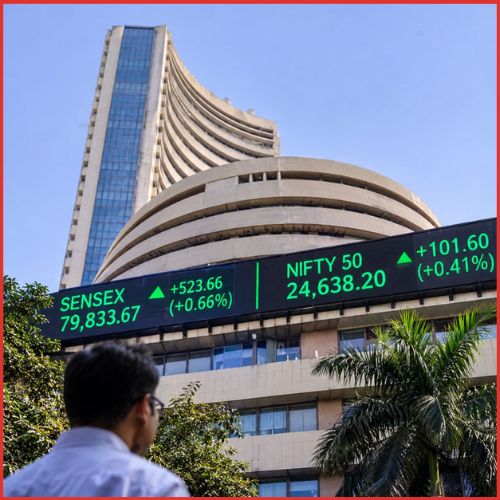
The decline contrasted with gains in the main market benchmarks at the same time. Business Standard reported that the Sensex and Nifty were up around 0.7% and 0.5%, respectively.
Astral’s company press release showed quarterly revenue rising 26% to ₹1,988.3 crore. EBITDA increased only 1.5% to ₹272.3 crore, while net profit fell 5.6% to ₹127.3 crore.
The result exposed a gap between the amount of business generated and the profit retained from it. That gap, rather than weak headline sales, became the central issue for investors.
Why Did Higher Revenue Not Produce Higher Profit?
Astral’s disclosed EBITDA margin fell to 13.7% from 17% in the corresponding quarter, a contraction of 3.3 percentage points.
Put another way, the company generated approximately ₹13.70 in EBITDA for every ₹100 of revenue, compared with ₹17 a year earlier.
Net profit margin also declined, to 6.4% from 8.5%, according to the company’s published figures.
Those changes explain how a company can report substantial sales growth and still earn less at the bottom line.
Additional revenue contributes less when the associated costs absorb a larger share. Even a modest improvement in absolute operating profit can leave insufficient room to offset changes elsewhere in the income statement.
The Astral Q2 results therefore require a different reading from a straightforward demand slowdown.
Sales expanded strongly. The pressure concerned the economics of those sales and the amount that reached shareholders as profit.
Which Businesses Accounted For The Operating Pressure?
The segment figures showed different outcomes within the group.
Plumbing EBITDA increased 6.9% to ₹227.6 crore. Paints and adhesives EBITDA fell 19.2% to ₹44.7 crore, Business Standard reported.
The company’s press release also highlighted plumbing volume growth of 19.1%. That indicates expansion in physical activity rather than revenue growth alone.
The contrast matters.
Plumbing contributed higher operating earnings, but that improvement was partly offset by weaker performance in paints and adhesives. A consolidated revenue figure cannot show that difference on its own.
Nor does stronger volume automatically establish stronger profitability. Pricing, product mix and production costs influence how much each additional unit contributes.
For investors, the next useful evidence will be whether those businesses improve their earnings conversion as sales develop.
A recovery in only one division may help, but the combined result depends on the scale and direction of both.
Why Can A Quarterly Miss Trigger A Larger Share-Price Fall?
The decline in Astral’s share price was larger than the percentage fall in quarterly net profit. That does not establish that the market response was excessive.
Share prices reflect expectations about several future periods, rather than the latest quarter alone.
When a result changes those expectations, investors may revise both their earnings forecasts and the valuation multiple they are willing to pay.
That combination can produce a larger price adjustment than the reported profit movement.
It can also work in reverse if investors become more confident that current pressure is temporary.
For Astral stock performance, the important question is how the quarter changes the expected path of earnings. A single weak period is different from evidence that margins may remain lower for longer.
The trading move shows that investors reacted strongly. It does not reveal one shared forecast among everyone buying or selling.
What Are Analysts Expecting From A Recovery?
Equirus Securities retained its “LONG” rating and a ₹1,833 target price after the results, according to Business Standard.
The brokerage nevertheless reduced its FY27 and FY28 EBITDA estimates by 5% and 3%. Its recovery expectations included pricing, UK adhesives, CPVC backward integration and new or higher-value products. It also identified the timely ramp-up of new capacity as an important consideration.
That combination illustrates the distinction between acknowledging near-term weakness and retaining a positive longer-term view.
The target remains a brokerage assessment, dependent on its assumptions. It is not a guaranteed price or a timetable for recovery.
Each proposed improvement also needs operating evidence.
Pricing changes need to hold without undermining demand. New products need to contribute commercially. Additional capacity needs to reach useful utilisation.
The recovery case becomes stronger when those developments appear in reported margins and cash generation.
What Does The Half-Year Picture Add?
The six-month figures were stronger than the latest quarter’s net-profit comparison.
Astral’s press release showed first-half revenue rising 21.4% to ₹3,566.3 crore, while net profit increased 15.7% to ₹247.5 crore. First-half EBITDA margin nevertheless narrowed to 14.5% from 15.7%.
The broader period therefore prevents the quarter from being read as a uniform decline in earnings throughout the half-year.
It also confirms that margin pressure extends beyond a single headline number.
Investors need both views. The half-year comparison describes accumulated performance, while the latest quarter provides a more recent indication of operating conditions.
Neither should be used to dismiss the other.
The next results will be especially useful in determining whether the September quarter marked the weakest point or whether the pressure is continuing.
What Would Demonstrate A More Convincing Improvement?
The clearest evidence would be sales growth accompanied by a recovery in operating margins.
That would indicate that Astral was retaining more of the value generated by its expanding business. Improvement across both plumbing and paints and adhesives would provide stronger support than a recovery concentrated in one division.
Cash generation deserves attention too. Higher accounting earnings are more useful when they convert into cash without a disproportionate increase in inventory or receivables.
A 52-week low is a price reference, not an assessment of business value.
Friday’s fall has reset the share price. The company’s task is to show that the strong demand visible in revenue and volumes can again translate into stronger profitability. That is the evidence the next stage of the investment case requires.