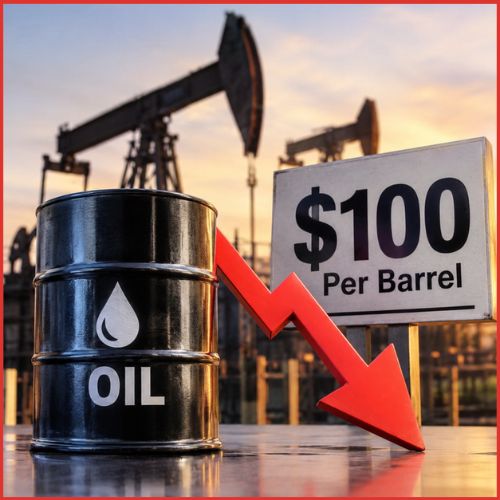
Oil has lost almost a fifth of its value this week. For investors worried about inflation and slowing growth, that should be welcome news. It is, up to a point.
The problem is where prices started.
Even after dropping below US$100 a barrel, crude remains nearly 60% more expensive than at the beginning of 2026. Natural gas is close to three times its level at the start of the year. Businesses and households are still dealing with a substantial increase in energy costs, despite the recent improvement.
The distinction helps explain the uneasy response to falling oil prices. A sharp retreat can remove some immediate pressure without undoing the damage caused by months of expensive fuel.
Reuters’ November 6 assessment described several concerns still hanging over markets: higher borrowing costs, weaker European economic activity and selling in technology shares. Together, they leave investors trying to judge whether inflation will ease before the pressure on growth becomes more severe.
The Oil Price Has Moved Faster Than Business Costs
For a manufacturer, a lower crude quotation does not immediately reduce the cost of goods already sitting in a warehouse.
Those products may have been made using expensive energy and transported under arrangements agreed weeks earlier. The next shipment could be cheaper. The current one still needs to be sold.
Similar delays run through the economy. Transport operators buy fuel under different arrangements. Retailers hold stock purchased at different prices. Some businesses adjust their charges frequently; others work under contracts that leave little room for an immediate change.
That makes the effect of cheaper oil uneven.
A company that has absorbed rising costs may keep part of any eventual saving to repair its margins. Another might cut prices to win business. A third may find that higher wages or financing expenses swallow the benefit.
The improvement in global inflation therefore depends on more than the latest move in crude.
Duration matters. A sustained decline gives businesses a reason to revise their budgets. A few volatile sessions offer much less certainty, particularly when companies have already been caught out by sudden changes in costs.
For now, the market has evidence of relief in one important input. It is still waiting to see how much reaches the wider economy.
Households Are Still Working Through The Earlier Shock
A family paying more for energy and essential goods has less money available elsewhere. Spending on a meal out, a household purchase or a holiday can be postponed, even when income has not fallen.
Businesses experience the other side of that decision through weaker orders.
They may then become more careful about hiring, investment and stock purchases. If their own costs remain elevated, they face an uncomfortable choice between accepting lower margins and asking customers to pay more.
That is how an economy can lose momentum while prices continue rising.
It also leaves central banks with a difficult judgement. Higher interest rates can restrain spending and borrowing. They cannot directly resolve an interruption to supply or make additional energy available.
Cutting rates carries its own complications if businesses and workers have begun assuming that prices will keep climbing.
The growth and inflation outlook turns partly on those expectations. A temporary increase in one expense is manageable in a different way from repeated increases that begin influencing wage demands, contracts and investment plans.
Lower energy prices could help break that pattern. But policymakers need to see whether the improvement spreads beyond fuel.
Consumers, meanwhile, make decisions against the bills they actually receive. A better market outlook does not put back money already spent.
Financing Can Get Tighter Without A Rate Increase
Borrowers do not need another central bank decision to encounter more expensive credit.
Changes in government bond yields can influence the rates used to price mortgages, corporate debt and other financing. When those yields rise, the consequences arrive at different times for different borrowers.
A company with long-term, fixed-rate debt may have breathing room. One approaching a refinancing deadline may discover that the same borrowing now costs considerably more.
The effect can reach investment plans before an existing loan changes.
A proposed factory expansion, for example, needs to earn enough to justify its financing and construction costs. If the interest bill rises, management may delay the project or reduce its size. That decision affects suppliers, employment and spending beyond the company itself.
Cheaper oil could improve the operating forecast while more expensive finance weakens the investment case. Both can happen at once.
This is why the recent energy retreat does not settle the argument about growth. Businesses are assessing a collection of costs, rather than one commodity.
Their willingness to spend will depend on demand as well. Affordable credit offers little encouragement if customers are ordering less.
Technology Selling Adds Another Source Of Uncertainty
Weakness in technology shares brings a separate concern into the same discussion.
Falling equity values can make fundraising less attractive and encourage companies to reconsider acquisitions or ambitious investment programmes. Households whose portfolios have declined may also become more cautious about spending.
Those effects are possible consequences, not automatic outcomes of every correction.
A brief sell-off can pass with little lasting economic damage. Persistent weakness across shares and credit markets would be harder to dismiss, especially if it coincided with slowing orders and more expensive borrowing.
That combination is the concern behind global market volatility.
It would still be premature to apply the same economic diagnosis everywhere. Reuters’ assessment noted that the US continued to grow and unemployment remained relatively low, reasons to be careful about declaring stagflation.
The next few sets of economic figures should help establish whether the pressure is spreading or beginning to ease.
Investors will be looking for lower costs alongside reasonably steady demand. Either development on its own leaves questions unanswered.
Oil has provided a better starting point this week. Businesses and households now need that improvement to last long enough to show up in their accounts.
Source: Reuters’ Global Markets Report, Published By Euronext.