A nineteen-year-old left Patna for Mumbai in 1973 with roughly two thousand rupees, a tin trunk, and no formal degree to fall back on. He wasn’t chasing a start-up dream the way the phrase is used today; he was chasing scrap-metal margins, failing at one venture after another, until something finally held.
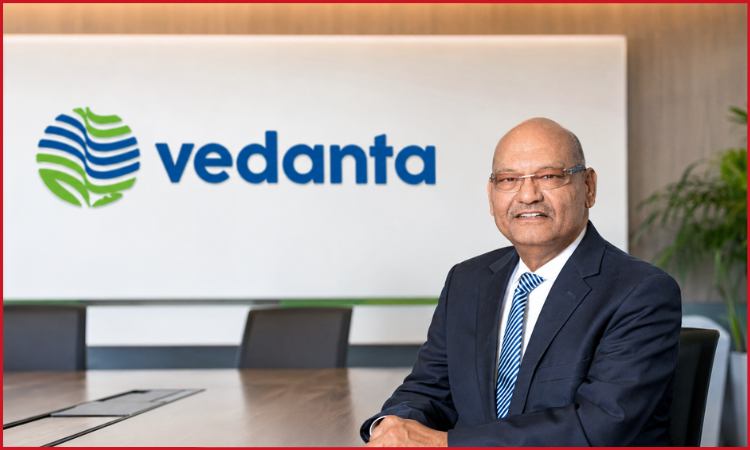
That man was Anil Agarwal, and the trading-floor hustle he built in Mumbai’s non-ferrous scrap market eventually grew into Vedanta Resources, a metals, oil, and energy group with operations across India, Zambia, Namibia, South Africa, Australia, and Ireland. This Vedanta Success Story is worth revisiting less for the rags-to-riches drama, which is well told elsewhere, and more for the acquisition playbook underneath it: buying distressed public-sector assets when nobody else wanted them, then financing growth through global capital markets that most Indian promoters of his generation never touched.
Agarwal dropped out of school around age fifteen to help his father’s cable and conductor business in Patna, learning balance sheets through practice rather than a classroom. His real turning point came in 1976, when he took over a small, struggling firm, Shamsher Sterling Cable Company, and used it as the base for everything that followed. The business model, stripped to its core, has stayed consistent for five decades: acquire underpriced natural-resource assets, run them harder than the previous owner did, and let commodity cycles do the rest.
Quick Glance
| Founder Name | Anil Agarwal |
| Company | Vedanta Resources Limited |
| Founded Year | 1976 (as Shamsher Sterling Cable Company; renamed Sterlite Industries in 1986) |
| Sector | Mining, Metals, Oil & Gas, Power |
| Key Stat | $18.2 billion consolidated revenue in FY25 (Vedanta Resources, 2025) |
| Current Status | Privately held via Volcan Investments; #934 on Forbes’ 2026 Billionaires list |
The Early Journey
- Born in 1954 in Patna, Bihar, into a Marwari family running a modest scrap and cable-trading business.
- Left school around age fifteen; moved to Mumbai at nineteen with about ₹2,000 and no contacts in the city’s metal-trading circles.
- Failed at close to nine ventures in non-ferrous scrap trading before the business started to work in his favour.
- The 1976 purchase of Shamsher Sterling Cable Company was less a calculated bet than a foothold in a distressed unit he could afford, in a trade he already understood.
- Renamed the business Sterlite Industries in 1986 and scaled into cable manufacturing well before mining entered the picture.
The pattern echoes what Business Outreach documented in Micky Jagtiani’s rise from taxi driver to retail billionaire; humble beginnings converted into industrial scale through sheer persistence rather than early capital or connections.
Building The Vedanta Group Business
Manufacturing To Metals
Sterlite’s early growth ran on copper and aluminium conductors, not mined ore. In 1993, the company commissioned India’s first private-sector copper smelter and refinery, a regulatory and technical feat few private players had attempted at the time. That single plant repositioned Sterlite from a components manufacturer into a metals producer, which is the shift that made everything after it possible.
The Acquisition Engine
Agarwal’s next decade was defined by buying what the state wanted to sell. In 2001, Sterlite picked up a 51 percent stake in Bharat Aluminium Company (BALCO) through the government’s disinvestment programme, followed shortly after by a majority holding in Hindustan Zinc Limited (HZL). Both were public-sector units considered inefficient before the deals; both became core profit centres inside what would be renamed Vedanta Resources.
The pattern resembles what discipline-first dealmakers like Asish Mohapatra of OfBusiness practiced decades later – buying market position through acquisition and operational tightening rather than manufacturing it from scratch.
Agarwal’s real skill was never mining ore – it was mining the state’s willingness to sell.
Going Global For Capital
In 2003, Vedanta Resources listed on the London Stock Exchange, the first Indian-origin company to do so, giving Agarwal access to institutional capital pools well beyond what Indian banks alone could offer. That listing, more than any single acquisition, is the piece of the Anil Agarwal business journey that separates his approach from most domestic industrial peers.
Few Indian promoters of his generation accessed global capital the way Jay Chaudhry later built Zscaler into a global cybersecurity giant using US markets, a comparable bet on capital access over purely domestic scale.
Growth & Turning Points
| 1976 | Acquired Shamsher Sterling Cable Company, the founding unit of the Vedanta Group business |
| 1993 | Commissioned India’s first private-sector copper smelter under Sterlite Industries |
| 2001 | Acquired 51% of BALCO and a majority stake in Hindustan Zinc through government disinvestment |
| 2003 | Listed Vedanta Resources on the London Stock Exchange |
| 2011 | Acquired Cairn Energy’s Indian oil assets for $6.5 billion, entering oil and gas (Republic World, 2025) |
| 2018 | Took Vedanta private, paying over $1 billion for the one-third of the company he didn’t already own (Forbes, 2026) |
| 2021 | Signed the Giving Pledge, committing 75% of family wealth to philanthropy |
According to Forbes’ 2026 Billionaires list, Anil Agarwal and family rank #934 globally, with a net worth near $4.2 billion built almost entirely on the family’s 100 percent stake in Vedanta Resources, held through Volcan Investments.
Vedanta Challenges
The 2020 attempt to delist Vedanta Limited from Indian stock exchanges drew sharp pushback from minority shareholders and institutional investors, who argued the buyback price undervalued the company. The bid ultimately failed to gather enough shares tendered, a rare public loss for a group better known for winning contested asset auctions.
Debt has been the other recurring pressure point. Vedanta Resources’ FY25 earnings release confirmed record consolidated revenue of $18.2 billion, up 6 percent year-on-year, alongside net debt of $11.1 billion. Business Standard reported the company swung to a $1.617 billion profit in FY25, reversing a $400 million loss the year before a swing sharp enough to show how quickly results move with commodity prices and refinancing terms.
That leverage risk is not unique to Vedanta; Changpeng Zhao’s Binance journey shows how quickly even dominant market positions can turn fragile once external conditions shift.
Key Takeaways
● Distressed state assets, bought during disinvestment windows, generated more long-run value than any greenfield project did.
● A London listing gave Agarwal a capital advantage most Indian industrialists of his cohort didn’t pursue.
● Vertical entry through manufacturing (cables, then smelting) preceded the jump into mining; the sequencing mattered.
● Debt-funded scale cuts both ways: it accelerated growth in up-cycles and amplified stress in down-cycles.
● Minority shareholder relations remain an unresolved friction point in an otherwise aggressive dealmaking record.
● Diversification across zinc, aluminium, oil, and power reduced exposure to any single commodity swing.
Conclusion
Strip away the scrap-dealer origin story, and what remains is a fairly disciplined thesis: buy assets the market has mispriced, professionalise them faster than the seller expected, and use global capital markets to fund the next purchase. That throughline runs across Vedanta Group history, repeated through cable manufacturing, copper smelting, zinc, aluminium, and eventually oil.
Founders studying the Anil Agarwal mining empire tend to focus on the acquisitions themselves; the more transferable lesson, as Business Outreach’s roundup of the world’s most successful entrepreneurs keeps illustrating, is the capital strategy that financed them, and the debt exposure that came bundled with it. For businesses eyeing similar disinvestment or distressed-asset plays elsewhere, the Vedanta case reads as much like a caution about leverage as it does a playbook for scale.
Frequently Asked Questions
1. Who is Anil Agarwal and how did he start his career?
Anil Agarwal is the founder and chairman of Vedanta Resources, born in 1954 in Patna, Bihar. His business journey began as a scrap-metal trader in Mumbai in the early 1970s, with several failed ventures before Shamsher Sterling Cable Company gave him his first real foothold.
2. What does the Vedanta Group business cover today?
The Vedanta Group business spans zinc, aluminium, copper, iron ore, oil and gas, and power generation, with operations across India, Africa, Australia, and Ireland. It reported consolidated revenue of $18.2 billion in FY25, according to the company’s own results.
3. How did Vedanta Resources get listed on the London Stock Exchange?
Agarwal listed Vedanta Resources in London in 2003, making it the first Indian-origin company on the exchange. The move opened access to institutional capital that later funded acquisitions such as Cairn India’s oil assets.
4. Why did Anil Agarwal take Vedanta private?
In 2018, Agarwal paid over $1 billion to buy out the roughly one-third of Vedanta he didn’t already own, delisting the London entity. A separate 2020 attempt to delist Vedanta Limited in India failed after minority shareholders pushed back on the offer price.
5. What is Anil Agarwal’s net worth in 2026?
According to Forbes’ 2026 Billionaires list, Anil Agarwal and family rank #934 globally, with a net worth near $4.2 billion held largely through Volcan Investments’ full stake in Vedanta Resources.
6. What lessons does the Anil Agarwal mining empire offer other founders?
The clearest lesson is sequencing: build manufacturing credibility first, then acquire distressed assets, then use public capital markets to fund scale. The debt load that came bundled with that scale is the cautionary half of the same Anil Agarwal success story.
Read also: HCL Founder Shiv Nadar’s Success Story