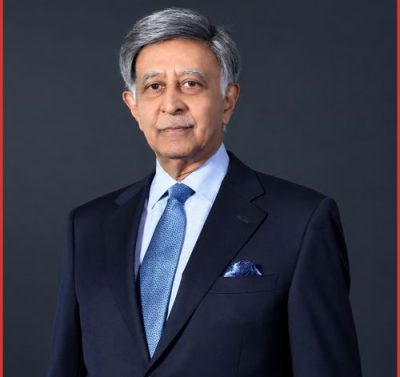
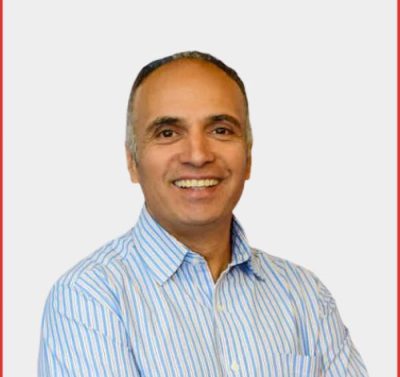
A young chemistry graduate once pedalled through Ahmedabad’s lanes on a bicycle, selling handmade detergent packets for three rupees a kilo while rivals charged thirteen. Decades later, his cement arm alone helped push his fortune past four billion dollars. His story is one thread in a wider fabric of Top Self-Made Businessmen In India founders who turned empty pockets into empires without family capital or a business surname to lean on.
This list ranks ten founders on one yardstick: documented starting capital, the scale of wealth eventually built, and how well the journey is verified across Forbes, Hurun, and company filings. Rankings reflect this combined measure as of 2026, not age or media visibility.
Some names here trace back to socialist-era Mumbai; others belong to the UPI and edtech boom. Each is counted among successful Indian entrepreneurs precisely because no inheritance cushioned the fall each is a genuine entry in the wider list of entrepreneurs who built businesses from scratch.
Quick Glance Top Self-Made Businessmen In India
| Rank | Name / Company | Founded | Started With | Verified Net Worth | Sector |
| 1 | Dhirubhai Ambani – Reliance Industries | 1958 | Rs 500–15,000 on return from Yemen | Built India’s largest private conglomerate (family holding, Forbes 2025) | Textiles, petrochemicals, energy |
| 2 | Karsanbhai Patel – Nirma Group | 1969 | Rs 15,000, backyard operation | $4.2 billion (Forbes profile, 2021) | FMCG, detergents, cement |
| 3 | Shiv Nadar – HCL Technologies | 1976 | Rs 1,87,000 pooled with 5 friends | $31 billion (Forbes, Oct 2021) | IT services, hardware |
| 4 | N.R. Narayana Murthy – Infosys | 1981 | Rs 10,000 borrowed from his wife | First India-listed NASDAQ stock (1999) | Software, IT consulting |
| 5 | Kailash Katkar – Quick Heal Technologies | 1990 | Rs 15,000 repair-shop savings | ~30% retail antivirus market share (Forbes India, 2016) | Cybersecurity software |
| 6 | Ritesh Agarwal – OYO | 2013 | Accelerator grant, age 19 | $1.1 billion, youngest self-made billionaire (Forbes, 2020) | Hospitality |
| 7 | Falguni Nayar – Nykaa | 2012 | $2 million personal savings, age 50 | $6.5 billion at IPO peak (Forbes, 2021) | Beauty, e-commerce |
| 8 | Vijay Shekhar Sharma – Paytm | 2010 | Rs 10,000/month earnings background | $1.1 billion (Forbes, Sept 2022) | Fintech, digital payments |
| 9 | Alakh Pandey – PhysicsWallah | 2016 | Free YouTube channel, zero capital | $1 billion+ (Forbes World’s Billionaires, 2026) | Edtech |
| 10 | Bhavish Aggarwal – Ola | 2010 | ~Rs 20 lakh initial capital | $2.3 billion (Bloomberg Billionaires Index, 2024) | Mobility, EVs |
1. Dhirubhai Ambani – Reliance Industries
Long before Reliance spanned refining, telecom, and retail, Dhirubhai Ambani was a teenage petrol-pump clerk in Aden, Yemen. He returned to Mumbai in 1958 with little beyond trading contacts and set up a 350-square-foot trading office. Reliance later needed a football stadium for shareholder meetings, showing how widely its stock was held. He tops this list for building the platform from a rented room, not for wealth his descendants hold today.
- Started as a Rs 300-a-month petrol-pump clerk in Yemen before returning to India in 1958.
- Founded Reliance Commercial Corporation from a 350-square-foot Mumbai office with one telephone.
- Built India’s first company whose shareholder base needed a football stadium for its AGM.
2. Karsanbhai Patel – Nirma Group
Karsanbhai Patel was a government lab technician when he began mixing detergent powder in his Ahmedabad backyard in 1969, selling it door to door at nearly a fifth of what larger brands charged. Nirma has since expanded into cement and pharmaceuticals, and Forbes placed Patel’s fortune at $4.2 billion after the 2021 listing of its cement arm, Nuvoco Vistas. He named the brand after a daughter he lost far too young a clear case of Indian businessmen who started from scratch, undercutting giants purely on price.
- Started in 1969 with Rs 15,000 in savings and a backyard detergent-mixing operation.
- Priced Nirma at Rs 3/kg against rivals’ Rs 13/kg to win price-sensitive buyers.
- Net worth reached $4.2 billion after Nuvoco Vistas’ 2021 cement-arm listing (Forbes, 2021).
3. Shiv Nadar – HCL Technologies
Shiv Nadar pooled savings with five friends and roughly Rs 1,87,000 to open a Delhi garage workshop making calculators in 1976, just as IBM was exiting India. That workshop grew into HCL Technologies, and Forbes valued Nadar’s net worth at about $31 billion in October 2021, ranking him among India’s three richest citizens. Annual revenue has since crossed $14 billion a decisive move from garage hardware to a global IT services brand.
- Pooled Rs 1,87,000 with five friends to start a Delhi garage calculator workshop in 1976.
- Pivoted from hardware into IT services just as IBM exited the Indian market.
- Reached $31 billion net worth by October 2021, India’s third-richest citizen (Forbes).
4. N.R. Narayana Murthy – Infosys
In 1981, N.R. Narayana Murthy borrowed Rs 10,000 about $250 then from his wife, Sudha Murty, and gathered six fellow engineers to found Infosys from a small Pune apartment. Foreign-exchange controls and steep import duties made the early years brutal, yet Infosys became the first India-registered company listed on NASDAQ, in 1999. Murthy is remembered as much for creating thousands of employee-millionaires through stock options as for the company’s scale, a benchmark among Indian entrepreneur success stories.
- Borrowed Rs 10,000 from wife Sudha Murty to found Infosys with six engineers in 1981.
- Operated from a small Pune apartment through steep import duties and forex controls.
- Became the first India-registered company listed on NASDAQ, in 1999.
5. Kailash Katkar – Quick Heal Technologies
Kailash Katkar dropped out after Class 10 and repaired calculators in Pune for Rs 400 a month, before opening his own repair shop with Rs 15,000 in savings in 1990. His brother Sanjay’s antivirus code, first sold for Rs 700, grew into Quick Heal Technologies, which Forbes India reported held close to a 30 percent share of India’s retail antivirus market by its 2016 listing proof that narrow, unglamorous technical work can scale nationally.
- Dropped out after Class 10 and repaired calculators for Rs 400 a month.
- Opened his own repair shop with Rs 15,000 in savings in 1990.
- Built close to a 30% retail antivirus market share by its 2016 listing (Forbes India).
6. Ritesh Agarwal – OYO
Ritesh Agarwal left college at seventeen after building Oravel Stays on a modest accelerator grant, then pivoted it into OYO Rooms in 2013. Forbes named him the world’s youngest self-made billionaire in 2020, at $1.1 billion, and OYO listed on Indian exchanges in 2024. The company now runs tens of thousands of partner hotels worldwide, billionaire status reached with no prior corporate career.
- Dropped out of college at seventeen to launch Oravel Stays on an accelerator grant.
- Pivoted Oravel into OYO Rooms in 2013, scaling to dozens of countries.
- Named world’s youngest self-made billionaire in 2020 at $1.1 billion (Forbes).
7. Falguni Nayar – Nykaa
Falguni Nayar spent two decades in investment banking before leaving at fifty to start Nykaa with roughly $2 million of her own savings, in 2012, when Indians barely bought cosmetics online. Nykaa’s 2021 listing valued the company at $13 billion, and Forbes reported Nayar’s net worth touching $6.5 billion at that debut India’s wealthiest self-made woman entrepreneur, reframing what a start-from-scratch founder looks like.
- Left a two-decade banking career at fifty to self-fund Nykaa with $2 million in 2012.
- Entered online beauty retail before Indian shoppers trusted buying cosmetics online.
- Net worth touched $6.5 billion at Nykaa’s 2021 IPO debut (Forbes).
8. Vijay Shekhar Sharma – Paytm
Vijay Shekhar Sharma grew up in small-town Aligarh in a Hindi-medium household, taught himself English through rock music, and once managed on roughly Rs 10,000 a month before founding One97 Communications and later Paytm. Demonetisation in 2016 pushed digital payments mainstream, and by September 2022, Forbes put his net worth at $1.1 billion. Sharma became India’s youngest billionaire by 2017, on a product built for customers he grew up around.
- Grew up in Hindi-medium schooling in Aligarh and taught himself English independently.
- Managed on roughly Rs 10,000 a month before founding One97 Communications.
- Became India’s youngest billionaire by 2017, worth $1.1 billion by 2022 (Forbes).
9. Alakh Pandey – PhysicsWallah
Alakh Pandey began teaching physics free on YouTube from Prayagraj in 2016, reportedly turning down a Rs 75 crore buyout rather than sell out early. PhysicsWallah’s November 2025 IPO listed at close to a 33 percent premium, and Forbes’ 2026 World’s Billionaires List placed Pandey’s net worth above $1 billion. He priced courses well below rival edtech firms to build volume over margin, proof not every entry here needed early venture capital.
- Started with a free physics YouTube channel from Prayagraj in 2016, zero capital.
- Turned down a reported Rs 75 crore buyout to keep building independently.
- Crossed $1 billion net worth after PhysicsWallah’s November 2025 IPO (Forbes, 2026).
10. Bhavish Aggarwal – Ola
Bhavish Aggarwal quit a research role at Microsoft and, with co-founder Ankit Bhati, launched Ola Cabs from a small Bengaluru office in 2010 on close to Rs 20 lakh of initial capital. Ola Electric’s 2024 listing pushed his fortune to roughly $2.3 billion, per the Bloomberg Billionaires Index, making him one of the world’s youngest self-made billionaires that year. He has since founded the AI venture Krutrim, which turned unicorn within a year proof that engineers from mid-sized cities can still out-build entrenched incumbents.
- Quit a Microsoft research role to launch Ola Cabs on ~Rs 20 lakh in 2010.
- Diversified into Ola Electric and the AI venture Krutrim, a unicorn within a year.
- Net worth reached ~$2.3 billion after Ola Electric’s 2024 listing (Bloomberg Billionaires Index).
Conclusion
Reliance’s football-stadium shareholder meetings and PhysicsWallah’s billion-dollar IPO sit almost seven decades apart, yet both began the same way a founder betting on an unproven idea with very little cash. That consistency is what makes these self-made entrepreneurs in India worth tracking, especially as edtech and fintech founders keep entering the billionaire bracket earlier than the industrialists before them. For anyone studying startup founders in India today, these inspiring business success stories India keeps producing argue that fortune matters less than how long each founder stayed small before scaling.
Frequently Asked Questions
1. How was this list of Top Self-Made Businessmen in India ranked?
Ranking combined documented starting capital, the scale of wealth eventually built, and how well the scratch-to-scale journey is verified across Forbes, Hurun, and company filings, not media visibility.
2. Do any women feature among India’s self-made billionaires?
Falguni Nayar is the clearest example, leaving a two-decade banking career at fifty to start Nykaa, later becoming India’s wealthiest self-made woman entrepreneur after its 2021 listing.
3. What industries produce the most self-made billionaires in India?
This list spans FMCG, IT services, hospitality, edtech, fintech, and mobility the pattern among Indian businessmen who started from scratch repeats wherever an underserved customer base exists.
4. Is inherited wealth excluded entirely from this ranking?
Yes, every entrant built ownership from a personal, borrowed, or near-zero starting position rather than family wealth, a strict entry condition for this list of richest self-made businessmen in India.