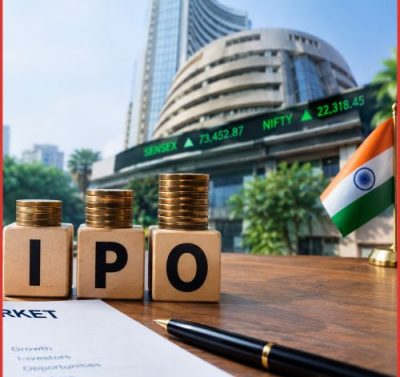
Dalal Street has not seen a September like this in years. Six mainboard issues opened on the same day earlier this month, and the country’s own stock exchange is now selling shares to the public that trades everyone else’s. That single fact tells you most of what you need to know about the India IPO market 2026: it is bigger, busier and considerably more disciplined than the froth-driven run that preceded it.
Grant Thornton Bharat’s FY26 report counted 366 companies listing across mainboard and SME platforms, together raising close to ₹1.9 lakh crore, with the mainboard alone bringing in about ₹1.77 lakh crore, a three-year high. Add the National Stock Exchange’s own offer to that tally and 2026 fundraising crosses ₹1 lakh crore for the third year running, the fourth time this has happened in market history, according to data compiled by PRIME Database and reported by Business Today.
What has changed is not the volume but the mood. Investors who once queued up for anything with a listing-day pop are now asking harder questions about earnings, debt and governance before they apply. That shift shows up clearly in how the National Stock Exchange (NSE) IPO and the long-awaited Jio Platforms IPO are being priced, discussed and, in some cases, delayed.
Quick Glance: India IPO Market 2026
| Parameter | 2026 Snapshot |
| IPO activity | 62 mainboard IPOs raised ₹73,673.54 crore between January and August; NSE’s issue pushes annual mainboard fundraising past ₹1 lakh crore |
| Investor sentiment | Selective and fundamentals-driven; less reliance on subscription hype than in 2024–25 |
| Major sectors | Financial services, telecom and digital platforms, quick commerce, fintech, consumer electronics |
| Key development | NSE IPO opened September 17 and Jio Platforms received SEBI approval on August 28 |
| Major upcoming companies | Jio Platforms, PhonePe, Zepto, OYO, Flipkart, boAt (Imagine Marketing) |
| SME IPO activity | 126 SME IPOs raised ₹5,738.88 crore between January and August 2026 |
| Investor focus | Profitability, valuation discipline, cash flow and promoter quality over listing-day gains |
India IPO Market 2026: From IPO Boom to Selective Growth
Calendar year 2025 was the high-water mark by sheer count. Business Standard reported 373 IPOs, comprising 103 mainboard and 270 SME issues, mobilising ₹1.95 lakh crore, more than a three-year high measured against 2024’s ₹1,59,783.76 crore and 2021’s ₹1,18,723.17 crore.
This year’s Indian IPO market is following a different script. The number of issues has not exploded further; instead, deal sizes have grown and screening has tightened. Research from Gretex Corporate Services notes that average IPO size has more than doubled compared with the pre-2020 period, moving from roughly ₹692 crore to about ₹1,605 crore, even as the overall count of offerings has fallen relative to the previous two decades.
Analysts tracking IPO trends 2026 describe this as a move from momentum investing to maturity. Grant Thornton Bharat’s report frames it plainly: capital is still available and domestic participation remains strong, but investors are now weighing valuations, earnings visibility, governance and cash flows before committing money that once chased any big brand name.
SEBI’s own data reinforces the point. India accounted for roughly 14% of global listings in March 2026, keeping the country among the world’s busiest primary markets even as risk appetite for weaker, overpriced issues has thinned out.
The NSE IPO: One of 2026’s Biggest Market Events
The National Stock Exchange of India filed its draft papers with SEBI on June 17, 2026, and the issue finally opened for subscription on September 17, closing on September 21, with listing expected around September 24.
The offer is priced in a band of ₹1,700 to ₹1,785 per share, with a lot size of eight shares, valuing NSE at roughly ₹4.42 lakh crore at the top end. It is structured entirely as an Offer for Sale (OFS) of about 126.4 million shares, meaning every rupee raised goes to existing shareholders rather than into NSE’s own balance sheet.
That OFS structure matters for how investors should read the NSE IPO 2026. There is no fresh capital for expansion or debt reduction here; the listing mainly creates a public market for existing shares and gives current investors an exit route. Reuters reported NSE’s net profit for the quarter ended June 30, 2026, rose 6.7% to ₹31.2 billion, with operating revenue up 13% to ₹45.6 billion, numbers that support the exchange’s near-monopoly position in equity derivatives trading.
The issue’s scale is why it dominates any discussion of the biggest IPOs in India 2026. NSE itself reported more than 253 million registered investor accounts and 2,978 listed companies with a combined market capitalisation of about ₹411 trillion as of March 31, 2026, underlining why its own listing carries outsized symbolic weight for the exchange ecosystem it runs.
Jio Platforms IPO Could Become the Biggest Deal
If the NSE issue is the biggest event on the calendar so far, the Jio Platforms IPO is the one investors have waited years for. Reliance Industries’ digital and telecom arm filed its Draft Red Herring Prospectus with SEBI on June 19, 2026, the same day Chairman Mukesh Ambani confirmed the move at the company’s 49th Annual General Meeting.
SEBI cleared the issue on August 28, 2026. The offer is a 100% fresh issue of up to 270 million shares, close to 3% of total equity, expected to raise around ₹37,700 crore (about $3.8 billion), with proceeds earmarked mainly for reducing existing debt at subsidiary Reliance Jio Infocomm.
Valuation estimates vary widely across brokerages, a sign of how unusual this listing is. Figures range from a DRHP-implied value near $137 billion to broader analyst bands of $130–180 billion, and the final number will only be clear once the Red Herring Prospectus with price band is filed.
Jio’s scale explains the attention: subsidiary Reliance Jio Infocomm served 524.4 million customers as of March 31, 2026, and carried roughly 60% of India’s wireless data traffic that fiscal year. A listing anywhere close to the higher valuation estimates would immediately place Jio among India’s two or three largest companies by market capitalisation, making it a serious contender for the title of India’s biggest-ever IPO once an official date and price band are announced, expected around Diwali 2026.
Technology and Startup IPOs Remain Important
Beyond the two mega-listings, startup IPOs in India continue building a long pipeline. Industry tracker Inc42 counts more than 48 new-age companies working toward a public listing over the next 12 to 18 months, with 24 having already filed draft papers with SEBI.
PhonePe has SEBI’s approval to raise funds through an entirely OFS-structured issue, with Walmart, Tiger Global, Microsoft and General Atlantic expected to trim their stakes; the fintech major briefly paused its plans in March 2026 amid geopolitical tensions before resuming preparations.
Zepto filed its confidential DRHP in December 2025 and an updated version in July 2026, targeting roughly ₹11,000 crore at a $7–8 billion valuation, split between a fresh issue of about ₹8,010 crore and an OFS component. OYO’s IPO journey has been rockier: after withdrawing draft papers in 2021 and again in 2024, the hospitality company has reportedly filed fresh confidential papers as it works toward another attempt.
Consumer electronics brand boAt, run by Imagine Marketing, has filed an updated DRHP for a ₹1,500 crore issue, split between a ₹500 crore fresh raise and a ₹1,000 crore OFS. Logistics platform Shadowfax has already completed its listing this year, according to Inc42’s startup IPO tracker, while companies such as Infra.Market remain among the names widely discussed as future IPO candidates without a confirmed filing yet.
What is common across these names is a change in tone. Companies going public in 2026 are leaning harder on profitability metrics and unit economics in their pitches, a direct response to investors who no longer reward growth-at-any-cost stories the way they once did.
SME IPOs Are Expanding the Market
Smaller companies have quietly become a structural part of the Indian IPO market. Between January and August 2026, 126 SME IPOs collectively raised ₹5,738.88 crore, per PRIME Database figures cited by Business Today, continuing a run that saw 270 SME issues in calendar 2025 alone.
SME IPO activity offers smaller businesses a genuine route to public capital, but performance across this segment varies far more than it does on the mainboard. Liquidity is thinner, analyst coverage is limited, and a handful of poor-quality issuers can dent sentiment for the segment as a whole.
For anyone evaluating an SME IPO, the basics matter more than the buzz: audited financials, promoter shareholding and lock-in structure, and whether trading volume is likely to support an orderly exit after listing. Regulatory changes and moderating listing-day gains, as Navia’s 2026 market review notes, have already made this a more selective corner of the market than it was two years ago.
Investors Are Becoming More Selective
Institutional money is steering this year’s Indian IPO market more visibly than retail enthusiasm. Mutual funds, insurers and other large investors are applying sharper filters around governance, earnings quality and cash generation before committing to an anchor book.
A heavily subscribed issue is not automatically a safe one. Oversubscription reflects short-term demand and grey market chatter as much as it reflects a company’s underlying financial health, and several previously hyped debuts have struggled to hold their listing-day gains once initial excitement faded.
That is precisely why professional investors increasingly look past the subscription number to the numbers behind it: revenue growth quality, margin trends, debt levels and how IPO proceeds are actually going to be used.
The IPO Pipeline Remains Strong
| Company | Sector | IPO Outlook |
| Jio Platforms | Telecom & Digital | SEBI-approved; date awaited, expected around Diwali 2026 |
| NSE | Financial Services | Open Sept 17–21, 2026; listing around Sept 24 |
| Zepto | Quick Commerce | UDRHP filed; under SEBI review |
| PhonePe | Fintech | SEBI-approved; updated DRHP pending |
| OYO | Travel & Hospitality | Confidential DRHP reportedly filed |
| boAt (Imagine Marketing) | Consumer Electronics | Updated DRHP filed for ₹1,500 crore issue |
| Shadowfax | Logistics | Already listed in 2026 |
| Infra.Market | Construction Technology | Widely discussed IPO candidate; no confirmed filing yet |
IPO timelines in this table can shift depending on regulatory approvals, board decisions and broader market conditions; none of the outlook notes above should be read as a confirmed date unless officially announced by the company or SEBI.
What Could Drive the IPO Market in the Rest of 2026?
- Stock-market conditions: continued volatility around global crude prices or geopolitical tension could again push large issues to the sidelines, as happened with PhonePe in March 2026.
- Institutional participation: mutual funds and insurers now anchor a larger share of big-ticket books, and their appetite will shape pricing for Jio Platforms and other large offers.
- Startup profitability: companies demonstrating a credible path to profit, not just user growth, are more likely to see calmer post-listing trading.
- Large IPOs: how NSE and, eventually, Jio Platforms perform after listing will set the tone for investor confidence in the rest of the pipeline.
- Valuation discipline: issuers that price conservatively relative to peers appear better positioned to avoid the sharp post-listing corrections seen in some 2025 debuts.
Conclusion
Taken together, the India IPO market 2026 tells a story of scale meeting scrutiny. The NSE IPO has already crossed the finish line as one of the year’s headline events, while the Jio Platforms IPO looms as the listing that could reset what ‘biggest IPO in India’ even means.
Around these two anchors sits a genuinely broad pipeline: fintech, quick commerce, hospitality, consumer electronics and dozens of smaller SME issuers all working through SEBI’s process at the same time. What ties them together is a market that has grown up, one where fundamentals, governance and valuation discipline now matter as much as headlines.
India’s capital markets are entering a phase where size and selectivity can coexist, and how well the pipeline of upcoming IPOs in India converts that discipline into steady, durable listings will shape investor confidence well beyond 2026.
Frequently Asked Questions
Which is the biggest IPO expected in India in 2026?
The Jio Platforms IPO, targeting a fresh issue of about ₹37,700 crore at a valuation analysts place between $130–180 billion, is widely expected to be the largest, alongside NSE’s own ₹22,568 crore offering.
When is the NSE IPO scheduled?
The NSE IPO opened for subscription on September 17, 2026, closed on September 21, and is expected to list around September 24, 2026.
Why are startups launching IPOs?
Public listings give startups access to long-term capital, an exit route for early investors, and greater visibility, while increasingly demonstrating profitability to meet investor expectations.
What should investors check before investing in an IPO?
Key checks include audited financial statements, valuation relative to peers, debt levels, cash flow, promoter shareholding and lock-in terms, and the stated use of IPO proceeds.