India’s beauty and personal care industry has changed significantly over the past decade. Consumers now discover products through social media, compare ingredients online, read reviews before buying and increasingly move between brand websites, marketplaces, quick commerce and physical stores.
This shift has created space for a new generation of Indian beauty companies built around direct consumer relationships. Mamaearth and SUGAR Cosmetics are two of the better known names from this wave, but they have followed notably different paths.
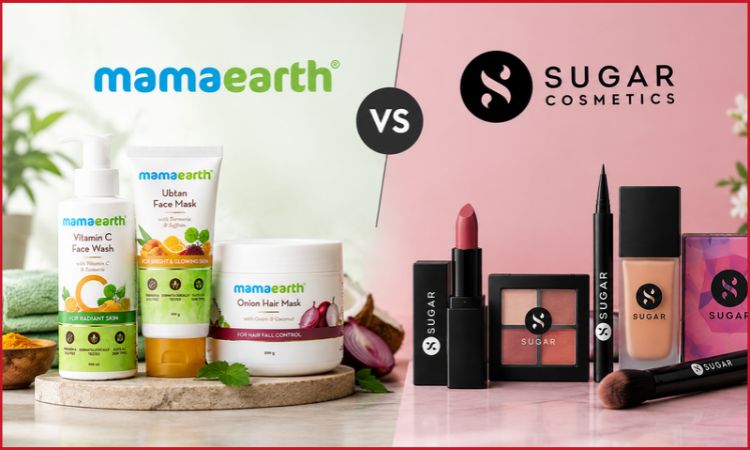
Mamaearth built its identity around natural and safe personal care before expanding into skincare, haircare, baby care and cosmetics. SUGAR, meanwhile, established a stronger position around colour cosmetics, especially makeup designed for Indian consumers.
Their stories offer a useful view of how India’s D2C beauty business has evolved from selling products online to building brands that can compete across multiple channels.
Two different starting points for D2C beauty
Mamaearth began in 2016 after founders Varun Alagh and Ghazal Alagh searched for safer products for their child. The company initially focused on baby care and built its brand around natural ingredients, safety and ingredient awareness. It later expanded into skincare, haircare, body care and other personal care categories.
The larger business eventually became Honasa Consumer, which operates a portfolio of beauty and personal care brands. Mamaearth remains its flagship and largest brand, alongside names such as The Derma Co, Aqualogica, Dr Sheth’s and BBlunt.
SUGAR took a different route. Its core identity was built around makeup rather than a broad personal care portfolio. Its current product architecture is still heavily centred on lips, eyes, face and nails, although skincare and other categories have also been added. The company’s own brand messaging places strong emphasis on creating makeup for Indian skin tones and consumer preferences.
That distinction matters because the two businesses are not competing across exactly the same product categories. Their overlap is growing, but their original consumer propositions remain different.
Mamaearth’s shift from D2C brand to consumer platform
Mamaearth’s early growth illustrates one of the biggest advantages of the D2C model: a company can identify a specific consumer problem, build a recognisable proposition and acquire customers without first depending on a nationwide retail network.
The brand used digital marketing, social media and online commerce to create awareness around concepts such as toxin free products, natural ingredients and ingredient transparency. EY described Honasa’s early strategy as digital first, with customer acquisition driven substantially through social platforms.
However, the business eventually needed to move beyond a primarily digital distribution model.
Honasa’s public filings show how aggressively the company has expanded its offline reach. By March 2025, its total FMCG retail reach stood at approximately 237,000 outlets, while direct distribution had increased to around 102,000 outlets.
Mamaearth has also developed its own exclusive retail network. The brand opened its 100th exclusive brand outlet in January 2024, reflecting the wider transition from a digital native company to an omnichannel consumer business.
This transformation reflects a broader lesson in Indian D2C business. A website can create a brand, but physical distribution can become important for repeat purchases, impulse buying and reach beyond digitally active consumers.
SUGAR’s makeup first strategy
SUGAR Cosmetics followed a more category focused path.
Instead of starting with baby care or broad personal care, it built its brand around makeup and a clearly defined consumer identity. Its product range spans lipsticks, lip products, foundations, concealers, blushes, eyeliners, kajals, mascaras, eyeshadows and nail products, along with newer skincare categories.
Its brand communication also reflects a deliberate focus on Indian consumers. SUGAR says its products are created with Indian women and Indian skin tones in mind rather than simply adapting products developed for Western markets.
That positioning helped the company build recognition in a segment where colour, shade selection, formula performance and visual branding play a major role in purchase decisions.
SUGAR also moved relatively early into physical retail. The company had reached 200 brand owned stores by 2023, and in 2024 it said approximately 80% of its stores had already reached the break even point while it worked toward improving profitability across the remaining network.
Its strategy therefore resembles a classic D2C evolution: use digital channels to build awareness and demand, then add stores and other retail channels as the customer base expands.
The biggest difference: category economics
The most important difference between Mamaearth and SUGAR is not simply branding. It is the nature of the categories in which they operate.
Personal care products such as shampoos, face washes, moisturisers and body care products can become part of recurring household routines. This can create opportunities for repeat purchases when customers are satisfied with a product.
Makeup behaves somewhat differently. Consumers can be highly brand conscious, but purchases can also depend on occasion, trends, shades, product launches and experimentation.
That does not make one category inherently superior. It simply creates different business requirements.
A skincare or haircare company can focus heavily on repeat consumption and routine building. A cosmetics brand often has to maintain excitement through product innovation, shades, launches, content and visual merchandising.
For SUGAR, that makes product discovery and brand relevance particularly important. For Mamaearth, portfolio breadth and repeat use can play a larger role in the customer relationship.
Marketing has been central to both businesses
Both companies were built in an environment where traditional advertising was no longer the only path to brand discovery.
Social media made it possible for relatively young companies to reach consumers directly, while influencer marketing, product reviews and online marketplaces reduced some of the barriers that previously protected established beauty companies.
Mamaearth used educational and ingredient focused communication to build a consumer proposition around safer and more natural personal care. SUGAR relied more heavily on makeup culture, visual content, product launches and a strong brand personality.
The larger industry trend supports this shift. NielsenIQ has noted that Indian beauty shoppers are becoming more informed, with ingredient transparency, efficacy, skin tone compatibility, online reviews and social discovery influencing purchase decisions.
This creates both opportunity and pressure. Digital platforms reduce distribution barriers, but they also make it easier for competitors to enter the same category.
Distribution is where the D2C model gets complicated
The term D2C can create the impression that successful consumer brands primarily sell through their own websites. In practice, large Indian beauty companies increasingly operate through a mix of channels.
Nykaa’s annual report, for example, notes the growing role of D2C brands in Indian beauty and the importance of helping such brands expand offline as they reach scale.
Mamaearth’s business shows this transition particularly clearly. Its growth has involved marketplaces, its own digital channels, modern trade, general trade, distributors and exclusive stores.
SUGAR has followed a comparable direction by combining its online presence with company operated stores and broader retail distribution.
The reason is simple. Online channels provide data, convenience and broad geographic access. Physical retail provides visibility, product discovery and a different form of consumer trust.
The modern beauty business therefore looks less like a choice between online and offline and more like an effort to coordinate both.
Scale changes the challenge
Mamaearth’s parent company has also reached a different stage of corporate maturity.
Honasa Consumer became a publicly listed company in November 2023. In FY25, its consolidated revenue from operations reached about ₹2,067 crore, up from approximately ₹1,920 crore in FY24, although consolidated profit declined to about ₹72.7 crore from ₹110.5 crore.
These figures represent Honasa Consumer as a multi-brand company, not Mamaearth alone. That distinction is important when comparing the two businesses.
For SUGAR, publicly available FY25 filing data reported total income of roughly ₹405 crore and a net loss of about ₹134 crore. The figures belong to the legal entity operating the SUGAR business and therefore should not be directly compared with Honasa’s consolidated numbers, which cover several brands.
The more useful comparison is strategic rather than numerical.
Mamaearth has evolved into part of a larger house of brands, giving its parent company the ability to spread capabilities across multiple categories. SUGAR remains more closely associated with a single prominent cosmetics identity.
The role of brand architecture
Mamaearth’s parent company has used acquisitions and internally developed brands to create a portfolio rather than relying entirely on one consumer proposition.
This approach can provide multiple growth engines. A company can target different price points, consumer needs and categories without forcing every product into one brand.
Honasa has increasingly discussed a more focused category approach as competition in beauty and personal care has intensified. The company identified major Mamaearth categories including face wash, shampoo, sunscreen, moisturiser and baby care as key areas of focus.
SUGAR’s advantage is different. A focused cosmetics identity can make the brand easier to understand and more distinctive within makeup.
But focus can also create pressure. When growth in one category slows, the company needs to decide whether to deepen that category or enter adjacent ones without weakening the core identity.
That is why SUGAR has expanded beyond its traditional makeup base into skincare and additional product formats. Its current catalogue now covers both makeup and selected skincare products.
What the Mamaearth and SUGAR stories reveal about Indian D2C brands
The bigger story is not which company sells more lipstick or face wash. It is how the economics of D2C have changed.
Early D2C businesses could differentiate themselves through digital distribution, attractive packaging, influencer marketing and a sharply defined consumer proposition. As more companies adopted the same formula, the competitive advantage moved elsewhere.
Today, beauty brands have to solve several problems at the same time.
They need products that work, pricing that consumers can accept, marketing that can create discovery, distribution that can support scale and enough repeat purchasing to make customer acquisition economics sustainable.
The Indian market is becoming more fragmented as digital native companies enter established categories. Euromonitor reported that India’s beauty and personal care market recorded 9% retail sales growth in 2025 and highlighted the growing influence of digitally native brands, ecommerce, personalisation and hybrid retail models.
That environment makes brand loyalty harder to build but also creates more opportunities for specialised businesses.
Mamaearth vs SUGAR Cosmetics at a Glance
The table below summarises the key points of comparison discussed in this article.
| Aspect | Mamaearth | SUGAR Cosmetics |
|---|---|---|
| Founders | Varun Alagh and Ghazal Alagh | Vineeta Singh and Kaushik Mukherjee |
| Starting point | Began in 2016 with baby care, built around natural and safe personal care | Built around makeup and colour cosmetics for Indian skin tones |
| Product range | Skincare, haircare, baby care, body care and cosmetics | Lips, eyes, face and nails, with newer skincare categories |
| Corporate structure | Flagship brand of Honasa Consumer, alongside The Derma Co, Aqualogica, Dr Sheth’s and BBlunt | Primarily identified with a single cosmetics identity |
| Category economics | Personal care can become part of recurring routines, supporting repeat purchase | Makeup purchases can depend on occasion, trends, shades and launches |
| Marketing approach | Educational and ingredient focused communication | Makeup culture, visual content, product launches and strong brand personality |
| Offline presence | 100th exclusive brand outlet opened in January 2024; Honasa’s total FMCG retail reach of about 237,000 outlets by March 2025 | 200 brand owned stores by 2023; about 80% at break even by 2024 |
| FY25 financials | Honasa Consumer (multi brand): revenue from operations of about ₹2,067 crore; profit of about ₹72.7 crore | Total income of roughly ₹405 crore; net loss of about ₹134 crore |
Note: Honasa Consumer’s figures are consolidated across several brands and should not be directly compared with the figures for the legal entity operating SUGAR.
The business lesson behind the battle
Mamaearth and SUGAR represent two different routes to building a modern Indian beauty company.
Mamaearth started with a specific consumer problem, expanded across multiple personal care categories and gradually built a broad omnichannel distribution network under a larger beauty and personal care group.
SUGAR established a stronger cosmetics identity, used digital channels to build its consumer base and then invested in physical retail while expanding its product portfolio.
Neither model exists in isolation anymore.
The future of Indian D2C beauty is likely to depend on how efficiently companies combine brand building, product innovation, consumer data and distribution. The distinction between a D2C company and a traditional consumer company is becoming less useful as digital brands enter stores and traditional retailers invest heavily in ecommerce.
For businesses watching the sector, the Mamaearth versus SUGAR comparison therefore represents a larger shift. India’s beauty market is moving from a period when simply being digital was a differentiator to one where execution across product, brand, pricing and distribution determines how far a consumer brand can scale.
The real battle is no longer only for the online customer. It is for a place in the consumer’s everyday beauty routine, whether the purchase begins on Instagram, a marketplace, a brand website, quick commerce or a physical store.
Frequently Asked Questions
1. Is Mamaearth better than SUGAR Cosmetics?
Mamaearth and SUGAR Cosmetics focus on different beauty categories. Mamaearth has a broader portfolio covering skincare, haircare, personal care and cosmetics, while SUGAR is primarily known for makeup and colour cosmetics. The right choice depends on the product category and consumer preference.
2. What is the difference between Mamaearth and SUGAR Cosmetics?
Mamaearth began with baby and personal care before expanding into skincare, haircare and other categories. SUGAR Cosmetics built its identity primarily around makeup, including lipstick, foundation, eyeliner and other colour cosmetics.
3. Is Mamaearth an Indian brand?
Yes. Mamaearth is an Indian beauty and personal care brand founded in 2016 by Varun Alagh and Ghazal Alagh. It operates under Honasa Consumer, which also owns several other beauty and personal care brands.
4. Is SUGAR Cosmetics an Indian brand?
Yes. SUGAR Cosmetics is an Indian cosmetics company founded by Vineeta Singh and Kaushik Mukherjee. The brand is particularly known for makeup products developed with Indian consumers and skin tones in mind.
5. Which company is bigger, Mamaearth or SUGAR Cosmetics?
The companies are difficult to compare directly because Mamaearth operates within Honasa Consumer’s larger multi brand portfolio, while SUGAR Cosmetics is primarily identified with its own cosmetics business. Their reported financial figures therefore represent different business structures.