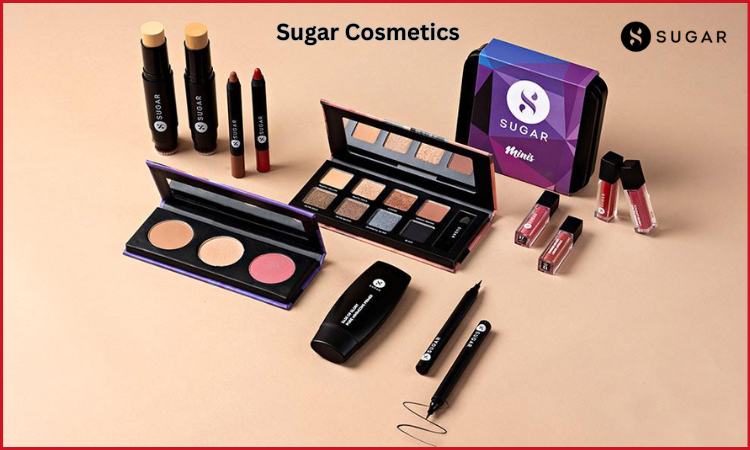
What began in 2015 with just two products has now become one of India’s best-known local beauty brands. Sugar Cosmetics did not build up its pan-India retail network just by expanding quickly. It has had to cope with financial limitations, stiff competition, changing customer tastes, and the difficulties involved in creating a DTC model. This is the story of how the company transformed from having a limited product range into a nationwide beauty brand—and all the problems that stood in its way.
The Market Gap That Started It All
India’s beauty market has grown rapidly in the past decade. Higher incomes, social media, and young people wanting to express themselves drove this growth, worth over $13 billion. For a while, Indians only had two choices: cheap mass-market products or very expensive foreign brands.
Neither choice was great. Foreign makeup was made for lighter complexions and cooler weather. Local brands were budget-friendly but not aspirational. There wasn’t much in the middle—good quality at reasonable prices for Indian skin.
Sugar Cosmetics filled that gap when it started in 2015. They make long-lasting, vibrant makeup for Indian skin tones and climate, costing between ₹300 and ₹1,000. This worked well, showing a smart market approach.
The Founders
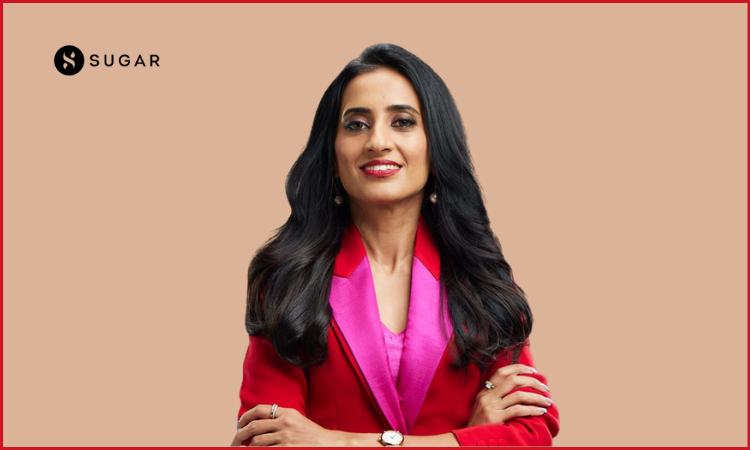
Vineeta Singh and Kaushik Mukherjee started Sugar Cosmetics in 2015. They both graduated from IIM Ahmedabad and, before Sugar, ran Fab-Bag, a monthly beauty subscription box that began in 2012. This gave them actual numbers on what Indian women wanted and where the market needed more products – info a lot of new companies can’t say they have right off the bat.
Vineeta turned down a ₹1 crore job offer when she finished at IIM Ahmedabad and tried two other businesses which didn’t work out. Still, this journey made her better at knowing what consumers want and helped her be more okay with taking risks. Oh, and being on Shark Tank India as an investor? It skyrocketed Sugar’s fame. Millions of people watching the show learned about their products.
Now, there’s a little fact correction that needs to be made. Many internet posts mistakenly say Sugar Cosmetics made a profit in 2014, but that’s not true since the company wasn’t even around then. The real deal is, according to reports, Sugar became operationally profitable in December 2023.
Products Built for India
Sugar made decisions about their products based on one main question: Would this appeal to Indian consumers given Indian conditions? One of their earliest products, the Smudge Me Not Liquid Lipstick, became a huge hit because of its long-lasting and heat-resistant qualities. Imported lipsticks often didn’t have those features.
Then came the Ace of Face Foundation Stick in 22 different shades that matched Indian skin tones. This made Sugar the first Indian brand to offer such a wide range. Their subsequent launch of a powder lipstick also sold out in just two weeks. Since day one, Sugar committed to being cruelty-free and vegan—and they’ve stuck to that promise throughout their growth.
Their packaging told a story too. They used a matte-black design that gave off a premium vibe but without a expensive price. This helped them stand out from the other brands that dominated the shelves with their pastel-colored products.
How Sugar Cosmetics Grew: Marketing Strategy
Sugar grew its audience early on via online platforms like influencer marketing and social media. They were one of the first Indian beauty brands to focus on these methods from the start, not just as extras.
Sugar worked with smaller beauty creators instead of big-name celebs. They gave these influencers freedom to make authentic content. During a Women’s Day push, they enlisted more than 1,200 creators, reaching around 10 million people – that’s what Affable.ai reported. For a later empowerment campaign, they involved over 7,000 influencers, according to Kofluence’s 2023 report.
Their #WheelOfLove campaign got users making over 240,000 posts. Their YouTube channel, Instagram, and app doubled as content hubs, not just selling spaces. In 2022, they got Ranveer Singh on board as a brand advocate. This move made them more visible to the masses while keeping their youthful vibe intact.
Offline Expansion: 550 Cities and 50,000+ Retail Touchpoints
Sugar started out online but moved into physical stores in 2017, earlier than most of their direct-to-consumer competitors. They did this because most Indian shoppers still prefer buying makeup in person. To tap into that market, they opened up brand-exclusive stores, put kiosks in malls, and struck deals with big retail chains. By late 2025, they had over 200 standalone stores in 50 cities, along with more than 50,000 sales spots spread out across 550 cities – that’s according to Storyboard18’s October 2025 report. These physical locations now account for about 60–65% of their total income. The rest comes from their site, marketplace sites like Nykaa, Amazon, and Flipkart, and same-day delivery apps like Blinkit and Zepto.
Revenue, Funding, and Financial Performance
| Period | Milestone | Impact |
|---|---|---|
| 2015 | Company founded | Launched D2C with Indian skin-tone focus |
| 2017 | Entered offline retail | Opened exclusive stores and mall kiosks |
| 2018 | Ace of Face Foundation — 22 shades | First Indian brand with 22 foundation shades |
| FY21 | Crossed ₹100 crore revenue | Proved D2C model can scale in Indian beauty |
| 2022 | $50M raised from L Catterton | Valuation reached ~$500 million |
| Dec 2023 | Achieved operational profitability | Significant amid losses across D2C peers |
| FY24 | Revenue hit ₹505 crore (20% YoY) | Net losses narrowed to ~₹68 crore |
| FY25 | Revenue fell to ~₹415 crore | Strategic retreat; focus on unit economics |
Sources: RoC filings via Entrackr (Nov 2024); Storyboard18 (Oct 2025); Inc42; The Arc; company-reported figures.
Sugar has brought in over $85 million in funding, attracting big names like Elevation Capital, A91 Partners, India Quotient, and L Catterton. They pulled in another ₹38 crore in December 2024 from the Anicut Equity Continuum Fund. In early 2025, Startup database Tracxn estimated Sugar’s value at around ₹2,943 crore (or roughly $355 million). That’s down from their earlier $500 million valuation two years prior. The dip matches a wider trend; investors now prioritize profits over growth more than they used to.
A glance at Sugar Cosmetics and its competitors
Sugar Cosmetics is a youth-oriented Indian beauty business that focuses on India-specific hues, eco-friendly formulas, and bold, cheap makeup. Lakmé is a long-standing mass-market competitor known for its widespread distribution, strong brand recognition, and larger everyday beauty offerings. Nykaa stands out as a platform-led beauty ecosystem, boasting strong private labels, extensive category depth, and omnichannel reach. In short, Sugar wins for brand sharpness and Gen Z appeal, Lakmé for scale and trust, and Nykaa for ecosystem strength and market dominance.
FY25 Slowdown and What Comes Next
In FY25, Sugar saw its first real drop in revenue. It reported roughly ₹412–415 crore, way down from ₹505 crore in FY24. That’s a contraction of around 17–18%, and losses got bigger too.
Two main reasons led to this dip. For one, people spent less on non-essential stuff after the pandemic excitement died down. This slowdown affected the entire beauty sector in India. Also, Sugar slowed down its rapid store expansion to boost each store’s earning power. Though it caused some short-term pain, they believed this was necessary for long-term health.
Sugar is actively moving forward. They started Molten, a new line aimed at Gen Z in collaboration with Myntra. Their other brands include Sugar POP for more affordable options, Quench Botanics, their vegan Korean skincare line from last fall, and ENN Beauty, which focuses on all-natural and cruelty-free makeup. Looking ahead, they project growth again by FY26 and expect to be profitable by FY27.
On top of that, their initial plans for an IPO were delayed. They had aimed for ₹1,000 crore before listing but had to push those dates back. By mid-2026, there was no sign of their Draft Red Herring Prospectus being filed with SEBI.
Conclusion
Sugar Cosmetics has carved out a serious spot for itself. The company spotted a real void in one of India’s fastest-growing consumer areas, made products to fit that need honestly, and spread its offerings across over 550 cities.
FY25 was rough, with falling revenue and bigger losses. Their IPO plans are on hold too. Still, they’ve got some strong stuff: ten years of customers trusting them, a founder folks all over India know, and a sales network that’s tough for others to copy quickly. If Sugar pulls off a recovery by FY26 and pushes toward making profits, they’ve got a good shot at becoming a big player again in India’s beauty scene.
Frequently Asked Questions
Who founded Sugar Cosmetics?
Sugar Cosmetics was founded in 2015 by Vineeta Singh and Kaushik Mukherjee, both IIM Ahmedabad alumni. Vineeta Singh is CEO and Kaushik Mukherjee is COO.
When did Sugar Cosmetics become profitable?
Sugar Cosmetics achieved operational profitability in December 2023. Claims suggesting it became profitable in 2014 are incorrect — the company did not exist until 2015.
What is Sugar Cosmetics’ revenue?
Sugar Cosmetics reported ₹505 crore in revenue in FY24, a 20% increase from ₹420 crore in FY23. FY25 saw a decline to approximately ₹412–415 crore due to weaker consumer spending and a strategic pullback from aggressive retail expansion.
How many stores does Sugar Cosmetics have?
As of late 2025, Sugar operated more than 200 exclusive brand outlets across 50 cities and over 50,000 retail touchpoints in 550 cities across India, per Storyboard18’s October 2025 report.
Is Sugar Cosmetics planning an IPO?
Sugar Cosmetics has discussed IPO ambitions publicly, with Vineeta Singh previously targeting ₹1,000 crore in revenue and consistent profitability before listing. As of mid-2026, no formal filing has been made with SEBI.
How is Sugar Cosmetics different from Lakmé or Nykaa Beauty?
Sugar differentiates on three fronts: its formulations are built specifically for Indian skin tones and weather conditions; its shade ranges reflect the real diversity of Indian consumers; and its entire catalogue is cruelty-free and vegan. Unlike Lakmé, which carries legacy mass-market positioning, Sugar built its distribution independently. Unlike Nykaa Beauty, which operates as a marketplace-led house of brands, Sugar is a single brand with defined sub-labels.