OpenAI has introduced a new sticker-making feature in ChatGPT, allowing users to create personalised sticker packs from photographs, written prompts and everyday ideas.
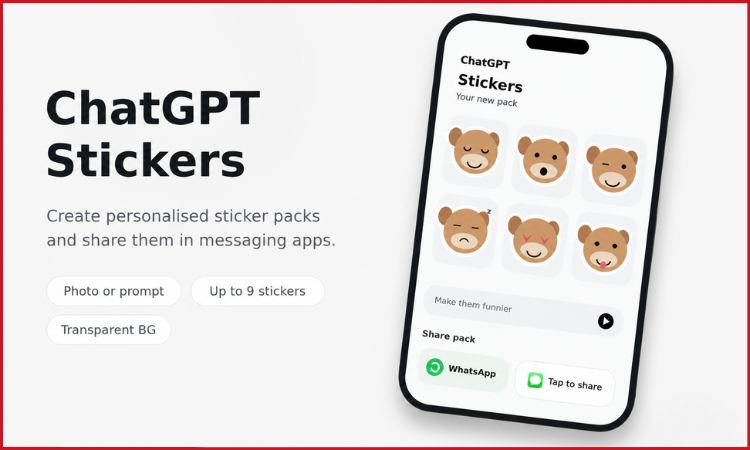
The new ChatGPT Stickers tool can turn a pet photograph, facial expression, character concept or inside joke into a set of images designed for messaging apps. Completed stickers can be downloaded, saved to a device or added directly to WhatsApp and iMessage.
The feature is powered by ChatGPT Images 2.0, OpenAI’s latest image-generation model. It is being made available globally through the ChatGPT mobile app and can be used by free account holders as well as paid subscribers.
OpenAI announced the feature on August 24 and began making it available to users worldwide. As with most large product rollouts, availability may differ temporarily across accounts, devices and app versions.
How ChatGPT Stickers Work
Users can create a sticker pack either from a written description or an existing image. A prompt can describe the subject, expression, visual style and any text that should appear in the final design.
Someone could, for example, ask ChatGPT to create a sticker pack showing a pet reacting to different situations. The same process can be used for characters, objects, workplace reactions or jokes shared within a group.
The tool supports transparent backgrounds, allowing the generated designs to appear as standalone stickers instead of rectangular images. This is particularly useful when the stickers are transferred to a messaging application.
Users can create as many as nine stickers in one pack. ChatGPT also offers up to 18 visual styles, including anime, 3D and holographic options. Styles can be selected before generation or changed through a follow-up instruction.
Existing photographs can also be uploaded as references. ChatGPT can use the subject from a photograph while changing the expression, clothing, pose, background or overall illustration style.
The original picture does not have to be converted directly. It can instead serve as inspiration for a new set of related designs.
ChatGPT Images 2.0 Powers the Feature
The sticker maker uses ChatGPT Images 2.0, which OpenAI introduced in April 2026 across all ChatGPT subscription plans.
The model was designed to follow more detailed image instructions and handle complicated edits more accurately. It can generate new images from text, work from uploaded references and make targeted changes during an ongoing conversation.
OpenAI has also improved text rendering in generated images. This is relevant for stickers because short phrases, names and reaction words often form part of the design.
Earlier image generators regularly produced misspelled or distorted text. Images 2.0 is intended to produce denser and more accurate wording, although results may still require correction.
The conversational editing process remains central to the new feature. Users do not have to control every detail through a single prompt. They can review the first pack and then ask for specific adjustments.
A user could request shorter captions, a different facial expression or a consistent art style across all nine stickers. ChatGPT can then revise the output while retaining the original concept.
Paid users also have access to an image-generation mode that spends additional processing time planning and refining the result. The standard sticker function, however, is available without requiring a paid plan.
OpenAI Expands ChatGPT Beyond Text Responses
The launch adds another consumer-focused function to a platform that began primarily as a text-based chatbot.
ChatGPT already supports image generation, photo editing, voice conversations, file analysis and web-based research. The sticker tool uses its existing image capabilities for a specific everyday task rather than asking users to generate and manually format each design.
Direct export is an important part of the release. Users previously could ask ChatGPT to generate sticker-style illustrations, but they generally had to save the image, remove or check the background, crop individual designs and import them separately into a messaging application.
The dedicated interface combines creation, customisation and export within one workflow.
The addition also puts ChatGPT into closer competition with image-editing applications and messaging platforms that already provide sticker-generation tools. WhatsApp, for example, offers ways to create stickers from photographs and supports AI-generated visual content in selected markets.
OpenAI’s approach is centred on conversational control. Instead of relying only on fixed editing buttons, users can describe the required changes in ordinary language.
Availability on Android and iPhone
The sticker feature is intended for the ChatGPT mobile application. Both Android and iPhone users can create and save packs, although the available sharing options depend on the operating system.
iMessage export applies to Apple devices, while WhatsApp is available across supported Android and iOS phones.
Users who do not see the Stickers option should check whether the latest version of the ChatGPT app is installed. The tool may also take time to appear on every account during the global rollout.
OpenAI has not announced a separate charge for generating sticker packs. Usage remains subject to the image-generation limits applied to each ChatGPT plan.