For years, business messaging in India meant one thing for most customers: an SMS.
A bank sent an OTP. An airline sent a boarding update. A retailer pushed out a discount code. The message arrived, the customer read it, and the conversation usually ended there.
That model is starting to look dated.
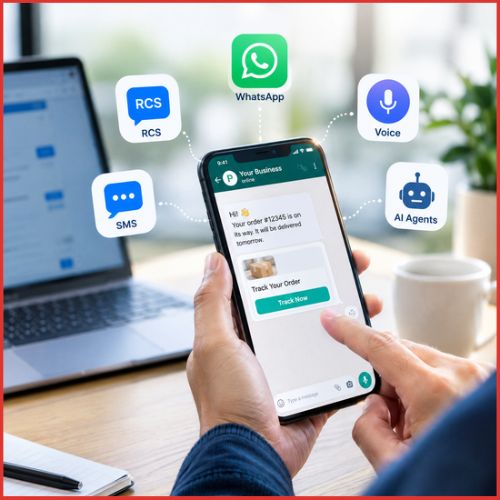
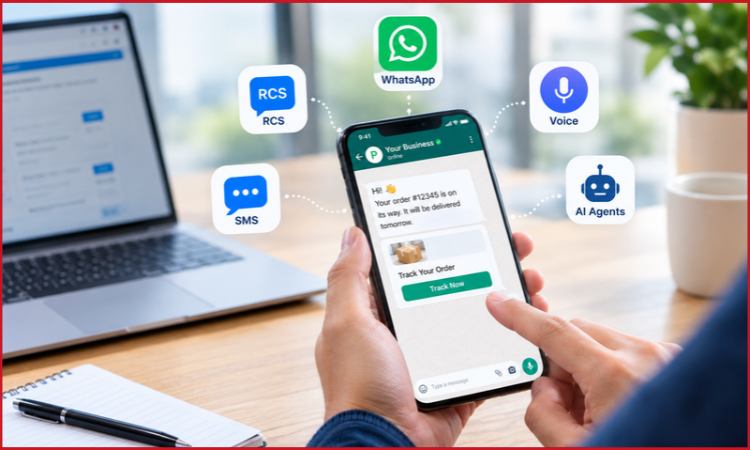
At India Mobile Congress 2026, companies including Airtel and Authkey showed how AI-powered customer engagement is moving business communication towards a mix of WhatsApp, RCS, SMS, voice and automated AI agents. The change is not simply about giving marketers another channel. Businesses increasingly want those channels to work together and carry a customer from the first message through support, payment or verification without restarting the conversation each time.
SMS Is Still Useful, but It Cannot Do Everything
SMS has one big advantage that newer messaging products struggle to match: reach.
It works on almost every mobile phone and does not require a customer to install another app. That makes it difficult to replace for OTPs, alerts and other messages where delivery matters more than presentation.
Its limitations are equally obvious.
A conventional text message cannot easily show a product carousel, offer several interactive options or carry on a detailed support conversation. Customers often receive information but then have to open an app, visit a website or call a support number to do anything with it.
That gap is pushing companies towards omnichannel business messaging rather than abandoning SMS altogether.
The newer idea is to use the right channel for each stage of a customer journey and move between them when necessary.
WhatsApp Has Turned Messaging Into a Conversation
WhatsApp has already changed customer expectations.
People are accustomed to replying inside the same chat where they received a message. A retailer can send an order update, a customer can ask a question underneath it, and an automated assistant or support employee can continue from there.
That feels very different from receiving a no-reply SMS.
For businesses, WhatsApp can support product images, buttons, catalogues, automated workflows and customer-service conversations. AI can then sit behind those interactions and handle repetitive questions before handing more complicated cases to a person.
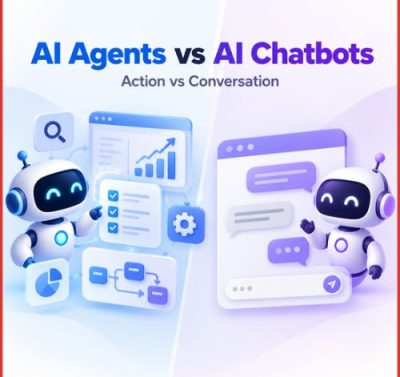
This is where AI customer service in India is beginning to move beyond the familiar chatbot that responds with a fixed set of options.
Newer systems can understand more natural questions, retain context and use information from other business systems before replying.
RCS Is Giving the Normal Messaging App an Upgrade
Rich Communication Services, or RCS, approaches the problem from another direction.
Instead of asking customers to move to a separate messaging app, RCS adds richer features to the phone’s native messaging experience.
Businesses can use branded profiles, images, buttons and suggested replies rather than sending a plain block of text.
That makes something as ordinary as an order update more useful. The customer could receive shipment information alongside a button to track the package or contact support.
Adoption is picking up quickly in India.
Infobip’s 2026 messaging report recorded strong growth in RCS interactions, while sectors such as finance, fintech, retail and e-commerce have emerged as major users.
For businesses, RCS business messaging sits in an interesting position. It retains some of the familiarity of SMS while offering a more interactive experience.
Airtel Wants to Put Those Channels on One Screen
The problem with having more communication options is that companies can quickly end up with too many separate systems.
One vendor handles SMS. Another handles WhatsApp. Voice sits somewhere else. RCS may come from another provider again.
Airtel Business is trying to reduce that fragmentation with Airtel IQ Gateway.
The platform brings SMS, WhatsApp, RCS, business voice and number verification into a single control plane. It also includes real-time delivery information, automated fallback between providers and fraud-protection tools.
For a large bank, e-commerce company or logistics operator, that can matter more than adding another messaging feature.
The challenge is often not sending a message. It is knowing whether it actually arrived, whether the recipient is genuine and what should happen if the first delivery channel fails.
AI Is Starting to Decide What Happens Next
This is where the shift becomes more interesting than simply moving from SMS to WhatsApp.
AI can increasingly help determine the next step in the conversation.
Imagine a customer asking why a package has not arrived. An AI agent could identify the order, check delivery information and provide an update without forcing the customer through a menu of numbered options.
If the issue becomes complicated, it could send the conversation to a human agent with the earlier context intact.
Authkey, which is showcasing its communication tools at IMC 2026, is also pushing this type of model. Its platform combines WhatsApp, SMS, RCS, voice, email and AI-based automation rather than treating each one as an independent product.
The direction is towards conversational AI for businesses, where automation sits across the customer journey rather than appearing only as a chatbot on a website.
Indian Companies Are Adopting Rich Messaging Quickly
The market appears ready for that change.
Recent BCG research found widespread adoption of AI-enabled rich messaging among Indian enterprises. Yet only a small proportion have connected those interactions into a truly end-to-end customer journey.
That gap is important.
Sending an interactive message is relatively easy. Linking marketing, sales, payment, fulfilment and support into one continuous conversation is much harder.
A customer may receive a personalised offer on WhatsApp but still be asked to repeat their details when they contact support five minutes later.
That is the problem enterprise platforms are now trying to solve.
The next stage of business messaging in India is less about adding more channels and more about making existing ones remember what happened before.C
The Future Is Probably Not One Winning Channel
SMS is unlikely to disappear. Neither is WhatsApp going to handle every business interaction.
RCS, voice and email still have their own strengths.
What is changing is the idea that a business should pick one and stay there.
A fraud alert may still work best as SMS. A sales conversation may move to WhatsApp. An RCS message may offer richer information without requiring another app. A voice call may become necessary when the issue gets complicated.
AI can sit between them and help decide what happens next.
That is the larger shift behind AI-powered customer engagement in India.
Businesses are moving from sending messages to managing conversations. The technology is becoming richer, but the goal is actually simpler: let customers start an interaction in one place without feeling as though they are beginning again every time the channel changes.
Source:
Beyond SMS: How AI is changing way Indian businesses reach customers