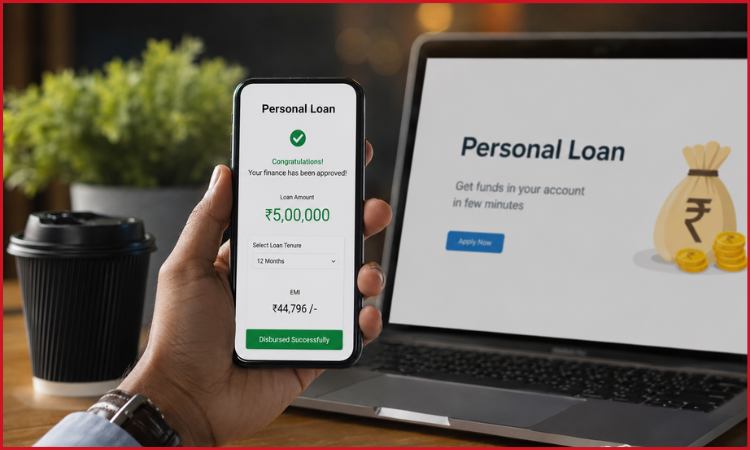
India’s digital lending platform market pulled in roughly USD 486.6 million in revenue in 2024 and is on track to grow at a 31.5 percent compound annual rate through 2030 (Grand View Research, 2026). That kind of trajectory doesn’t happen because people enjoy borrowing — it happens because a medical bill, a broken two-wheeler, or a delayed salary doesn’t wait for a bank’s working hours. This comparison of the best instant personal loan apps in India looks at ten platforms actually built for that pressure point, from unicorn-scale NBFCs to a bank app that disburses in minutes.
Founders and CXOs reading this list will recognise the pattern: every entry here won by solving friction, not by undercutting on rate. That distinction matters more than it sounds, because pricing is the easiest thing to copy and underwriting speed is not.
Quick Glance: Top 10 Emergency Loan Apps in India
| Name | Founded | Sector/Focus | Key Metric |
| Navi | 2018 | NBFC-backed full-stack lending | FY24 revenue up 37% to ₹2,290 crore |
| Moneyview | 2014 | NBFC-backed, tier II/III salaried borrowers | Unicorn at $1.2B, SEBI-cleared IPO in 2026 |
| Fibe (EarlySalary) | 2015 | Salary-linked consumer lending | FY26 net profit more than doubled to ₹257.5 crore |
| KreditBee | 2018 | New-to-credit, tier II/III co-lending | $1.5B valuation after Series E |
| CASHe | 2016 | Short-tenure loans for millennials | Over ₹1,200 crore disbursed cumulatively |
| Stashfin | 2016 | Credit line plus personal loan hybrid | 4 crore-plus users, ₹10,000 crore-plus disbursed |
| mPokket | 2015 | Students and young first-jobbers | $60M-plus raised, Series A |
| IDFC FIRST Bank (FIRSTmoney) | 2018 (bank) | Bank-backed digital personal loans | Disbursal within 10–15 minutes of approval |
| Bajaj Finance | 1987 (NBFC) | Large-ticket unsecured lending | Loans up to ₹55 lakh |
| PaySense | 2015 | First-timer and thin-file credit | Acquired by PayU for $185M, merged into LazyPay |
1. Navi
Sachin Bansal built Navi after Flipkart, and the app now behaves less like a startup experiment and more like a financial supermarket spanning loans, UPI, insurance and mutual funds. Revenue from operations rose 37 percent to ₹2,290 crore in FY24, with the company reportedly preparing an IPO worth close to ₹3,000 crore for FY27. Its personal loan book stretches unusually high for an app-first lender — a strong pick among instant personal loan apps in India for larger ticket sizes.
- Max Loan Amount: Up to ₹20 lakh
- Interest Rate: Competitive, risk-based pricing through Navi Finserv
- Best For: Larger emergency ticket sizes
- Key Feature: One app across loans, UPI and insurance
2. Moneyview
Two IIT-Delhi alumni, Puneet Agarwal and Sanjay Aggarwal, started Moneyview in 2014 as an expense tracker before pivoting into lending for India’s underbanked tier II and III cities. It crossed unicorn status at a $1.2 billion valuation in 2024 and received SEBI’s go-ahead for a public listing in 2026, with assets under management near ₹19,814 crore. Three-quarters of its user base comes from smaller cities, a demographic most legacy banks still underserve.
- Max Loan Amount: Up to ₹10 lakh
- Interest Rate: Varies by NBFC partner and credit profile
- Best For: Salaried borrowers outside metro India
- Key Feature: 200-million-plus registered user base
3. Fibe (Formerly EarlySalary)
Akshay Mehrotra and Ashish Goyal launched EarlySalary in 2015 to solve a narrow problem salary advances for young professionals then broadened it into a full lending platform and rebranded as Fibe in 2022. Net profit more than doubled to ₹257.5 crore in FY26, and the TPG-backed firm has filed papers for a stock-market listing. It also built India’s first numberless co-branded credit card, a small but telling detail about its product instincts.
- Max Loan Amount: Up to ₹5 lakh
- Interest Rate: Salary-linked, tenure-based pricing
- Best For: Best instant loan app for salaried employees under 35
- Key Feature: Numberless co-branded credit card
4. KreditBee
Madhusudan Ekambaram co-founded KreditBee to chase a specific population: new-to-credit borrowers in tier II and III towns who banks routinely decline outright. The company raised $220 million in a Series E round, pushing its valuation to $1.5 billion, and has disbursed over ₹21,000 crore in loans in a single year through its co-lending arrangements with more than ten institutions. Roughly 50 million downloads later, it is prepping for a possible public listing.
- Max Loan Amount: Up to ₹5 lakh
- Interest Rate: Roughly 10% to 28.5% per annum
- Best For: First-time borrowers with thin credit files
- Key Feature: Co-lending model spreads capital risk across partners
5. CASHe
CASHe took a narrower bet than most of its peers, building specifically for salaried millennials aged 24 to 35 and pricing loans for a maximum tenure of one year. Founder V Raman Kumar funded the company independently rather than chasing venture rounds early, and CEO Ketan Patel has spoken publicly about an eventual small finance bank licence. Cumulative disbursement has crossed roughly ₹1,200 crore.
- Max Loan Amount: Up to ₹4 lakh
- Interest Rate: Short-tenure pricing, typically higher for sub-one-year loans
- Best For: Millennial salaried borrowers needing quick, small-ticket cash
- Key Feature: Alternative-data credit scoring alongside financial history
6. Stashfin
Stashfin blends a revolving credit line with a conventional personal loan, letting borrowers draw only what they need and pay interest solely on the utilised amount. Operated by EQX Analytics, the platform now claims over 4 crore users and more than ₹10,000 crore disbursed, with APRs quoted around 21 percent per annum on its representative EMI examples. The interest-free window of up to 30 days is a genuine differentiator for short emergencies.
- Max Loan Amount: ₹1,000 to ₹5 lakh
- Interest Rate: From roughly 11.99% p.a., APR near 21%
- Best For: Borrowers who want flexible, partial drawdowns
- Key Feature: Interest-free period of up to 30 days
7. mPokket
Where most apps chase salaried professionals, mPokket went after students and early-career workers with little to no income proof, a segment almost every bank ignores. Founded by Gaurav Jalan, the company has raised over $60 million and built its underwriting entirely around alternate data since traditional bureau scores barely exist for this group. Loan tickets stay deliberately small, which keeps repayment realistic for a first-year salary.
- Max Loan Amount: Up to ₹45,000
- Interest Rate: Ranges widely, 0% to roughly 48% p.a. depending on profile
- Best For: Students and first-jobbers with no credit history
- Key Feature: Underwriting built for zero-credit-score applicants
8. IDFC FIRST Bank – FIRSTmoney
This is the one bank-native entry on the list, and it closes the speed gap that used to separate banks from fintechs. FIRSTmoney disburses within 10 to 15 minutes of approval, prices loans starting at 9.99 percent per annum, and charges zero foreclosure fees numbers that would have sounded implausible from a scheduled commercial bank five years ago. Because it sits inside the bank’s own balance sheet, there is no lending service provider taking a cut in the middle.
- Max Loan Amount: Up to ₹15 lakh
- Interest Rate: Starting at 9.99% p.a.
- Best For: Borrowers wanting bank pricing at fintech speed
- Key Feature: Zero foreclosure charges, fully digital KYC
9. Bajaj Finance
Bajaj Finance earns its slot on scale alone its Instant Personal Loan product goes up to ₹55 lakh, dwarfing every fintech app on this list, with rates advertised from around 10 percent per annum for qualifying customers. The NBFC’s decades-old lending infrastructure means approval criteria lean more traditional, favouring applicants with an established credit history. For a genuine large-ticket emergency, few app-based lenders can match its ceiling.
- Max Loan Amount: Up to ₹55 lakh
- Interest Rate: Starting from around 10% p.a.
- Best For: Large emergencies needing six-figure funding
- Key Feature: Among the highest loan ceilings of any app-based lender
10. PaySense
PaySense’s story is really an acquisition story: Prashanth Ranganathan built it in 2015 as a lender for first-timers and thin-file borrowers, and PayU bought a controlling stake for $185 million in 2020, merging it into what became the LazyPay credit stack. It still operates under its own brand today, working through partners including IDFC FIRST Bank and SMFG India Credit. The lesson for founders watching this space: a well-underwritten thin-file product can be worth more as an acquisition target than as a standalone IPO candidate.
- Max Loan Amount: ₹5,000 to ₹5 lakh
- Interest Rate: Roughly 1.4% to 2.3% per month
- Best For: Low interest personal loan apps for first-time credit users
- Key Feature: Backed by multiple regulated lending partners under one app
What These Apps Have In Common
Every platform on this list routes its loans through an RBI-registered bank or NBFC, a distinction that matters more than app-store ratings ever will. RBI Digital Lending Directions 2025 notification (https://rbi.org.in/Scripts/NotificationUser.aspx?Id=12848&Mode=0), in force since May 8, 2025, now requires a signed Key Fact Statement and direct bank-to-borrower disbursal from all of them, closing the gap that unregulated apps used to exploit. RBI also runs a public directory of Digital Lending Apps, live since July 2025, letting borrowers confirm exactly which regulated entity stands behind an app (PIB, 2025).
One risk worth naming: several of these apps compete hardest on speed, and speed is precisely where borrowers skip reading the Key Fact Statement. Two practical lessons follow check the lender’s name against RBI’s directory before applying, and treat any app promising approval with zero documentation as a red flag rather than a convenience.
Key Takeaways
• Bank-backed apps like IDFC FIRST’s FIRSTmoney now match fintech speed while undercutting most NBFC pricing.
• Instant personal loan apps in India built for thin-file borrowers – KreditBee, mPokket, PaySense – accept alternative data where banks demand bureau history.
• Emergency loan apps India-wide have converged on the same regulatory floor since the 2025 directions, regardless of ticket size.
• Bajaj Finance remains the outlier for genuinely large emergencies; most app-first lenders cap out well under ₹20 lakh.
• Confirming an app’s regulated lender name takes thirty seconds and prevents most fraud complaints.
• Personal loan apps with fast approval are not automatically the cheapest – compare APR, not just disbursal time.
Conclusion
None of these ten platforms became RBI-approved loan apps in India by accident; each solved a specific underwriting problem banks left on the table, whether that was students with no income proof or salaried workers in tier III towns. For founders building adjacent fintech products, the current cycle – Moneyview’s IPO clearance, Fibe’s public filing, KreditBee’s Series E – suggests investors are rewarding profitability over pure growth in online personal loan apps India-wide. Anyone tracking this sector’s funding patterns further might find our piece on How to Get Funding for Your Startup in India useful for context on where that capital originates.
Frequently Asked Questions
- Which is the best instant loan app for salaried employees in India?
Fibe and Moneyview both specialise in salaried borrowers, with Fibe leaning toward younger professionals and Moneyview serving a broader tier II and III base. The right pick depends on your income bracket and how quickly you need funds disbursed.
- Are all the apps on this list RBI-approved loan apps in India?
Every entry here operates through an RBI-registered bank or NBFC partner, which is what “RBI-approved” practically means for a digital lending app. Always verify the specific lender named in the Key Fact Statement before accepting an offer.
- What is the fastest personal loan app for a genuine emergency?
IDFC FIRST Bank’s FIRSTmoney and several NBFC apps like Stashfin and Navi disburse within minutes to a few hours of approval. Bank-backed apps trade a little speed for lower interest rates, so the “fastest” option isn’t always the cheapest.
- Can students get a loan without any income proof?
mPokket was built specifically for students and first-jobbers with limited or no credit history, using alternative data instead of bureau scores. Loan amounts stay small by design, usually capped around ₹45,000.
- What’s the best low interest personal loan app in India for a large amount?
Bajaj Finance offers the highest ceiling on this list, up to ₹55 lakh, with rates starting near 10 percent per annum for qualified applicants. IDFC FIRST Bank’s FIRSTmoney is competitive too, starting at 9.99 percent for smaller ticket sizes.
- How do I check if an app is genuinely RBI-compliant before applying?
Look up the lender’s name from the app’s Key Fact Statement against RBI’s public Digital Lending Apps directory, live since July 2025. If the name doesn’t appear or the app avoids naming a lender at all, treat that as a hard stop.