Think about entering a bank today with no credit history, no collateral, and no guarantor, but with only a mobile phone and your employment details. The usual answer will be a clear and concise “No.” To hundreds of millions of Indians who were outside the circle of formal banking, this was a weekly routine.
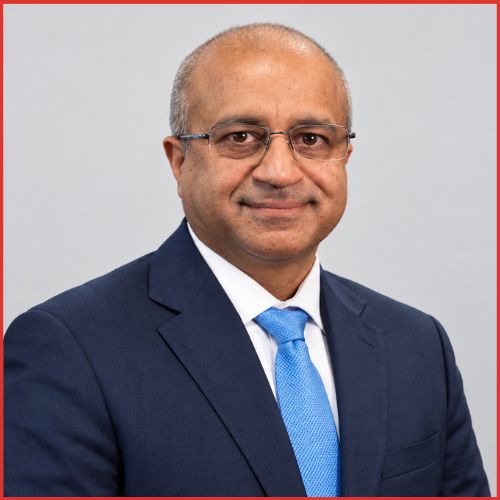
This barrier of financial exclusion is precisely what Mr Madhusudan E., Co-founder and CEO of KreditBee, was determined to bring down. Fast forward to 2026, when the market responded with the company landing a Series E investment round worth $280 million, bringing its valuation to $1.5 billion while becoming India’s 128th unicorn in the midst of a global funding winter in which funding for startups in Silicon Valley was reduced by 26% in Q1 2026 alone versus Q1 2025.
Why does this particular moment have such importance for the Indian fintech industry? While the company’s remarkable valuation alone should not be underestimated, the proof-of-concept it demonstrates is perhaps more relevant at this stage.
KreditBee posted revenues of ₹2,700 crore and a net income of ₹473 crore in FY2025, numbers that have silenced many early sceptics of the instant-loan model. With over 60 million loans disbursed and an assets under management figure of nearly ₹15,000 crore in FY2026 (up ~44% year-on-year), KreditBee has moved decisively past the “interesting experiment” phase into hard, compounding scale.
The Rise of KreditBee: A 2026 Case Study in Fintech Innovation
Once again, India’s fintech industry has achieved a significant milestone with KreditBee, an online lender, hitting the unicorn mark of being India’s 128th. KreditBee was granted unicorn status after raising $280m in its latest funding round, giving KreditBee a valuation of $1.5b. In this way, KreditBee is joining Juspay (the first unicorn this year) in becoming one of India’s very few Indian fintech unicorns 2026, even though the economic environment is very hard to manoeuvre through.
Understanding the Context of KreditBee’s Achievement
KreditBee funding 2026 round is notable both for its size and timing. KreditBee’s performance has been strong, despite the overall slowdown in Silicon Valley startup funding (it was down 26% in Q1 2026 compared to Q1 2025), as per Inc42. The current global economic conditions are not favorable (particularly because of geopolitical turmoil in the Middle East), and there are no major deals expected.
The Core Strategy Behind KreditBee’s Success
The strategy of KreditBee involves using the recently raised capital to further expand its business operations by increasing its presence in various strategic markets and improving its technology.
A significant chunk of the raised capital will go into the development of AI-powered lending solutions. This is predicted to benefit the organization by allowing better risk assessment and greater availability of credit.
The key to the success of KreditBee was its strategic emphasis on digital lending. KreditBee co-founder and CEO Madhusudan E saw an opening in offering instant, small-ticket loans to the underserved and those new to credit. This approach went against the traditional approach of lending, where borrowers had to physically visit branches and provide documentation manually.
Madhusudan’s experience in ecommerce, where he considered ways of incorporating lending during checkout processes, was critical to his decision to create something different at KreditBee. Although faced with opposition from the traditional lenders, he saw an opportunity to build a lending stack that is digitalized.
Building a Digital Lending Powerhouse
From Concept to Unicorn
The transition from idea to unicorn required stringent testing and dedication to developing robust systems. The founders of KreditBee conducted a controlled beta test among college students, primarily concentrating on adversarial testing of its risk engine. In doing so, they ensured the reliability and scalability of their lending platform.
Incorporated in 2016 and obtaining an NBFC license in 2017 as KrazyBee Services Private Limited, KreditBee’s path included strategic steps that made it well-positioned to defy the conventional lending model.
What Sets KreditBee Apart From Every Competitor
- Profitable at Scale
₹473 Cr net profit in FY2025 — most competitors are either unprofitable or at a much smaller scale.
- Credit Data Moat
60M+ loan history creates an unmatched proprietary dataset for risk modeling that newer entrants simply cannot replicate.
- Co-Lending Architecture
Bank co-lending partnerships reduce capital requirements and enable scale without overloading the NBFC balance sheet.
- Full-Stack Product Range
From ₹1,000 micro-loans to property loans and MSME credit — KreditBee serves a wider credit spectrum than nearly any competitor.
- Adversarial Risk Testing Origin
Founded with risk engine stress-testing at its core — built for defaults, fraud, and delinquency from day one, unlike many growth-first lenders.
KreditBee’s Business Model: Lending Where Banks Wouldn’t Look
KreditBee’s business model is built on a simple but powerful insight: India’s formal banking system had largely abandoned the credit needs of young, mobile-first, income-earning individuals who lacked the paper trails that traditional lenders demanded. KreditBee built technology to serve them at scale, quickly, and profitably.
1. App-First Distribution
With 230+ million app downloads, KreditBee’s primary distribution channel is its mobile app — removing the need for branch infrastructure and enabling 24/7 loan access for users across India’s Tier-1, 2, and 3 cities.
2. AI-Powered Risk Engine
The platform uses machine learning to assess creditworthiness using alternative data points — app usage behavior, employment verification, UPI transaction history — enabling loan decisions in minutes for users with no formal credit history.
3. Co-Lending Architecture
KreditBee works with regulated banks and financial institutions through co-lending arrangements, sharing loan risk and compliance obligations. This model allows scale without carrying the full capital burden on its own NBFC balance sheet.
4. Diversified Loan Products
Beyond personal micro-loans, KreditBee offers property loans, two-wheeler loans, MSME credit, and UPI-integrated products — reducing revenue concentration risk and building a full-stack digital lending ecosystem.
What This Means for Businesses
The story of KreditBee is an excellent example of how innovation and adaptation can revolutionize the financial industry. As far as business organizations are concerned, this case demonstrates that there are always opportunities in conventional markets that can be exploited through innovation. The fintech startup growth story is evidence of the fact that technology can be used to disrupt any industry.
KreditBee’s Funding Details and Expansion Plans
Investments have been made by renowned companies like WhiteOak Capital and A.P. Moller Holding in the recent capital infusion into KreditBee. The total capital infusion makes the total investment in the fintech company $540 million.
This capital infusion is the second-largest capital investment after Neysa, which was invested with $1.2 billion in 2026.
The total amount infused into KreditBee will be utilized for securing Micro, Small, and Medium Enterprises loans.
Strong Financial Performance and Strategic Mergers
- KreditBee achieved remarkable revenues of ₹2,700 crore and a net income of ₹473 crore in the financial year 2025.
- The organization plans to consolidate its technology business unit with its NBFC before launching an IPO for the current financial year.
- Also Read: Zetwerk, Ready for IPO, Restructures its Leadership Team!
Business Growth and Loan Offerings
More than 60 million loans have been provided through KreditBee, which has assets under management (AUM) of nearly ₹15,000 crore in the financial year 2026. There is an increase in the AUM by around 43-44%, considering that the previous year witnessed AUM worth ₹10,100 crore.
KreditBee is providing various types of loans like property loans and two-wheeler loans, along with having secured loans AUM of ₹1,000 crore and MSME lending worth ₹500 crore.
Strong Growth Trajectory
The NBFC Fintech company, KreditBee, which was founded in 2016 by Madhusudan E, Karthikeyan Krishnaswamy, and Vivek Veda, operates via its RBI-licensed NBFC entity called KrazyBee Services Limited. The firm also works with various financial firms through co-lending arrangements.
Throughout the course of its evolution, the following metrics were achieved:
- 230+ million app downloads
- 18+ million individual borrowers
- 60+ million loans disbursed across India
- $1.5 billion assets under management (AUM) by March 2026
- The offerings include personal loans, business loans, loans against property, two-wheeler loans, credit reports, and UPI products.
The IPO Roadmap: Is KreditBee India’s Next Fintech Listing?
The signals are unmistakable. The domicile shift from Singapore to India in 2024. The strategic decision to merge its technology business unit with its NBFC entity. The composition of the Series E investor table — featuring long-term institutional names like WhiteOak Capital and Advent International, whose holding periods align with public market timelines. These are not the moves of a company content to stay private.
- Entity consolidation: KreditBee is merging its tech arm with KrazyBee Services Limited (NBFC), simplifying the corporate structure into a single, clean, listable entity — a standard pre-IPO step.
- Profitability profile: At ₹473 crore net profit on ₹2,700 crore revenue (~17.5% net margin), KreditBee’s financial profile compares favorably with listed peers like MobiKwik and will likely attract strong retail and institutional investor interest.
- AUM trajectory: 44% YoY AUM growth gives public market investors a compelling growth story — not just a value play. This combination of growth + profitability is the rare “profitable growth” narrative that Indian equity markets reward with premium multiples.
- Regulatory standing: A clean RBI-licensed NBFC with transparent co-lending disclosures and a history of regulatory compliance significantly de-risks the IPO process compared to peers with regulatory grey areas.
- Timing: With 42 tech companies listing in India in 2025 (up 17% YoY), the public market appetite for fintech names has strengthened, and KreditBee’s management has indicated the IPO is planned for the current financial year.
If KreditBee successfully lists, it will join a very short list of operationally profitable fintech IPOs in India — a distinction that could command a significant valuation premium over loss-making peers who rushed to market earlier.
Conclusion
KreditBee attaining its unicorn status is indicative of the fast-growing success story of India’s fintech industry. Having secured $280 million through its Series E fundraising and possessing solid growth plans based on artificial intelligence, along with IPO prospects, KreditBee is positioned to make a name for itself in India’s lending space.
FAQ
Q1.What is KreditBee’s valuation, and how did it achieve unicorn status in 2026?
KreditBee became a unicorn ($1.5B valuation) in the year 2026 through Series E funding of $280M, owing to its solid financial metrics such as ₹2,700 crores revenue, ₹473 crores profits, and AUM growth of 44% reaching ₹15,000 crores.
Q2. How does KreditBee’s business model differ from traditional banks and other digital lenders?
Unlike conventional banking institutions, KreditBee utilizes AI/alternative data-based underwriting (no need for salary slips), co-lending with RBI-authorized banks to reduce the cost of capital, and provides the complete loan stack while remaining profitable.
Q3. Is KreditBee planning an IPO, and what is its expected timeline?
KreditBee is planning to go public in the fiscal year 2026-27 as the company has completed redomestication to India and integration of its technological and NBFC arms into one entity.