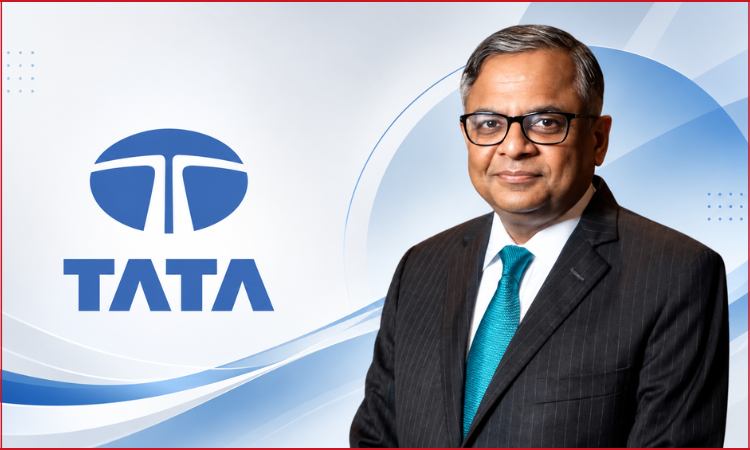
For years, Natarajan Chandrasekaran’s career looked like a classic Tata success story: join TCS as a young software engineer, rise through its ranks, become CEO, and eventually take charge of Tata Sons.
In September 2026, this simple looking story became more complicated.
Chandrasekaran’s position at Tata Sons has suddenly become the centre of a wider corporate governance dispute involving Noel Tata, Tata Trusts, the Tata Sons board and the future structure of the group.
After saying in August that he would not seek another term, Chandrasekaran was asked by the Tata Sons board to reconsider. On September 17, the board approved his reappointment for another five years.
Noel Tata opposed the decision, and Tata Trusts subsequently challenged its validity. Tata Sons has rejected that challenge and maintains that the reappointment was valid under its Articles of Association.
This makes N Chandrasekaran’s career worth looking at again, not simply as a biography, but as the story of a technology executive who moved from TCS to the top of one of India’s largest business groups.
N. Chandrasekaran: Quick Facts
| Particular | Details |
| Full name | Natarajan Chandrasekaran |
| Born | June 2, 1963 |
| Birthplace | Mohanur, Tamil Nadu |
| Education | Bachelor’s degree in Applied Sciences and Master’s in Computer Applications |
| Joined TCS | 1987 |
| TCS CEO and MD | 2009 to 2017 |
| Joined Tata Sons Board | October 2016 |
| Tata Sons Chairman | From February 21, 2017 |
| Current position | Chairman, Tata Sons |
| Latest reappointment | Five-year term approved by Tata Sons board in September 2026, disputed by Tata Trusts |
| FY26 Tata Sons remuneration | ₹158.66 crore |
| Major honours | Padma Bhushan, Legion of Honour and honorary KBE recognition |
Why N Chandrasekaran Is in the News in 2026
The latest dispute has changed the immediate question around Chandrasekaran’s future.
On August 12, 2026, he told the Tata Sons board that he would not offer himself for reappointment when his current term ends on February 20, 2027. This decision by Chandrasekharan appeared to start a leadership succession process in the company.
This simple looking story changed within weeks.
On September 3, the Nomination and Remuneration Committee of Tata Sons considered the matter and asked Chandrasekaran to reconsider his decision. According to Tata Sons’ statement, the committee cited his contribution to the group and its larger interests.
On September 17, Chandrasekaran agreed to reconsider, and the board approved his reappointment for another five-year term by a majority vote. Noel Tata, who is a prominent executive figure in the company, was the only director reported to oppose this.
The decision has since become a governance dispute in Tata.
What Is the Chandrasekaran and Noel Tata Dispute About?
Tata Trusts, currently chaired by Noel Tata, has challenged the validity of his reappointment. The Trusts argue that their nominee directors’ support was required under Tata Sons’ Articles of Association and that the resolution could not validly pass when Noel Tata opposed it. Tata Trusts has described the resolution as invalid.
Tata Sons has taken the opposite legal position. In a September 24 letter to Noel Tata, the company said the board had validly resolved to reappoint Chandrasekaran by majority.
Tata Sons argued that the special procedure cited by Noel Tata applies to the first appointment of a new chairman, not to the reappointment of an existing chairman.
The disagreement is therefore not simply a personal dispute between two senior figures. It concerns the interpretation of Tata Sons’ internal governance rules and the balance of authority between the board and Tata Trusts.
Reuters reported on September 25 that Tata Trusts owns about 66% of Tata Sons and that both sides are considering legal options. The report noted that a potential court case would likely centre on Tata Sons’ Articles of Association, Which is a by-law for the relationship between the company, its board and its major shareholder.
Tata Sons Listing Adds Another Layer
The Chandrasekaran reappointment dispute is happening alongside another major question: should Tata Sons be listed on the stock market?
The Reserve Bank of India rejected Tata Sons’ request to surrender its registration under the relevant regulatory framework in September 2026. The decision by RBI brought the long-running question of a possible Tata Sons listing back into focus.
Tata Sons has said its board will initiate steps to comply with applicable RBI requirements and seek guidance from the RBI, Tata Trusts and other stakeholders.
Tata Trusts, however, has also said it does not agree to listing and wants alternatives to be examined.
The issue matters because Tata Sons is the principal holding company of the Tata group, and Tata Trusts is its largest shareholder. The disagreement over listing and the disagreement over Chandrasekaran’s reappointment are now connected by a larger question: who should have the decisive say over the future direction of Tata Sons?
As of September 26, 2026, there is no announced Tata Sons IPO date. The governance dispute and regulatory process remain unresolved.
Natarajan Chandrasekaran: Early Life and Education
Natarajan Chandrasekaran was born on June 2, 1963, in Mohanur, Tamil Nadu.
He studied in Tamil Nadu and later completed an undergraduate degree in Applied Sciences from the Coimbatore Institute of Technology. He went on to complete a Master’s degree in Computer Applications from Regional Engineering College, Tiruchirappalli, which is now known as the National Institute of Technology, Tiruchirappalli.
His educational background helps to explain the direction of his early career. Instead of entering a traditional business role, Chandrasekaran moved into India’s developing technology industry.
Eventually this decision took him to the top of TCS.
N Chandrasekaran’s TCS Career
N. Chandrasekaran joined Tata Consultancy Services in 1987 as a software engineer.
There was no dramatic jump to the top. He spent decades moving through technology, operations and management roles within TCS, eventually becoming Chief Operating Officer and Executive Director. Later, he was appointed as Chief Executive Officer and Managing Director in 2009.
His TCS years are an important part of the Natarajan Chandrasekaran biography because they established the management style he later brought to Tata Sons.
When Chandrasekaran became CEO, TCS was already a large global IT services company. During his eight years as CEO, its revenue increased from about $6.3 billion to $16.5 billion, according to TCS material documenting his tenure.
TCS also expanded its capabilities beyond traditional software services, with greater emphasis on digital technologies, analytics, cloud and newer technology platforms.
In 2017, Chandrasekaran handed the TCS leadership to Rajesh Gopinathan and moved to Tata Sons.
From TCS CEO to Tata Sons Chairman
The move from TCS to Tata Sons marked a very different kind of leadership challenge. TCS operates primarily as a technology company. While Tata Sons sits at the centre of a much broader business ecosystem covering automobiles, steel, power, aviation, hotels, consumer products, technology and other industries.
N. Chandrasekaran joined the Tata Sons board in October 2016. In January 2017, Tata Sons appointed him Executive Chairman, with his tenure beginning on February 21, 2017. His appointment was significant because he had spent his entire corporate career inside the Tata ecosystem rather than arriving from an outside conglomerate.
The approach he brought with him from TCS was built around scale, technology and execution. At Tata Sons, this developed into what the Tata Group describes as the One Tata strategy, built around simplification, scale and synergy.
Chandrasekaran’s Leadership at Tata Group
During Chandrasekaran’s tenure, the Tata Group has pushed into several areas that were less central to its traditional portfolio.
One example is aviation. The Tata Group completed its acquisition of Air India in 2022 and began restructuring its airline businesses under the wider Air India Group. Chandrasekaran has remained closely involved as chairman of Air India.
The turnaround has proved more difficult than initially expected, and in July 2026 Tata Sons said the airline’s full transformation could take up to a decade.
Technology has also moved beyond TCS. Under Chandrasekaran, the Tata Group has been building businesses in semiconductors, electronics manufacturing, batteries, digital platforms and mobile technology. Tata’s own leadership profile describes these all as part of the broader transformation strategy of the group.
This is an important part of understanding Chandrasekaran’s leadership: he has not treated Tata only as a collection of legacy companies. He has also been involved in building businesses aimed at industries expected to shape the next decade.
Chandrasekaran’s Role Across Tata Companies
His responsibilities extend well beyond Tata Sons. Tata’s current leadership profile lists him as chairman of several major group companies:
| Company | Sector |
| Tata Steel | Steel |
| Tata Motors | Automobiles |
| Tata Motors Passenger Vehicles | Automobiles |
| Tata Power | Power |
| Air India | Aviation |
| Tata Consumer Products | Consumer goods |
| Indian Hotels | Hospitality |
Chandrasekaran does not run each listed Tata company like a conventional operating CEO. The individual businesses have their own management teams and CEOs. His role is more closely aligned with group strategy, governance, capital allocation and long-term direction.
This idea is important because Tata Sons is not simply the head office of every Tata company. It is the holding company and promoter that sits at the centre of the group’s ownership structure.
Natarajan Chandrasekaran’s Achievements and Recognition
Over the course of his career, Chandrasekaran has received several national and international honours for his contributions to business and leadership.
Some of his major recognitions include:
- Padma Bhushan (2022): One of India’s highest civilian honours, awarded for distinguished service.
- Légion d’Honneur (2023): A prestigious French national order recognising his contributions.
- Honorary KBE recognition (2025): An honorary recognition associated with the Most Excellent Order of the British Empire.
- Leadership at TCS: Served as CEO and Managing Director from 2009 to 2017, overseeing a period of significant revenue growth and global expansion.
- Leadership at Tata Sons: Became Chairman in 2017 after spending nearly three decades at TCS.
- Business and technology forums: Held additional roles connected with business and technology organisations beyond Tata companies.
His career is notable for his progression within one corporate ecosystem, moving from software engineering to the leadership of a major multinational business group.
N. Chandrasekaran Salary, Remuneration and Net Worth in 2026
N. Chandrasekaran’s salary and net worth are among the most frequently searched topics related to his biography.
His disclosed remuneration from Tata Sons provides a clearer picture of his annual compensation.
For FY26, his total remuneration from Tata Sons was reported at ₹158.66 crore.
N. Chandrasekaran’s FY26 Remuneration
| Remuneration Component | Amount |
|---|---|
| Salary and Other Benefits | ₹17.97 crore |
| Profit-Linked Commission | ₹140.69 crore |
| Total Remuneration | ₹158.66 crore |
The total includes his salary, benefits, and profit-linked commission from Tata Sons.
His remuneration reflects his position as the head of one of India’s largest business groups. However, annual compensation and personal net worth are two different measures.
While Chandrasekaran’s remuneration is publicly reported, his complete personal wealth has not been reliably disclosed.
Online estimates of his net worth may include assumptions about investments, property, and other private assets. Such figures should be treated cautiously unless supported by reliable information.
His disclosed compensation also places him among the highest paid CEO-level executives in India, although comparisons depend on the companies, roles, and compensation periods being considered.
What Makes Chandrasekaran’s Career Different?
The most interesting part of N Chandrasekaran’s career is the length of his journey. He entered TCS in 1987 when India’s technology industry was still developing.
He spent decades learning the business then moved from engineering to operations and leadership. He became CEO in 2009, and eventually took responsibility for the wider Tata Group in 2017.
The background also helps explain why technology remains central to his Tata strategy. Today, the group is simultaneously dealing with aviation, electric vehicles, semiconductors, electronics manufacturing, digital businesses and more traditional sectors such as steel and power.
What Happens Next for N Chandrasekaran?
The immediate question is no longer whether Chandrasekaran has been asked to leave Tata Sons because the board has approved another five-year term.
The more important questions are:-
- whether the reappointment survives the challenge from Tata Trusts
- how the company resolves the dispute over its Articles of Association
- when its shareholder meeting can be completed
- how Tata Sons responds to RBI requirements concerning its regulatory status and potential listing
The annual general meeting scheduled for August 18 was adjourned because of a lack of quorum, adding another procedural issue to the situation.
Tata Sons has said a general meeting will be convened for the necessary shareholder decisions concerning Chandrasekaran’s directorship.
For Chandrasekaran, the next phase of his Tata Sons career is likely to be defined not only by business expansion, but also by governance, regulation and shareholder relations. A very different chapter from the one that began when a young software engineer joined TCS in 1987.
Natarajan Chandrasekaran: FAQs
Who is Natarajan Chandrasekaran?
Natarajan Chandrasekaran is the Chairman of Tata Sons, the holding company and promoter of the Tata Group. He spent 30 years at TCS and served as its CEO and MD from 2009 to 2017.
What is N Chandrasekaran’s education?
He holds a Bachelor’s degree in Applied Sciences and a Master’s degree in Computer Applications.
When did N Chandrasekaran join TCS?
N Chandrasekaran joined Tata Consultancy Services as a software engineer in 1987.
When did N Chandrasekaran become Tata Sons Chairman?
Chandrasekaran was appointed Chairman of Tata Sons in January 2017 and took charge on February 21, 2017.
What happened between N Chandrasekaran and Noel Tata?
The disagreement between them centres on Chandrasekaran’s September 2026 reappointment and the interpretation of Tata Sons’ Articles of Association. Tata Trusts, chaired by Noel Tata, has challenged the validity of the board resolution while Tata Sons said that the resolution was valid.
How much does N Chandrasekaran earn?
His total remuneration from Tata Sons was ₹158.66 crore in FY26, including ₹17.97 crore in salary and other benefits and ₹140.69 crore in profit-linked commission.
What is N Chandrasekaran’s net worth?
A definitive current personal net worth figure is not reliably disclosed in public company filings. His disclosed Tata Sons remuneration should not be confused with personal net worth.
What is the latest update on N Chandrasekaran?
As of September 26, 2026, the Tata Sons board has approved his reappointment for another five-year term, while Tata Trusts argues the validity of that decision. The company has also moved into a wider regulatory and governance dispute over the potential listing of Tata Sons.