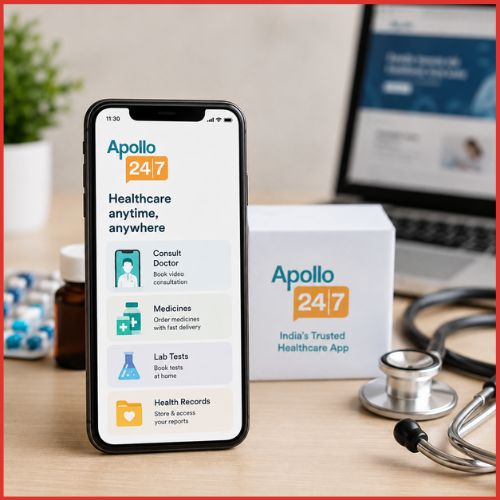
As we approach the year 2026, which is going to be a major stage in the digital transformation of healthcare due to the development of electronic health records, there has been a transition to the age of “intelligent orchestration.” The global healthcare information technology market is expected to grow by more than 15.48 per cent, reaching a market value of more than 1 trillion by 2026.
One of the most important steps to take now in order to enhance their clinical performance is to choose a company out of a large number of Healthcare IT Services Companies. Some of the top companies in this industry are listed below.
To start with, let’s talk about the top 10 healthcare IT service companies in 2026.
Top 10 Healthcare IT Services Companies Transforming Healthcare Delivery in 2026
1. Zymr
- Established: 2012
- Headquarters: Silicon Valley, USA
- Specialties: Engineering of healthcare software, cloud-native technology, artificial intelligence and data analytics, cybersecurity, DevSecOps
Company profile:
As a leader in cloud-native and highly efficient software engineering, Zymr offers best-in-class solutions for designing pipelines in healthcare information technology. The firm focuses on offering the full end-to-end solution in the development of secure pipelines that will transport confidential patient information directly to the cloud after point-of-care gadgets and devices. They focus on telemedicine startups and medical equipment manufacturers, proposing HIPAA-compliant cloud architecture design.
2. Accenture
- Founded: 1989
- Location: Dublin, Ireland
- Expertise: Healthcare IT consulting, digital transformation, cloud services, artificial intelligence, interoperability
Company profile:
Being one of the largest companies worldwide, Accenture is able to provide full-scale digital transformation. Its goal by 2026 is “Total Enterprise Reinvention,” where Generative AI is applied to streamline administrative tasks and enhance interactions between payers and providers. Accenture will be the preferred vendor of end-to-end hospital networks that wish to move their legacy systems to the sovereign cloud.
3. UST
- Established: 1999
- Headquarters: Aliso Viejo, CA, United States
- Services Provided: Healthcare IT services, Digital Engineering, Data Analytics & Automation
Company profile:
UST has established itself as amongst the pioneers of human-centric technology firms. It has done so by crafting its operations on the basis of the patient journey and through the use of advanced data analytics and AI platforms to design its operations on the basis of the patient journey. UST’s Smart Operations offerings assist hospitals in minimizing the leakage and improving accuracy in allocating resources via digital twins.
4. GE Healthcare
- Founded Year: 1994
- Headquarters: Chicago, Illinois, United States
- Core Competencies: Diagnostic Accuracy, Medical Imaging IT, Clinical Workflows, and Artificial Intelligence
Company profile:
GE Healthcare is one such company that is pioneering in integrating hardware and software. By 2026, their Edison Digital Health Platform will be acting as a vendor-neutral orchestrator, which will enable clinicians to integrate third-party applications in their diagnostics workflow. They have been the pioneers in the field of medical imaging IT turning unstructured imaging data collected in MRI and CT scans into predictive analytics in the fields of oncology and cardiology.
5. Cognizant
- Founded: 1994
- Location: Teaneck, NJ, USA
- Specialties: Healthcare Information Technology services; payer and provider software platforms; data analytics, cloud migration services
Company profile:
Cognizant excels at managing the business processes of healthcare. The company’s forte is its Revenue Cycle Management (RCM) and Claims Automation. With their experience in implementing machine learning into the “back-office” of healthcare, Cognizant enables healthcare providers to minimize claim rejections and keep the value-based care system sustainable.
6. Infosys
- Founded: 1981
- Headquartered: Bengaluru, India
- Specialties: Healthcare IT services, enterprise platforms, cloud migrations, AI solutions
Company profile:
Infosys leverages its Topaz AI platform to integrate healthcare systems that are inherently complicated. Infosys concentrates on minimising “data noise,” ensuring that physicians receive only critical data whenever necessary.
7. PwC (PricewaterhouseCoopers)
- Established: 1998
- Headquarters: London, United Kingdom
- Specialty: Healthcare IT consulting, digital strategy, compliance, data analytics
Company profile:
Although frequently mistaken for a consulting firm, PwC’s Healthcare IT division is the mastermind behind strategy development and execution. They assist organizations to maneuver through the large-scale M&A world of 2026, consolidating diverse IT systems.
8. Merative(formerly IBM Watson Health)
- Founded: 2022 (Heritage traced to IBM Watson)
- Headquarters: Ann Arbor, Michigan, USA
- Specialization: Healthcare data analytics, population health, clinical decision support
Company profile:
Merative taps into the vast data heritage from Watson Health to use it in real-world applications. They focus on “clearing the fog” of medical data to find actual clinical truths.
9. Innowise
- Date founded: 2007
- Company headquarters: Warsaw, Poland
- Area of expertise: Healthcare software development, telehealth solutions, and data integration
Company profile:
Innowise is a fast-growing technological partner that excels at solving what others call impossible engineering problems. The company focuses on technologies in niche markets, including 3D surgery simulations and complex IoT integrations for medical devices.
10. Binariks
- Year Established: 2014
- Location: Lviv, Ukraine
- Specialization: Interoperability, HL7 FHIR, and AWS/Azure/GCP Cloud Engineering
Company profile:
Binariks is an emerging leader in the 2026 ratings and is well respected for its niche expertise in Interoperability and FHIR. With the flexibility and expertise of a boutique partner in healthcare engineering, Binariks is able to assist health tech companies in quickly becoming compliant with some of the top electronic health record systems.
Market Stats to Know
| Metric | Figure |
| Global Healthcare IT Market (2025) | $354B |
| Projected Market Size (2032) | $981B |
| CAGR | 15.7% |
| Healthcare Digital Transformation Market (2026) | $98.5B |
| Health executives citing AI as a cost reduction driver | 64% |
| U.S. orgs using autonomous/semi-autonomous RCM (2026) | 30%+ |
| Clinician time saved via AI documentation tools | 15–20% |
| Denied claims from inaccurate patient data | ~35% |
Real World Examples of Healthcare Tech Impact
HealthTech companies are making a real difference to various systems of healthcare throughout the world. HealthTech organizations are generating tangible improvements across different healthcare systems around the world. An example of these forces is the ability of AI-based clinical documentation software to currently reduce paperwork and transition time for physicians to the patient’s bedside by approximately 20 percent.
Cloud-based interoperability platforms are accelerating patient diagnosis by allowing healthcare systems to securely share patient information across departments. Telemedicine systems are increasing access to healthcare by bringing it to rural areas and other underserved regions of the country and, by so doing, minimizing travel and related expenses. Furthermore, predictive analytics systems are already lowering readmission rates through early identification of patients with a high risk of illness.
Conclusion
The IT Services Companies in the healthcare sector have shifted to become not just vendors, but also the builders of our new paradigm of care. This may be in the form of cloud-native security services offered by Zymr, enterprise-grade services offered by Accenture, or unique interoperability solutions offered by Binariks. The companies are not perceived, but their influence cannot be overlooked.
The path towards building a smart hospital cannot be achieved overnight. When meticulously planned, a list of a service provider that fits your needs will mean raising the bar on the standards of care all your patients will receive when visiting your healthcare facility.
FAQ
1. What are the roles of a healthcare IT services organization?
The IT service organisations in the healthcare sector offer the technological solutions that must be in place to operate the modern medical centres. This includes the provision of EHR management, protection of healthcare systems against cybercrime, development of telehealth applications, and application of artificial intelligence in the clinical decision-making process.
2. What is the benefit of these services to the care of patients?
Their main advantages are that they provide real-time information that can be easily accessed by healthcare professionals, reduce the probability of human errors, offer the opportunity of remote monitoring of chronically ill patients, and earlier detect disease with the assistance of AI algorithms.
3. What are some of the services that hospital managers need to take into consideration?
One might want to look at IT vendors assuring interoperability (through HL7 FHIR), zero-trust cybersecurity, scalability in a cloud environment, and artificial intelligence-based clinical decision support. Staff training and support services are also essential in this regard.