Nobody buys a car for its crankshaft, and no soldier checks an artillery barrel’s metallurgy before it fires. Yet almost every axle, gear, and gun barrel built to survive extreme stress starts as forged steel the invisible discipline at the heart of this Baba Kalyani success story.
For over five decades, Kalyani has run Bharat Forge, the flagship company of the Kalyani Group, turning a domestic axle supplier into one of the world’s largest forging companies and one of the most frequently cited examples of an Indian manufacturing success story. The Baba Kalyani business journey is really about an engineer who refused to stay in his lane, and it doubles as a working blueprint for how the wider Indian forging industry could have scaled, had more firms taken the same risks.
His journey matters because it ran against how Indian industry usually grew through licences and protection, not exports and precision engineering. Read purely as a Baba Kalyani biography, it is also a case study in what patient, engineering-led capital can do for an automotive forging industry India otherwise built on cheap labour rather than deep technical capability.
Quick Glance
| Founder | Babasaheb Neelkanth (Baba) Kalyani |
| Company | Bharat Forge Limited, flagship of the Kalyani Group |
| Founded | 1961, by Neelkanthrao Kalyani, the original Bharat Forge founder |
| Sector | Forging, automotive components, aerospace, defence, energy, steel |
| Key Stat | Revenue of ₹15,122 crore (about $1.8 billion) in FY2025 (Bharat Forge, 2025) |
| Baba Kalyani Net Worth | Family valued at ₹25,158 crore (about $2.69 billion) on the 360 ONE Wealth Creators List 2026 (360 ONE, 2026) |
| Current Status | Chairman & Managing Director, Bharat Forge; #869 on Forbes’ 2026 Billionaires list (Forbes, 2026) |
Who Is Baba Kalyani?
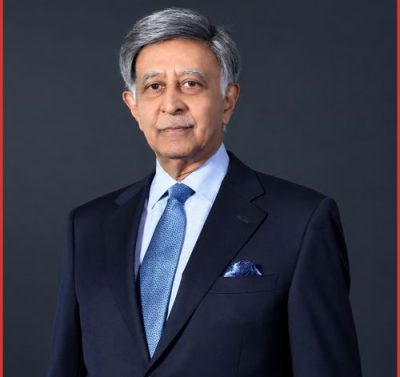
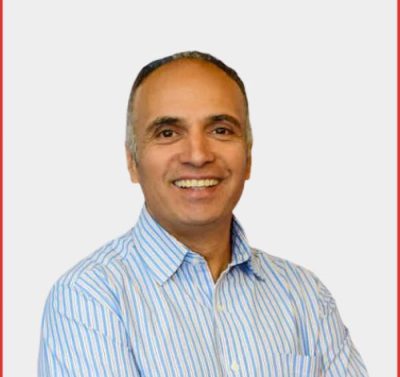
Babasaheb Neelkanth Kalyani was born in Pune in January 1949, into a family already running a forging business under his father, Neelkanthrao Kalyani. Any complete Baba Kalyani biography starts here, with a son inheriting not capital so much as an unglamorous, capital-intensive trade.
He earned a mechanical engineering degree from BITS Pilani in 1970, a master’s from MIT, then joined the family firm in 1972 as an engineer expected to prove himself, not an owner-in-waiting. That instinct still defines Kalyani Group business today, and it is the thread that runs through the entire Baba Kalyani business journey from that point on.
Baba Kalyani Net Worth
Net worth estimates for Baba Kalyani vary by source and year, which is typical for founder-promoter families whose wealth sits mostly in listed and unlisted group shareholding rather than cash. The 360 ONE Wealth Creators List 2026 valued the Kalyani family at ₹25,158 crore, or roughly $2.69 billion (360 ONE, 2026), while Forbes placed him at #869 on its 2026 Billionaires list (Forbes, 2026). Whatever the exact figure, Baba Kalyani net worth is built almost entirely on operating businesses – Bharat Forge, Kalyani Steels, and Kalyani Strategic Systems rather than passive investment, which is unusual even within the Indian forging industry.
The Beginning of Bharat Forge
Neelkanthrao Kalyani, the original Bharat Forge founder, set up the company in 1961 to supply forged axles and crankshafts to India’s small automobile industry. It stayed a regional supplier for a decade, limited by ageing presses and a business model built for local demand, not export.
When Baba Kalyani joined in 1972, his task was convincing a cautious family business to invest for global, export-grade customers. That single decision is arguably the hinge point of the entire Baba Kalyani business journey, and it set the tone for how the Kalyani Group business would be run for the next fifty years.
The Risk That Changed Bharat Forge Forever
The turning point wasn’t one deal it was spending ahead of demand. In 2002, Bharat Forge invested roughly $80 million in R&D, testing, and heavy-duty crankshaft machining capacity before the order book justified it (India Infoline, 2026).
A year later, in November 2003, it signed to acquire Carl Dan Peddinghaus GmbH (CDP), a 150-year-old German forger, instantly becoming the world’s second-largest forging company (New Equipment Digest, 2026) proof that building capacity before the market obviously needs it can reshape an entire competitive set, and a moment that Kalyani Group history keeps returning to as its defining bet.
How Baba Kalyani Built a Global Engineering Business
The Bharat Forge success story from here largely comes down to three overlapping bets: better engineering, tighter control of the supply chain, and manufacturing capacity outside India. Together, they explain why this remains one of the more durable Indian manufacturing success stories rather than a one-acquisition headline.
Technology and Innovation
Bharat Forge treats forging as an engineering discipline rather than a metal-bending trade. The company runs dedicated R&D and testing facilities and has pushed into simulation-driven design, so components are engineered for load tolerances before a single piece of steel is heated.
A forge doesn’t care about brand loyalty it cares whether the part survives the load, and that was the only pitch Kalyani ever needed to grow Bharat Forge into a serious global engineering business.
That shift, from making a part to specifying exactly how it fails under stress, is what allowed Bharat Forge to move from conventional automotive forging into aerospace and defence-grade components, where the margin for error barely exists, and it is a large part of why the automotive forging industry India built now looks so different from where it started.
Backward Integration
Kalyani Steels was set up in 1973 to meet the group’s own need for forging-grade steel, later scaling through Hospet Steels in Karnataka (Kalyani Steels, 2026). Roughly half to sixty per cent of its output still goes to group companies (CARE Ratings, 2025), which is a quiet but essential part of Kalyani Group business that rarely makes headlines.
Global Expansion
The CDP acquisition in Germany (2003–04) was followed by Imatra Kilsta in Sweden, Scottish Stampings, and a China joint venture with FAW (New Equipment Digest, 2026); the Federal Forge deal added a US base plants built inside the markets Bharat Forge sold into, years ahead of most Indian firms in the Baba Kalyani business journey and in the Indian forging industry more broadly.
From Automotive Components to Multiple Industries
Bharat Forge’s core strength has always been automotive forgings axles, crankshafts, and chassis components for passenger cars and commercial vehicles, the traditional backbone of the automotive forging industry India relied on through the 1980s and 1990s. But the company deliberately stopped depending on one industry’s cycle.
Diversification
| Aerospace | Forged and machined components for aircraft structures and engines |
| Defence | Artillery systems, armoured vehicles, ammunition, and marine platforms through Kalyani Strategic Systems |
| Railways | Forged components for locomotives and rolling stock |
| Energy | Components for oil and gas, power generation, and wind turbines through Kenersys |
| Construction & Mining | Heavy engineering components for construction and mining equipment |
| Industrial Engineering | General engineering products, including presses and material handling equipment |
Diversification also insulated Bharat Forge from a problem specific to the automotive forging industry India built its early reputation on single-customer, single-cycle dependency that many domestic component makers in the Indian forging industry never grew out of.
Baba Kalyani and India’s Defence Manufacturing
Bharat Forge entered defence manufacturing through Kalyani Strategic Systems Limited (KSSL), which the company took to full ownership in 2021 (Wikipedia, 2026). It builds artillery systems, protected vehicles, ammunition, and marine unmanned platforms largely a business-to-government segment, as joint managing director Amit Kalyani has described it (Forbes India, 2025).
The flagship product is ATAGS, the Advanced Towed Artillery Gun System, a 155mm/52 calibre howitzer developed with DRDO. After more than a decade of trials, the government approved a contract for 307 ATAGS guns and 327 towing vehicles worth close to ₹6,900 crore (Forbes India, 2025). Indigenous content in the platform has been pushed above 80 per cent (Indian Defence Research Wing, 2025).
KSSL has also unveiled the MArG series, mounted artillery guns on 4×4 vehicles, a configuration previously thought too heavy for that class of vehicle, and has exported guns to Armenia, the United States, and the UAE including becoming the first Indian company to supply artillery cannons to the US, in partnership with AM General (ThePrint, 2026).
In Baba Kalyani’s own assessment, the defence vertical is likely to overtake the company’s original automotive components business as its largest revenue segment (Forbes India, 2025) a striking statement from a company that built its name on truck axles, and further evidence of how far the Baba Kalyani business journey has travelled from where the Bharat Forge founder started it.
Baba Kalyani’s Business Empire and Kalyani Group
The Kalyani Group, founded in the mid-1960s, now spans engineering steel, automotive components, industrial products, renewable energy, urban infrastructure, and specialty chemicals, with a group turnover of more than $3 billion and manufacturing across India, Germany, Sweden, and China (Kalyani Steels, 2026).
That expansion steel, forging, defence, energy, and chemicals spread across four countries is really the backbone of Kalyani Group history, more than any single acquisition, and it is what most people mean when they refer loosely to “Kalyani Group business” rather than to Bharat Forge alone.
Kalyani Group Businesses
| Bharat Forge | Flagship company; automotive, industrial, aerospace and defence forgings |
| Kalyani Steels | Forging-grade carbon and alloy steel; backward integration for the group |
| Kalyani Strategic Systems | Defence: artillery, armoured vehicles, ammunition, marine platforms |
| Kenersys | Wind turbine design and manufacturing for renewable energy |
| Global joint ventures | Meritor, Carpenter Technology, Maxion Wheels, FAW Corporation, Alstom, David Brown |
The group’s approach to those joint ventures has been consistent: partner for market access and technology, then build internal capability rather than trying to out-compete established players from a standing start a pattern that recurs throughout Kalyani Group history.
Bharat Forge Revenue, Growth and Business Strategy
Bharat Forge reported revenue of ₹15,122 crore, roughly $1.8 billion, in FY2025 (Bharat Forge, 2025). The more recent quarter tells a more complicated story: consolidated net profit for Q2 FY26 rose 23 per cent year-on-year to ₹299 crore, even as standalone revenue fell 7.5 per cent sequentially because commercial vehicle exports to North America dropped 16 per cent (Business Standard, 2025).
That gap between consolidated growth and standalone weakness is the diversification strategy working in real time defence and domestic manufacturing offset a genuine slowdown in exports to one region. The company’s defence order book alone stood at ₹9,467 crore by the second quarter of FY26 (Business Standard, 2025).
On the growth side, Bharat Forge has spun off its electric mobility unit into a separate subsidiary, Kalyani Powertrain, to build EV components without diverting management attention from the core forging business (Forbes, 2026). Combined with continued investment in aerospace and defence platforms, the strategy is less about chasing every new trend and more about not missing the ones with a decade-long runway consistent with how Kalyani Group business has always allocated capital.
Awards and Recognition
Baba Kalyani received the Padma Bhushan, India’s third-highest civilian award, in 2008 for his contribution to trade and industry (Wikipedia, 2026).
| Padma Bhushan (2008) | India’s third-highest civilian honour, for contribution to trade and industry |
| Order of the Rising Sun (2019) | Japan’s national honour for international achievement |
| Bundesverdienstkreuz (2012) | German Cross of the Order of Merit, for contribution to bilateral industrial ties |
| Royal Order of the Polar Star | Swedish honour recognising his industrial contribution |
| Legion of Honour | One of France’s highest distinctions awarded to a foreign national |
| ASME Holley Medal (2025) | American Society of Mechanical Engineers award for engineering leadership with global impact |
| Honorary Doctorates | Deakin University (Australia), IIT Kharagpur, and KLE Technological University, among others |
The ASME Holley Medal is worth noting specifically. It is one of the oldest engineering awards in the world, established in 1924, and it recognised Kalyani’s engineering-led approach to navigating global supply chain disruption (ASME/Adda247, 2025 recognition that sits alongside the rest of any serious Baba Kalyani biography.
Conclusion
Strip away the acquisitions and the artillery contracts, and what’s left is a fairly simple pattern: spend on capability before the order book justifies it, then diversify into sectors that can use the same underlying engineering skill. That pattern is really what the Baba Kalyani success story comes down to, and it is why the Baba Kalyani business journey keeps getting taught as a template for the Indian forging industry.
Bharat Forge’s shift from truck axles to artillery systems and aerospace components is the clearest evidence the approach worked, even if exposure to markets like North American trucking shows the risk never fully disappears. The more durable takeaway is less about forging specifically and more about what long-term industrial thinking looks like in practice: spend ahead of demand, own more of the supply chain, and diversify into what you’re already good at, not into what’s currently fashionable. Whether measured by Bharat Forge’s global scale, Kalyani Group history, or Baba Kalyani net worth, this remains one of the clearer Indian manufacturing success stories of the last fifty years.
Frequently Asked Questions
1. What is Baba Kalyani famous for?
Baba Kalyani is known for transforming Bharat Forge from a domestic auto-parts supplier into one of the world’s largest forging companies. His work forms one of the more studied examples of an Indian manufacturing success story, spanning automotive, aerospace, and defence components.
2. When did Baba Kalyani join Bharat Forge?
He joined Bharat Forge in 1972, shortly after completing his master’s degree at MIT, and gradually took over from his father, Neelkanthrao Kalyani, the original Bharat Forge founder.
3. Who founded Bharat Forge?
Neelkanthrao Kalyani founded Bharat Forge in 1961 to supply components to India’s early automobile industry. His son Baba Kalyani later expanded it into a global player across the Indian forging industry.
4. What sectors does the Kalyani Group operate in?
The Kalyani Group business spans automotive and industrial forgings, aerospace, defence systems, oil and gas components, and renewable energy, including wind turbines through its Kenersys venture.