Introduction
India’s manufacturing sector is revolutionising; this was evident from the fact that manufacturing accounted for between 16% and 17% of India’s GDP, while the last two sets of GDP data reported the sector growing at a rate of 7.3%. The latest set of industrial production data also showed output in manufacturing grew by a rate of 6.2%, driven by resurgent demand in a host of key sectors, including renewables and electronics, as well as automotive and food processing.
Government policies like Make in India, PLI (Production Linked Incentive) schemes, development of infrastructure, and growth in domestic consumption are opening up new markets for entrepreneurs. The manufacturers are eager to spread their supply chains and minimize their dependency on imports, and India is emerging as a favored manufacturing destination.
For the entrepreneur, this represents an enormous opportunity. But not all manufacturing businesses have the same scope for growth. Some industries have the advantages of state backing, rapidly emerging markets, and emerging long-term trends for demand.
In this article, we will discuss the most money-making manufacturing business ideas to start up in India, Market Opportunities, Investment, Drivers, and Future Potential.
Why Manufacturing Businesses Are Growing in India
Several factors are facilitating growth in manufacturing across India.
First of all, government efforts have been intensified by the application of PLI schemes, enhanced spending on infrastructure, and policies to promote domestic manufacturing. Secondly, the large consumer market of India is continuing to adapt to and demand items such as electric consumer appliances, vehicles, packaged food, and healthcare offerings.
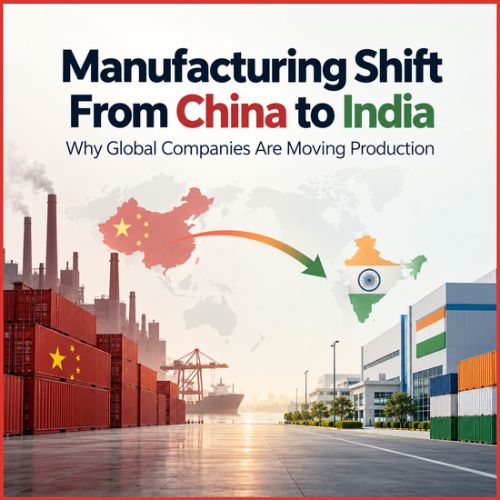
Meanwhile, multinationals around the world are diversifying their supply chains, creating a good opportunity for Indian manufacturers to access export markets. Despite the recovery of the global economy, the increasing usage of machines and automation makes businesses more productive and profitable.
These trends are lending themselves to opportunities for entrepreneurs entering high-growth manufacturing categories.
1. Solar Panel Manufacturing
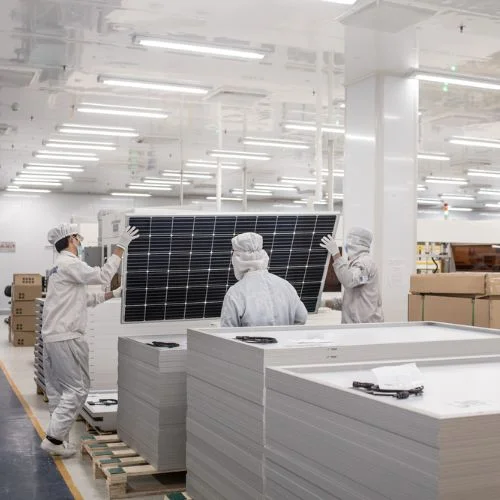
India has experienced growth in the renewable energy sector. India achieved the second position in the world by the addition of annual solar capacity in 2025, over large economies like China, the US, Germany, Japan, etc. Total installed solar capacity is about 132.85 GW, and the solar modules manufacturing capacity addition in India is about 119 GW in 2025, respectively.
Along with the government’s renewable energy targets, rising demand from commercial, industrial, and residential users continues to provide a powerful incentive for investment in solar infrastructure.
Why It Is Profitable
- Strong government support
- Growing domestic demand
- Import substitution opportunities
- Expanding export potential
Investment Level
High
Future Outlook
With India targeting very ambitious renewable energy targets, the solar manufacturing sector is likely to continue being one of India’s fastest-growing industrial segments.
2. Electronics Components Manufacturing
India has developed itself into a manufacturing hub for electronics across the globe. The government has approved projects amounting to above 55 billion to boost the growth of electronics components manufactured in India. The electronics manufacturing industry is estimated to grow from around 1.46 trillion to 6 trillion in FY2027.
Growing sales of smartphones, consumer electronics, IoT gadgets, and industrial automation systems are fueling a continuous requirement for locally manufactured components.
Why It Is Profitable
- Rapid industry growth
- Government incentives
- High-value products
- Strong export opportunities
Investment Level
Medium to High
Future Outlook
Electronics manufacturing is expected to emerge as one of the most strategic industries in India in the next ten years.
3. EV Components Manufacturing
The Indian electric vehicle market is still drawing vast amounts of money from car makers and investors. Demand for batteries, chargers, controllers, motors, BMS (battery management systems), and other components is growing as electric vehicle use rises.
Numerous EV companies are increasing plant capacity, indicative of optimism for future demand.
Why It Is Profitable
- Rising EV adoption
- Government support for electrification
- Expanding supplier ecosystem, long-term growth potential
Investment Level
Medium to High
Future Outlook
The movement away from conventional cars towards electric transport will lead to a high demand for the suppliers of the components.
4. Food Processing Manufacturing
Overall, India’s food processing offers the largest manufacturing opportunities due to its sheer size of agricultural production and consumer market.
Demand for packaged foods, ready-to-eat foods, frozen foods, health foods, and convenience foods is on the rise among urban consumers.
Why It Is Profitable
- Consistent consumer demand
- Large domestic market
- Export opportunities
- Product diversification potential
Investment Level
Low to High
Future Outlook
The long-term industry growth can be supported by population growth and varying consumer lifestyles.
5. Sustainable Packaging Manufacturing
With various industries shifting away from conventional plastics, a rising call for environmentally responsible packaging is evident. As consumers look more closely at the environmental impacts of their buying choices, companies in the e-commerce, retail, FMCG, food delivery, and healthcare markets are looking for green packaging options.
Products made from biodegradable packaging, paper-based containers, molded fiber packaging, and recyclable materials are gaining traction.
Why It Is Profitable
- Regulatory support
- Growing corporate demand
- Sustainability trends
- Expanding e-commerce sector
Investment Level
Medium
Future Outlook
Environmental regulations and consumer preferences will also reinforce, further increasing the strength of demand.
6. Pharmaceutical Manufacturing
India is one of the world’s leading producers of pharmaceuticals. Thanks to growing health expenditure, rising exports, and increasing demand for generic medicines, pharmaceutical manufacturers in India are expected to benefit from significant opportunities.
Contract manufacturing and those specializing in drug production are other challengers also emerging as attractive segments.
Why It Is Profitable
- Strong domestic demand
- Global export market
- High-value products
- Industry expertise already established
Investment Level
High
Future Outlook
Healthcare demand growth will remain steady as the future population increases and people gain better access to healthcare.
7. Auto Components Manufacturing
India is still one of the world’s largest car markets. Car manufacturers demand thousands of parts, where a manufacturer of precision components for car parts would find opportunities.
Products consist of engine components, braking systems, transmission systems, electrical systems, and aftermarket products.
Why It Is Profitable
- Large customer base
- Export opportunities
- Strong OEM demand
- Established supply chain
Investment Level
Medium to High
Future Outlook
Annual production of traditional vehicles and electric vehicles is expected to keep the demand going.
8. Technical Textile Manufacturing
Technical textiles cater to the requirements of diverse sectors, including healthcare, construction, automotive, defense, infrastructure, and agriculture.
Technical Textiles, as opposed to traditional textiles, whether in the field of functional textiles or in the design textiles field, offer excellent margins because the emphasis is on performance and functionality.
Why It Is Profitable
- Specialized applications
- Export demand
- Government support
- Higher value products
Investment Level
Medium
Future Outlook
Long-term growth is likely to be sustained by infrastructure and the development of industry.
9. Agricultural Equipment Manufacturing
Mechanization remains a vital component of the continuing modernization of Indian agriculture. Farmers are acquiring machinery that both enhances productivity and lessens reliance on human effort.
Mechanical products are also still in demand, for instance, irrigation systems, seeders, harvesters, and small farm machinery.
Why It Is Profitable
- Large agricultural market
- Government support
- Growing mechanization
- Rural demand
Investment Level
Medium
Future Outlook
Further agricultural modernization is expected to create additional opportunities for equipment manufacturers.
10. Battery and Energy Storage Manufacturing
Energy storage has become an essential element of renewable energy systems, electric vehicles, and backup power supplies.
As the adoption of solar and sales of electric vehicles continue to rise, advanced battery technologies are projected to experience a large increase in demand.
Why It Is Profitable
- Supports multiple industries
- Growing renewable energy sector
- EV market expansion
- Strategic industry importance
Investment Level
High
Future Outlook
Battery manufacturing is anticipated to be a central pillar of India’s transition to cleaner fuels.
Key Factors to Consider Before Starting a Manufacturing Business
Before investing in any manufacturing venture, entrepreneurs should evaluate:
- Initial capital requirements
- Market demand
- Government incentives
- Regulatory compliance
- Supply chain availability
- Technology requirements
- Scalability potential
- Competitive landscape
Choosing an industry with high demand, attractive economics, and long-term growth forward indicators can be a key to success.
Conclusion
India’s manufacturing sector is entering a strong growth phase, driven by evolving industrial policies, infrastructure investments, technology adoption, and rising consumer demand. Industries such as solar panels, electronic components, EV components, food processing, and sustainable packaging are benefiting from multiple growth drivers that support their long-term expansion.
Although manufacturing businesses require careful planning and investment, entrepreneurs who choose high-growth industries can position themselves to benefit from India’s evolving industrial landscape. Manufacturing is expected to remain one of the most attractive sectors for building a long-term profitable business as India continues to strengthen its role in global supply chains.
FAQs
1. Which manufacturing business is the most profitable in India?
Solar panel manufacturing, electronic components manufacturing, electric vehicle components manufacturing, and pharmaceutical manufacturing are the top-most lucrative manufacturing businesses in India, as these are in high demand in the market, government subsidized, and have the prospects of long-term growth.
2. What is the best manufacturing business to start with low investment?
Many processing, packaging, small-scale agri-machineries, as well as a few textile manufacturing entrepreneurship can be started with relatively less investment compared to electronics or pharmaceutical manufacturing sectors.
3. Which manufacturing sectors are growing the fastest in India?
India has the following fastest growing manufacturing industries:/ Renewable energy/ electronics manufacturing/ electric vehicle manufacturing/ battery manufacturing/ technical textiles/ sustainable packaging.
4. How much capital is required to start a manufacturing business in India?
The cost of investment varies with the industry. It is a few lakhs in the case of small-scale food processing/packaging units. In the case of solar panels/electronics/far/machine manufacturing, it could be from a few crores to hundreds of crores.
5. What government schemes support manufacturing businesses in India?
Entrepreneurs can benefit from government initiatives such as Make in India, Production Linked Incentive (PLI) schemes, Micro, Small & Medium Enterprise support programs, Startup India, Credit Guarantee schemes, and various state-level incentives that support manufacturing growth.
6. Is manufacturing a good business opportunity in India in 2026?
Yes. Manufacturing is still growing in India based on growing domestic consumption, increased exports, infrastructure developments, diversification of the supply chain, and government policy measures for the promotion of local goods. It is one of the most promising industries for entrepreneurs in 2026.