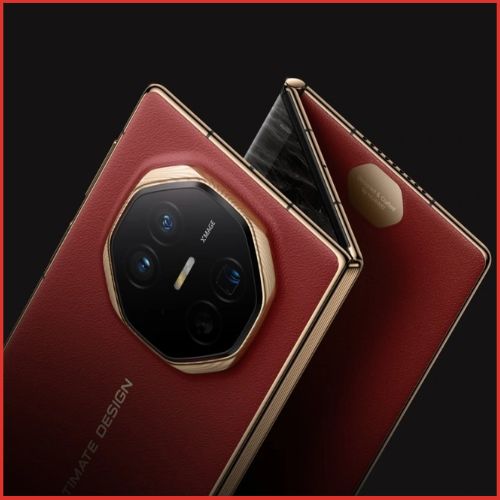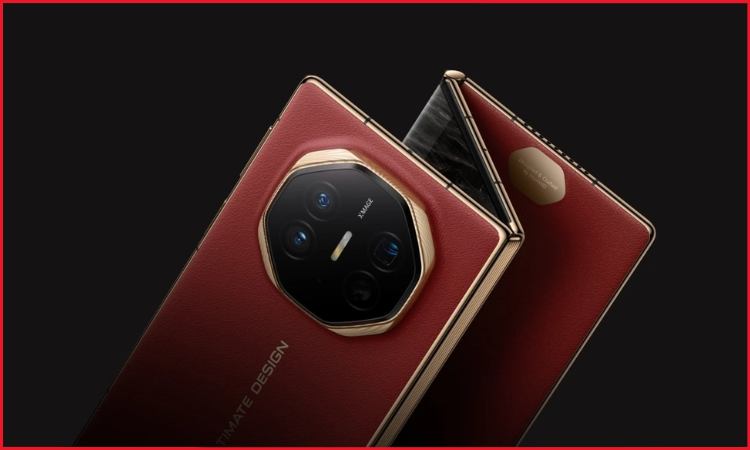
Huawei has launched the Mate XT2, a new premium smartphone that unfolds twice to create a tablet-sized display, as competition intensifies in China’s foldable-device market.
Prices for the Huawei Mate XT2 begin at 19,999 yuan, or approximately $2,980, and rise to 24,999 yuan, or about $3,725. Sales in China will start on September 12. Huawei has not confirmed an international release schedule.
The entry-level model includes 16GB of RAM and 256GB of storage. The 16GB and 512GB version costs 21,999 yuan, while the standard 1TB configuration has been priced at 23,999 yuan.
A separate 16GB and 1TB version with Huawei’s privacy-display technology costs 24,999 yuan. The additional screen feature adds 1,000 yuan to the price of the regular 1TB model.
Huawei Executive Director Richard Yu said pricing was challenging because memory costs had increased and the company had introduced several new technologies. The range remains firmly positioned as a luxury device rather than a mainstream replacement for a conventional smartphone.
New Folding Design Protects the Main Screen
The Mate XT2 uses a redesigned inward-folding structure. Both sides of its flexible panel fold towards the centre, protecting the larger display when the device is closed.
This represents a notable change from the original Mate XT and its successor, the Mate XTs. Those phones used an accordion-style design that allowed one section of the flexible screen to remain visible when folded but also left part of the panel exposed.
Huawei’s new arrangement uses a dedicated external display for routine smartphone tasks. Opening both hinges reveals a 10.2-inch flexible screen, giving users a larger working area for videos, reading, multitasking and productivity applications.
The design is technically demanding because two hinges must move together while controlling the stress placed on the flexible panel. Foldable displays are also more vulnerable to impact and wear than conventional glass screens, making the inward-folding structure an important durability change.
Huawei has improved the phone’s resistance to water, with the Mate XT2 carrying an IP59 rating. The certification covers controlled testing against dust and high-pressure water exposure, but it does not mean the device is permanently waterproof.
The company has also introduced a privacy OLED option on the most expensive version. When activated, the display limits the angles from which its content can be viewed. The screen remains visible to the person directly in front of it while appearing considerably darker to someone looking from the side.
The feature is designed for users handling messages, documents or financial information in public places. It is hardware-based rather than a removable privacy film, but buyers must select the 24,999-yuan model to receive it.
The Mate XT2 also has an upgraded triple-camera system. Huawei has not announced a lower-priced model with fewer cameras, meaning the primary differences across the range are storage capacity and the optional privacy display.
Kirin 9050 Pro Introduces LogicFolding Architecture
Huawei’s new Kirin 9050 Pro processor powers every model in the series. The company says the chip provides more computing power while consuming less electricity than its previous generation.
The processor introduces an architecture called LogicFolding, which arranges logic components across multiple layers and uses vertical connections to shorten the distance travelled by signals inside the chip.
LogicFolding forms part of Huawei’s wider “Tau Scaling Law” approach, unveiled in May. The company is using chip-design and packaging methods to achieve performance improvements without depending entirely on conventional reductions in semiconductor size.
Huawei claims the Mate XT2 delivers a 42% improvement in overall performance compared with its predecessor. That figure comes from the company’s testing and will need to be assessed through independent reviews under sustained gaming, multitasking and productivity workloads.
A foldable phone must also manage heat within a body divided into several thin sections. Real-world performance will depend on cooling, software optimisation and whether the processor can maintain its speed during longer tasks.
The Mate XT2 arrives as Huawei attempts to protect its position in China’s high-end smartphone market. Huawei accounted for 22.6% of Chinese smartphone shipments during the second quarter, according to IDC. Apple held 18.1%, while Xiaomi had a 12.4% share.
Huawei’s position is even stronger in foldable phones. Smart Analytics Global estimated that it accounted for 68% of foldable-device shipments in China during the same quarter.
That lead will face a fresh test as other major brands introduce competing products. Xiaomi was preparing to unveil a rival foldable phone later on Monday, while Apple is scheduled to present its latest iPhone range on September 9. Reports suggest Apple could introduce its first foldable model, although the company has not confirmed the product’s name or specifications.
Xiaomi shares declined approximately 3% in afternoon trading following Huawei’s announcement. The movement reflected the market’s attention on the increasingly competitive premium-device category, although a single trading session does not establish the long-term commercial effect of the launch.
Tri-fold phones remain expensive and more complicated to manufacture than standard handsets. Their larger screens can support productivity and entertainment, but weight, durability, application optimisation and repair costs remain practical concerns.
Huawei is using the Mate XT2 to show that the tri-fold format can progress beyond an experimental first generation. The new protected display, Kirin 9050 Pro processor and privacy-screen option address specific areas of design, performance and business use.
The next measure will be customer demand when Chinese sales begin on September 12—and whether Huawei eventually decides to offer the device outside its domestic market.
Also Read: iPhone 18 Pro Pre-Orders