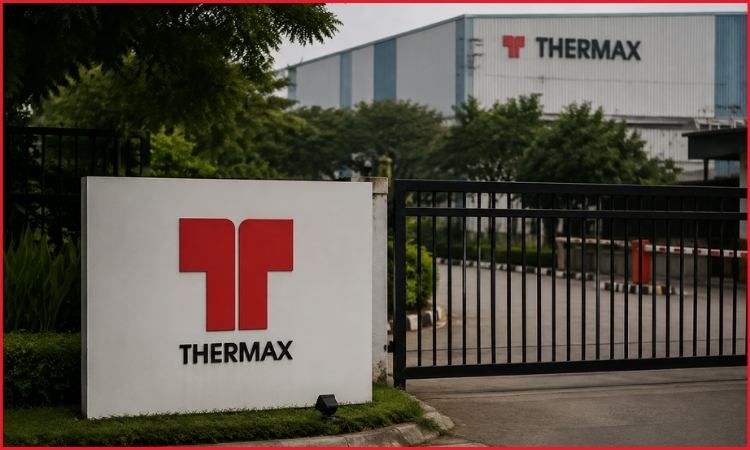
A Belgian joint venture fell apart in Pune in 1980, just as its founder was stepping back from daily operations. Most small industrial firms would have struggled to survive that kind of rupture.
This Thermax Success Story turns on what happened instead. A. S. Bhathena had built Wanson India in 1966 to manufacture boilers for a closed, protectionist economy. When the Belgian partnership ended in 1980, his son-in-law Rohinton Aga renamed the company Thermax and took over as Chairman and Managing Director the following year.
Aga had no formal engineering background. He built the company anyway, layering cooling, water treatment, and pollution-control businesses onto the original boiler line. Sixteen years later, his sudden death in 1996 handed control to his widow, Anu Aga, a trained social worker who had only recently joined the firm’s HR function.
Their daughter, Meher Pudumjee, now chairs a company with operations across India, Europe, and Southeast Asia. Three generations, one boiler business, and a habit of surviving succession shocks that would have broken most family enterprises that is the short version of how Thermax got here.
Quick Glance
| Founder | A. S. Bhathena (Wanson India, 1966); leadership carried forward by Rohinton Aga, Anu Aga, Meher Pudumjee |
| Company | Thermax Limited |
| Founded | 1966 (renamed Thermax in 1980) |
| Sector | Energy, environment and chemical engineering: boilers, cooling, water treatment, pollution control |
| Key Stat | Rs 10,694 crore consolidated revenue in FY 2025-26 (Thermax Annual Report, 2026) |
| Current Status | Listed on BSE and NSE; chaired by Meher Pudumjee, fourth generation of the founding family |
The Early Journey
A. S. Bhathena did not set out to build an engineering conglomerate. Wanson India began in 1966 as a joint venture with a Belgian boiler maker, producing package boilers for factories that had almost no import options under India’s closed economy.
The business stayed small and mechanical for over a decade: steady demand, thin margins, no dramatic growth. Bhathena ran it like a workshop, not an empire.
Everything shifted in 1980. Bhathena retired, and the Belgian tie-up ended, with Wanson India renamed Thermax that same year. His son-in-law Rohinton Aga took charge the following year, appointed Chairman and Managing Director in 1981. Aga had trained in the arts, not engineering, an odd fit for a Thermax industrial boiler business, on paper.
He compensated by hiring technical talent aggressively and pushing the company past boilers alone, into heat recovery, refrigeration, and pollution-control equipment through the 1980s.
Turning A Boiler Company Into An Engineering Business
Rohinton Aga did not inherit a company that needed saving. He inherited one that needed a bigger purpose.
Bhathena had built a reliable boiler maker. Aga wanted something wider – an integrated engineering company that could help Indian industry manage energy and environmental problems together, not as separate line items. That belief eventually became the company’s identity, not just a slogan attached to it.
The ambition showed up in what Thermax launched, not just in what it said. Thermopac, introduced in 1967, brought thermal oil heating to Indian factories and became something close to a generic name for the category. By 1975, rising crude oil prices had pushed the company into solid-fuel boilers through its Multitherm range, alongside a fresh entry into water treatment.
The environmental push came next. Thermax set up its Enviro division for air pollution control equipment in 1979, well before pollution control became a boardroom priority for most Indian manufacturers. Cogeneration followed in 1981, letting factories generate power from waste heat instead of buying all of it from the grid.
Product engineering kept pace with the strategy. The Revotherm shell-type reverse-flame boiler arrived in 1982 through a technical collaboration with Switzerland’s Ygnis, and the coil-type Revomax followed in 1988. A year later, Thermax formed a joint venture with Babcock & Wilcox to chase larger boiler contracts and turnkey EPC projects – work a single-product boiler company could never have won on its own.
None of this happened as one grand plan laid out in advance. It happened as a series of specific bets, each one building on what the last had already proven out. That incremental pattern is arguably the most overlooked part of this Thermax history: the company diversified by solving one adjacent industrial problem at a time, rather than chasing a broad vision all at once.
Building The Business
Product Diversification
Aga added absorption chillers and captive power equipment on top of the businesses above, turning a single-product boiler maker into a multi-division engineering house over the course of the 1980s.
The Combipac boiler, designed to burn agro-waste like rice husk and sawdust, became one of the company’s more distinctive later bets built for Indian factories that had cheap biomass on hand and no easy access to imported fuel technology.
Revenue Model
Thermax earns from three broad lines: equipment sales, engineering-procurement-construction (EPC) contracts for large boilers and power plants, and after-sales service. The EPC business carries lower margins but locks in long-term client relationships that feed repeat equipment orders.
By FY 2025-26, the company reported consolidated revenue of Rs 10,694 crore, up 3.1 percent year-on-year, with order booking climbing 34.2 percent to Rs 13,871 crore (Thermax Annual Report, 2026).
Growth Strategy
Export orders and overseas manufacturing became the second growth lever. Thermax now runs plants in India, Poland, and Southeast Asia, a bet on manufacturing diversification not unlike the moves covered in Tata Group’s recent strategic shifts, where geographic and portfolio spread became a deliberate hedge against a single market’s cycle.
This Thermax business growth story also leaned on segment diversification – industrial products, industrial infrastructure, green solutions, and chemicals.
Growth & Turning Points
| 1966 | Founded as Wanson India by A. S. Bhathena, manufacturing package boilers under a Belgian joint venture |
| 1980 | Belgian partnership ends; Wanson India renamed Thermax |
| 1981 | Rohinton Aga appointed Chairman and Managing Director |
| 1995 | Thermax lists on the Bombay Stock Exchange |
| 1996 | Rohinton Aga dies suddenly; Anu Aga takes over as Chairperson |
| 2004 | Anu Aga retires; daughter Meher Pudumjee becomes Chairperson |
| 2026 | Thermax cross-lists on the National Stock Exchange; consolidated revenue reaches Rs 10,694 crore |
Each handover happened under pressure, not by plan. Aga’s own health scare in 1982 a heart attack followed by a paralytic stroke during bypass surgery – had already pulled Anu Aga into the business years before she was forced to lead it outright.
That earlier, accidental apprenticeship in HR and operations is likely why the company held together after 1996, even with an economy in recession and a chairperson who had never run a factory floor.
Challenges
The 1996 leadership transition was the company’s most visible risk. Anu Aga inherited Thermax during a downturn in Indian industrial demand, with a workforce and board that had never reported to a chairperson with a social-work background rather than an engineering one.
She restructured aggressively, including layoffs that shrank the company an unpopular but, by most later accounts, necessary correction that stabilized margins through the late 1990s.
A second, quieter risk sits in the ownership structure itself. Family-run listed companies concentrate authority in a small group; Thermax has managed it by keeping a majority-independent board, but that tension between family control and public shareholders shows up across other family-led conglomerates too, including the Tata Group’s various companies such as Voltas, where a single promoter family still sets long-term direction for a publicly listed entity.
Conclusion
Thermax’s real asset was never a single boiler design. This Indian engineering company success story is really about how ownership got passed down without the business itself losing direction.
Three generations have now run Thermax without a clean handover ever working out as planned: the founder retired mid-crisis, the second-generation chairman died in office, and his successor took over an unfamiliar factory floor during a recession. What held the Thermax family business together each time was a habit of hiring for gaps in leadership rather than pretending those gaps didn’t exist. That is a more transferable lesson for other founder-led firms than anything about boilers specifically.
Frequently Asked Questions
1. Who founded Thermax and when?
A. S. Bhathena founded the company in 1966 as Wanson India, a joint venture with a Belgian boiler manufacturer. It was renamed Thermax in 1980 after the partnership ended.
2. Is Thermax a family-run business?
Yes. Leadership has passed through three generations of the same family — from A. S. Bhathena to his son-in-law Rohinton Aga, then to Rohinton’s wife Anu Aga, and now to their daughter Meher Pudumjee, who chairs the company.
3. What does Thermax manufacture?
Thermax makes industrial boilers, absorption chillers, water treatment and waste-recycling systems, air pollution control equipment, and performance chemicals, serving sectors from steel to textiles.
4. How big is Thermax today?
Thermax reported consolidated revenue of Rs 10,694 crore in FY 2025-26, with order booking of Rs 13,871 crore, and operates manufacturing facilities in India, Europe, and Southeast Asia.
5. Why did Anu Aga take over as Thermax chairperson?
Her husband, Rohinton Aga, died suddenly of a heart attack in 1996. Despite having no engineering background, Anu Aga stepped in as Chairperson and led the company through a difficult industrial downturn until her retirement in 2004.
6. Is Thermax listed on stock exchanges?
Yes. Thermax was listed on the Bombay Stock Exchange in 1995 and added a listing on the National Stock Exchange in 2026, decades into its history as a public company.
Read also: Tata Group Success Story: Journey of India’s Biggest Business Empire