Before CaratLane, jewellery purchases in India typically involved visiting stores, comparing designs with no time to think about which design you really liked, negotiating hard, and relying on trust.
CaratLane reshaped the jewellery-buying experience in India.
CaratLane, founded in 2008 by Mithun Sacheti & Srinivasa Gopalan, was among India’s earliest online jewellery start-ups before evolving into becoming a seamless omnichannel jewellery retailer backed by industry leader Titan (Tata group).
In this article, this article examines:-
How does this digital-first jewellery brand use its trust-building tech and design to create an all-new retail engine?
This article explores what makes the business model of the platform so compelling — besides selling jewellery online! From their focus on contemporary designs with accessible price points to using virtual try-on as well as leveraging data for effective merchandising, CaratLane does more than sell jewellery, but has reimagined how you buy jewellery online too, by setting up physical stores.
CaratLane’s Core Business Model
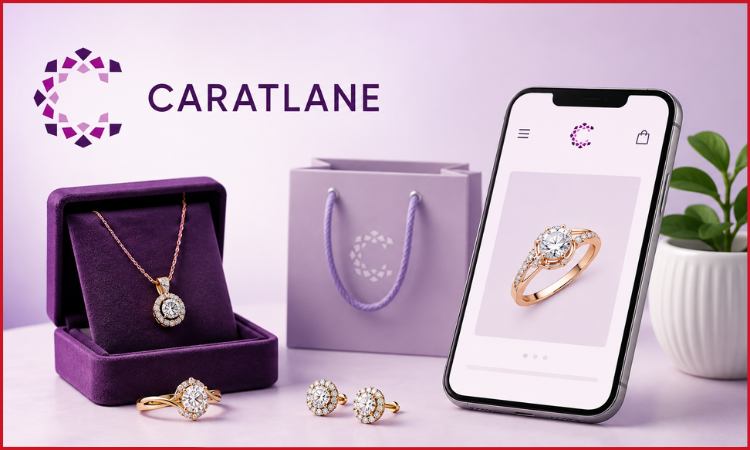
At the core, CaratLane’s business is about selling jewellery via an omnichannel (direct-to-consumer) approach — through its website, app or retail stores.
As described in Titan’s brand page — “CaratLane is an omnichannel brand that offers contemporary jewellery that’s affordable, accessible, and meant to be worn every day.”
As opposed to buying your usual stuff online which can often leave you anxious about the quality, design, price and authenticity of what you’re purchasing. This model minimizes those anxieties while still being able to tap into the huge benefits of running a direct to consumer online business. That’s why we think of CaratLane as a sort of trust building funnel, from inspiration to conversion.
Why CaratLane Worked: It Understood the New Jewellery Consumer
At the time, we noticed what many brands may have missed — the fact that customers didn’t just look at us for financial investments but wanted products that reflected their identities, celebrated their milestones and catered to their lifestyles,” says its official content about our millennial customer base here. “As an evolving business, we focussed on becoming a partner to those who were confident in making informed choices based purely on style and emotion rather than price alone.”
“While there are other factors which influence buying decisions such as impulse buys and everyday usability, there is no doubt that aligning with people’s salary cycles and occasions has been key to unlocking greater demand.”
Rather than stick solely to traditional jewellery occasions, CaratLane decided to expand the jewellery space by creating solutions for a much broader spectrum of consumers — from gifting to self-purchase, from anniversary to everyday rings and everything between, including light wear, mangalsutras and collections designed for specific celebrations.
The Technology Layer: CaratLane’s Digital Moat
Much of this can be attributed to the technology layer. A large portion of CaratLane’s business appears to be coming via the 3D app, which Titan’s own brand story says it has been one of the first to offer customers to virtually try on their jewellery. The company also mentions using predictive analysis to enhance timing and conversion rates.
This combination is effective as shopping for jewellery can be an emotive and highly considered process, with virtual try-on helping reduce hesitancy, better recommendation algorithms facilitating increased discovery while data-driven timing optimises conversion. It demonstrates the impact of well-deployed technology — especially if you’re willing to invest.
The Omnichannel Advantage: Online Discovery, Offline Confidence
CaratLane’s most important strategic move was not choosing between online and offline retail. It fused both. The brand started online, then expanded into stores to solve a problem that pure e-commerce could not fully address in jewellery: the need to see, touch, compare, and validate. Titan’s latest results show that CaratLane added 17 net stores in Q4 FY25, taking its total store count in India to 322 stores across 139 cities.
This scale is significant because it shows how an online-first brand can mature into a national retail network without abandoning its digital roots. The store network does not replace the website; it strengthens it. A customer may first discover a ring on the app, try it in a store, and then complete the purchase online later, or vice versa. That flexibility is one of the defining advantages of CaratLane’s omnichannel strategy.
How CaratLane Makes Money
This growth appears to have been driven by the fact that there were other companies selling products on multiple channels, but CaratLane’s strategy is distinguished by two factors- its product offering (contemporary jewelry pieces catering to recurring occasions at a wide range of budgets) as well as its brand positioning (accessible, everyday wear jewellery).
What makes this unique mix work even better is the fact that they drive both higher engagement as well as higher conversion because of their ability to continuously expand new categories without losing relevance with their core audience. This is especially critical when you think about how these customers first interacted digitally before stepping inside one of their stores.
The Titan and Tata Effect: Trust at Scale
CaratLane accelerated significantly after Titan got on board. According to its official records, Titan invested in the startup in 2016 — which then evolved into a seamless omnichannel brand under the Tata Group‘s umbrella. In August this year (2023), Titan also announced plans to purchase more stake in CaratLane, with it stating in February 2024 that it now had 99.64% of its equity and intended to turn it into a wholly owned subsidiary.
This brings several advantages to having a parent company like Titan. It builds trust among consumers as the Tata name carries weight with people who buy things like watches. Additionally, Titan brings in capital, operational discipline and retail expertise — all essential for building long-term success. There was concern that the brand might lose its identity, but CaratLane has managed to retain its youthful character while gaining an anchor partner.
Financial Performance at a Glance
| Metric (FY25) | Performance | Why It Matters |
| Total Income | ₹3,583 crore | Demonstrates strong demand and continued market expansion. |
| YoY Growth | 24% | Indicates healthy business momentum despite a competitive jewellery market. |
| EBIT | ₹296 crore | Shows the company’s ability to generate operating profits. |
| EBIT Margin | 8.3% | Reflects improving operational efficiency and cost management. |
| Retail Stores | 322 | Highlights CaratLane’s successful omnichannel expansion. |
| Cities Served | 139 | Strengthens nationwide brand reach and customer accessibility. |
What the numbers indicate
Instead of pursuing growth alone, CaratLane has balanced revenue growth, profitability, and retail expansion. A 24% increase in income alongside an 8.3% EBIT margin suggests the company is scaling sustainably. Meanwhile, a network of 322 stores across 139 cities reinforces its omnichannel strategy, allowing customers to seamlessly move between online discovery and offline purchases.
Why CaratLane Revolutionized India’s Jewellery Industry
The brand’s innovations have had a lasting impact on the industry as well. For starters, they’ve increased the discoverability (and reduced the intimidation factor) around buying jewels by allowing customers to explore designs at their leisure, compare different styles, and take advantage of technology to lessen the anxiety associated with making a purchase decision.
They’ve also redefined what jewelry consumption looks like for consumers, pushing it out of being just about weddings and big ticket items into everyday occasions and gift-giving scenarios, while also embracing milestones along the way — all helping fuel an increase in demand.
Finally, the evidence shows how well omnichannel retail could work — particularly within a trust heavy category.
CaratLane’s success demonstrated how well digital convenience and offline confidence can play off each other rather than against each other, giving insights for many others to draw upon.
CaratLane Business Model: The Strategic Lessons
Firstly, the importance of strong consumer insight. As we saw with CaratLane, their understanding that today’s young consumers were looking for emotional, design-led jewellery over the conventional variety was key to their strategy success.
Secondly, technology used smartly makes all the difference. Whether through virtual try-on or predictive analysis, CaratLane addressed customer hesitations around the buying process using tech effectively to drive up conversion rates.
Finally, omnichannel works best when there’s a sense of seamlessness between each touchpoint, such that your website, app and store are part of a singular system — think about how CaratLane has made the shopping experience feel cohesive.
When backed by the right strategic parent, you’re able to take advantage of their resources without losing the essence of what makes you special. In Titan’s case, they’ve given the company an opportunity for accelerated growth while still allowing them to maintain their modern, customer-first approach.
Conclusion
CaratLane’s journey is neither about being an online jewellery store nor the story of a successful brand. At its heart, this has been a fascinating experiment – how can we create a business which takes into consideration all these things? This case study will show you how the right mix of design, technology, affordability & omnichannel reach could redefine a traditional industry in our own time.
But CaratLane is much more than a brand; it is also the defining case study of a new era for jewellery retailing in India.
FAQs
What is CaratLane’s business model?
CaratLane follows an omnichannel jewellery retail model, selling contemporary, accessible jewellery through online and offline channels.
How does CaratLane make money?
It earns revenue through jewellery sales across its website, app, and stores, supported by a design-led product mix and a customer journey that combines digital discovery with offline trust.
Why is CaratLane considered revolutionary?
Because it made jewellery shopping more convenient, more modern, and more scalable by combining virtual try-on, data-driven retail, and a strong store network.