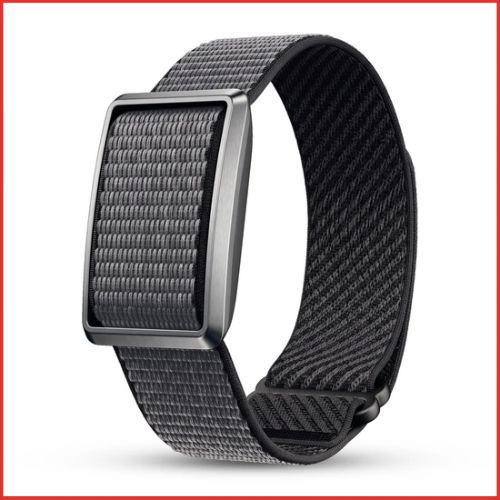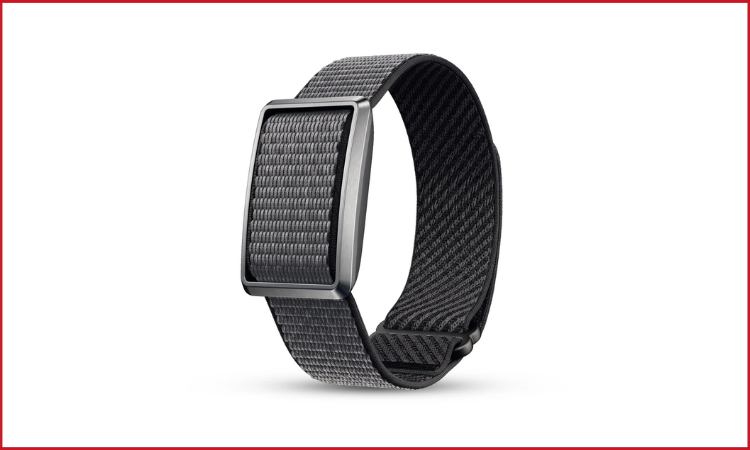
Pebble has entered the screenless fitness-band segment with the launch of the Qore Ultra in India, offering continuous health monitoring, AI-powered wellness insights and up to 15 days of battery life at an introductory price of ₹5,999.
Unlike a conventional smartwatch, the Pebble Qore Ultra does not have a display competing for the user’s attention throughout the day. Instead, the band is designed to remain on the wrist continuously while collecting health and activity data that can later be viewed through its companion app.
The approach puts Pebble into a growing category of wearables focused less on notifications and apps and more on sleep, recovery, exercise and long-term wellness trends.
Qore Ultra Has No Screen
One of the biggest differences between the Qore Ultra and most affordable Indian wearables is what Pebble has removed.
There is no display.
Users will not be checking messages, changing watch faces or scrolling through menus on their wrist. Pebble is positioning the device around what it calls distraction-free wellness tracking.
That puts the Pebble wellness band closer in concept to products such as Whoop than the conventional smartwatches that dominate the budget wearable market.
Removing the display can also help with battery life and make the device easier to wear overnight, which becomes important when sleep and recovery tracking are major parts of the experience.
Pebble says the band weighs around 24g and uses a nylon strap designed for all-day wear.
Four Photodiodes Track Health Around the Clock
The Qore Ultra uses a four-photodiode precision sensor system alongside six-axis motion sensors.
It can continuously monitor heart rate and heart-rate variability, or HRV, while also tracking blood oxygen saturation, respiratory rate, stress and body temperature.
HRV has become particularly common in recovery-focused fitness wearables because changes in the time between heartbeats can provide useful context around stress and recovery when considered alongside other measurements.
The Qore Ultra health tracking system also includes VO2 max estimates for users who want to monitor changes in cardiovascular fitness during running and other activities.
Pebble combines those measurements instead of presenting every number independently.
The companion software generates wellness scores around areas such as sleep, readiness and daily activity.
AI Turns the Data Into Daily Wellness Insights
Collecting data is relatively easy for modern wearables. Explaining what someone should do with it is becoming the more important part.
Pebble is using AI-powered health insights to interpret the information captured by the band.
A sleep score, for example, can combine sleep duration and stages with signals including heart rate, HRV, breathing and blood oxygen levels.
The readiness score is intended to help users understand how prepared their body may be for exercise or another demanding day.
Activity information then tracks movement and energy expenditure throughout the day.
The Pebble Qore Ultra AI insights are designed to provide simple suggestions rather than expecting users to understand every individual metric themselves.
As with any consumer wearable, these readings should be viewed as wellness information rather than a replacement for professional medical assessment.
Sleep Tracking Is a Major Part of the Experience
A screenless device makes particular sense for sleep tracking.
Smartwatches can track sleep too, but some users charge them overnight or find larger displays and cases uncomfortable in bed.
Pebble wants the Qore Ultra to stay on the wrist around the clock.
The band tracks awake time and light, deep and REM sleep while monitoring overnight vital signals.
Those readings can then be viewed together inside the app rather than forcing users to interpret sleep duration alone.
Long-term trends may be more useful than any one night’s result. Someone could see whether resting heart rate or HRV changes across several days alongside their sleep score and exercise routine.
Battery Life Reaches Up to 15 Days
Pebble claims up to 15 days of battery life from the 150mAh battery.
That is considerably longer than many full smartwatches, which often need charging after several days depending on their features.
The Qore Ultra battery life is particularly important because gaps in charging can reduce the usefulness of long-term wellness data.
A device intended to understand sleep, recovery and resting heart rate works better when it is being worn consistently.
Magnetic charging is supported, with Pebble listing a charging time of around two hours.
The band also carries a 3ATM water-resistance rating, allowing it to handle everyday water exposure and supporting use across more activities.
More Than 100 Sports Modes Are Supported
The Qore Ultra is not limited to passive wellness tracking.
Pebble says it supports more than 100 sports modes covering activities such as running, cycling, swimming, yoga, cricket, football, badminton, strength training and hiking.
Automatic sports detection is included for supported activities.
For outdoor exercise, the companion app can use phone-based GPS to map routes and show information such as pace, distance, heart rate and steps.
That means the band itself does not need a large screen or built-in map interface.
Instead, it collects the activity information while the smartphone handles the more detailed visual presentation.
Pebble Is Avoiding a Monthly Subscription
Another notable part of the product is the absence of a required subscription.
Some recovery-focused wearables combine the initial hardware purchase with recurring membership fees for analytics and personalised insights.
Pebble says Qore Ultra’s wellness and AI features will not require an additional monthly charge.
That could become one of the device’s biggest advantages in India.
At an introductory Qore Ultra price of ₹5,999, the product already sits above many inexpensive smart bands. Avoiding an ongoing fee makes the overall cost easier to understand.
The listed MRP is ₹8,999, making the ₹5,999 price a launch offer.
Three Colours Will Be Available
Pebble is selling the Qore Ultra in Forest Black, Coastal Blue and Desert Gold.
The band works with both Android and iOS devices and can sync wellness information with wider health platforms.
Smart notifications are available for functions such as incoming calls, sedentary alerts and reminders to drink water, although the lack of a screen means the experience remains deliberately simpler than a smartwatch.
That simplicity is really the point.
The Pebble Qore Ultra is aimed at people who want to know more about their sleep, activity and recovery without putting another bright display on their wrist.
At ₹5,999, Pebble is trying to make the screenless wellness-band concept accessible to a much wider Indian audience. Whether its health insights prove accurate and genuinely useful will require real-world testing, but the Qore Ultra gives buyers a noticeably different option from the hundreds of similar-looking smartwatches already competing in the market.