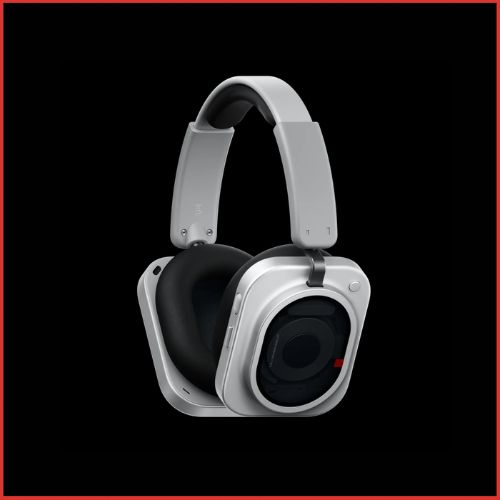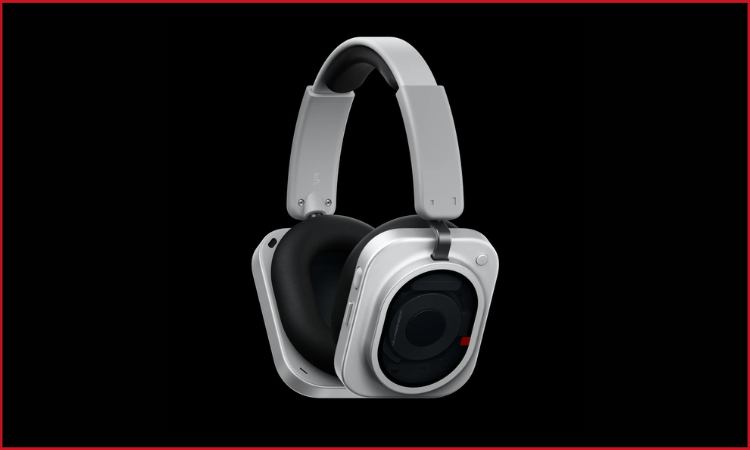
Nothing has moved further into premium audio with the launch of the Headphone (1) Pro, a new pair of flagship over-ear headphones that puts most of its upgrades where listeners will notice them: inside the earcups.
The Nothing Headphone (1) Pro uses three separate drivers for different parts of the frequency range, adds a 10-microphone active noise cancellation system and introduces a physical switch for quickly moving into a flatter studio-style sound profile. Nothing has also upgraded the construction with aluminium, titanium and scratch-resistant glass.
The headphones are priced at $399 in the US, putting them considerably above Nothing’s other audio products and directly into the premium wireless-headphone market.
Three Drivers Handle Different Parts of the Sound
The biggest technical change is the new triple-driver system.
Instead of relying on a single full-range driver inside each earcup, the Nothing Headphone (1) Pro triple-driver systemdivides the work between three components.
A 40mm dynamic driver handles bass frequencies. A separate 13 x 8mm dynamic driver is focused on the middle range, where vocals and many instruments sit. High frequencies are handled by a small xMEMS solid-state driver made using a silicon diaphragm.
Nothing says dividing frequencies this way allows each driver to concentrate on a narrower part of the sound rather than asking one component to reproduce everything.
The company claims the redesigned bass driver produces 15% stronger bass impact and offers 26% greater sensitivity compared with the original Headphone (1).
For listeners, the more interesting question will be whether that technical complexity translates into cleaner separation between bass, vocals and higher-frequency details.
Metropolis Studios Helped Tune the Sound
Nothing has worked with London’s Metropolis Studios on the acoustic tuning.
That partnership has also resulted in one of the more unusual controls on the headphones: a physical Flat EQ switch.
Flipping the switch changes the headphones from the user’s regular equaliser profile to a flatter sound setting intended to reproduce audio with less coloration.
The feature is clearly aimed at listeners who want something closer to a studio-monitoring experience without opening an app and manually adjusting an equaliser every time.
The headphones support Hi-Res Audio for both wireless and wired playback. They also support LDAC for higher-quality Bluetooth audio.
A USB-C connection can deliver lossless playback at up to 24-bit/192kHz, while a traditional 3.5mm headphone connection remains available.
ANC Now Uses 10 Microphones
Noise cancellation is another major part of the upgrade.
The Nothing Headphone (1) Pro ANC system uses 10 microphones in total, with five microphones positioned on each side.
Nothing rates the adaptive noise cancellation at up to 46dB.
The headphones continuously analyse the surrounding environment as well as the seal around the user’s ears and can adjust the amount of noise cancellation automatically.
Nothing has also added an 8mm silicone baffle around the earcup structure to reduce sound leakage.
Transparency mode remains available when users need to hear their surroundings without removing the headphones.
For calls, environmental noise cancellation uses dedicated microphones to isolate the user’s voice from nearby sound.
Premium Materials Replace the Simpler Construction
Nothing has retained the transparent design language that has become closely associated with the brand, but the new headphones use noticeably more expensive materials.
The earcup structure is machined from aluminium, while the arms use a titanium alloy that Nothing says is 45% lighter than the equivalent components on the original Headphone (1).
Transparent sections are protected by 9H Panda Glass designed to improve resistance against scratches and damage.
The Nothing Headphone (1) Pro design still looks recognisably like a Nothing product, but the emphasis is now more clearly on premium construction rather than simply using transparent elements as a visual signature.
The headphones weigh 327g.
Nothing has also changed the fit. The ear cushions are said to be 50% softer, while the headband is 10% wider and receives 12% thicker padding.
The entire product carries an IP52 rating for protection against dust and light water exposure.
Physical Controls Remain a Big Part of the Experience
Nothing has resisted the industry’s tendency to move everything towards touch-sensitive surfaces.
The Headphone (1) Pro keeps the company’s tactile Roller and Paddle controls.
The Roller handles volume as well as play and pause functions, while the Paddle can be used to move between tracks, fast-forward audio and manage calls.
A customisable button can trigger functions including voice assistance and other shortcuts configured through the Nothing X app.
The new Flat EQ switch sits alongside those controls.
That physical approach should make common commands easier to find without requiring users to remember different tapping or swiping gestures.
Battery Life Reaches 68 Hours
Battery endurance is rated at up to 68 hours of AAC playback when active noise cancellation is switched off.
Turning ANC on cuts that figure to around 30 hours.
When using LDAC, battery life is rated at up to 53 hours without ANC and 28 hours with noise cancellation active.
The Nothing Headphone (1) Pro battery life is therefore still substantial even when more demanding audio features are switched on.
A 1,060mAh battery sits inside the headphones.
Fast charging can provide around four hours of playback after five minutes of charging when ANC is disabled. With noise cancellation active, a five-minute charge is rated for around two hours of playback.
A complete wired charge takes approximately two hours.
Bluetooth 6.1 and Spatial Audio Are Included
Wireless connectivity uses Bluetooth 6.1.
The headphones support simultaneous connections with two devices, allowing someone to move between a laptop and smartphone without manually pairing each time.
Dynamic Spatial Audio with head tracking is also available, creating a wider soundstage that adjusts as the listener moves their head.
Users can choose several simulated listening environments, including studio and concert-style profiles.
Auracast support allows compatible audio to be shared wirelessly across multiple listening devices.
Google Fast Pair, Microsoft Swift Pair and Apple’s Made for iPhone functionality are also supported, reflecting Nothing’s attempt to make the headphones work equally well outside its own smartphone ecosystem.
Nothing Is Moving Into a Much More Competitive Price Range
At $399, the Headphone (1) Pro is no longer competing mainly on price.
The premium headphone market already includes established models from Sony, Bose, Apple and other specialist audio brands.
Nothing therefore needs the triple-driver system, stronger ANC and premium materials to deliver more than an impressive specification sheet.
Still, the company has clearly made a much larger technical jump than a simple annual refresh.
The Nothing Headphone (1) Pro combines an unusual triple-driver architecture with wired high-resolution playback, strong battery life and physical controls that remain uncommon among premium wireless headphones.
Whether those upgrades justify the higher price will depend heavily on real-world sound and ANC performance, but Nothing is no longer treating headphones as a side category. With the Pro model, it is making a much more serious attempt to compete at the top end of consumer audio.