According to data released by the Ministry of Commerce and Industry on May 14, the annual rate of inflation based on the All India Wholesale Price Index stood at 8.3% in April 2026 — up sharply from 3.88% in March and 2.26% in February. The number is provisional, but the direction is unambiguous: wholesale prices are rising fast, and one commodity is driving almost all of it: Crude petroleum
“Positive rate of inflation in April 2026 is primarily due to an increase in prices of mineral oils, crude petroleum & natural gas, basic metals, other manufacturing and non-food articles etc,” said the government in a statement.
The WPI data shows crude petroleum inflation at 88.06% year-on-year in April 2026. This means wholesale prices for crude are nearly double what they were a year ago. The broader crude petroleum and natural gas sub-group registered inflation of 67.18%. In the Fuel and Power category, which carries a 13.15% weight in the overall index, annual inflation hit 24.71% — with petrol up 32.4% and high-speed diesel up 25.19% year-on-year. Month-on-month, the Fuel and Power index alone jumped 18.22% between March and April.
The West Asia conflict, which has kept Brent crude elevated above $120 a barrel, is the direct cause. What the WPI data confirms is that the West Asia shock has now fully transmitted to India’s wholesale economy. The question is how much of it reaches the retail consumer — and how soon.
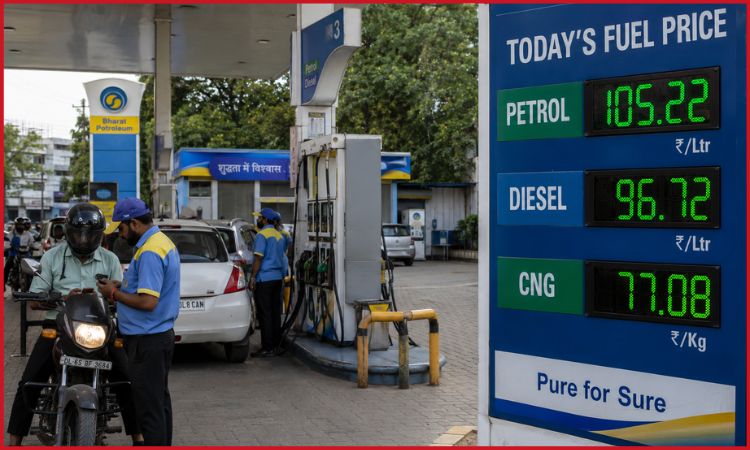
The answer, for now, is: less than expected. The government has held petrol and diesel pump prices steady, absorbing the crude surge through under-recoveries at state oil companies. But that buffer is costly and finite. The WPI data puts the pressure in numbers: when wholesale diesel inflation is running at 25% year-on-year while pump prices haven’t moved, someone is paying the difference. Currently, it is the exchequer.
Beyond fuel, the data reveals pressure building across the broader economy. Primary articles inflation rose to 9.17% in April, with non-food articles up 12.18% and oilseeds up 22.24%. In manufactured products — which carry the highest weight in the index at 64.23% — textiles inflation rose to 7.3%, basic metals to 7%, and chemicals to 5.09%. Twenty-one of twenty-two manufactured product sub-groups saw price increases in April.
The one piece of relative comfort is food. The WPI Food Index inflation came in at 2.31% year-on-year in April — modest and contained. Vegetables, onions, and potatoes all showed year-on-year deflation, providing some relief on kitchen tables even as factory gates and fuel pumps face mounting cost pressure.
WPI inflation more than doubled in a single month
The month-on-month WPI for all commodities rose 3.86% in April alone — the sharpest single-month jump in at least six months, and nearly three times the 1.52% recorded in March. That acceleration matters. It suggests the crude shock is not tapering — it is compounding.
For businesses, particularly those in manufacturing, logistics, textiles, and chemicals, April’s WPI data signals a cost environment that will be difficult to absorb without either margin compression or price hikes passed on to buyers. For the RBI, which has held its repo rate at 5.25%, citing a cautious stance, the wholesale inflation number adds to the case for vigilance, even as retail inflation remains relatively contained.