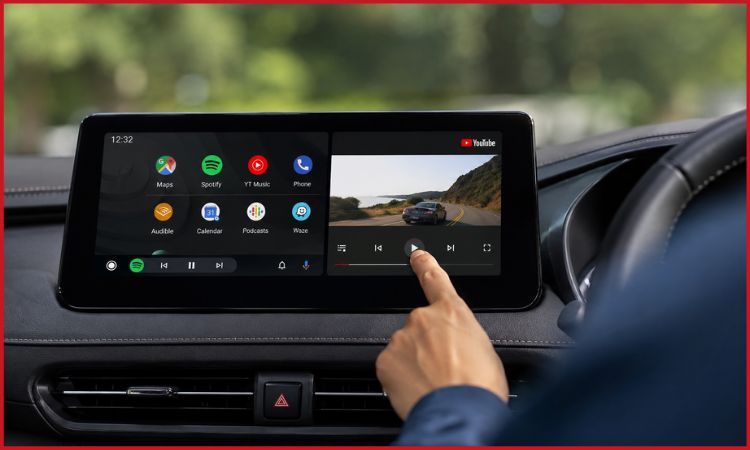
“There’s never been a more exciting time for Android,” Google’s president of Android ecosystem Sameer Samat said at The Android Show: I/O Edition 2026 held on Tuesday. For Indian consumers, that excitement has a very specific address: the car dashboard.
In what is a notable acknowledgement of India’s homegrown auto majors, Google explicitly named Mahindra and Tata among the first set of car brands to receive two of Android Auto’s biggest upgrades.
Mahindra and Tata among first to get Android Auto’s Dolby Atmos and full HD video
“For the first time in Android Auto, you’ll be able to sit back, relax and watch videos on apps like YouTube,” Google wrote in its official blog post, noting that the full HD 60fps experience will roll out “starting with BMW, Ford, Genesis, Hyundai, Kia, Mahindra, Mercedes-Benz, Renault, Škoda, Tata and Volvo.”
Both Mahindra and Tata are among India’s best-selling passenger vehicle brands, making this a nod to the Indian market from a global platform announcement.
The second upgrade is arguably more premium. “Android Auto will soon put you at the center of the music with immersive, spatial sound using Dolby Atmos in supported apps and cars,” Google said, again naming Mahindra and Tata alongside a shortlist of global marques.
The rollout is expected later this year.
From Indian cars to Indian phones: Google’s Android 2026 updates decoded
Beyond the car, the update that will resonate most with India’s deeply Android-dominated smartphone market is the Quick Share expansion. India runs on a wildly diverse mix of Android devices — Samsung, Xiaomi, OnePlus, Oppo, Vivo — and Google has now confirmed that Quick Share’s AirDrop-style cross-brand file transfer is coming to all of them.
“Quick Share’s AirDrop compatibility is coming to Samsung, Oppo, OnePlus, Vivo, Xiaomi, and Honor this year,” the company announced. Until full compatibility lands, Quick Share can now generate a QR code to allow instant sharing with iOS devices via the cloud, and the feature is also coming to WhatsApp — which has near-universal penetration in India.
Also worth flagging for Indian users is an upgrade to Gboard, Google’s default keyboard on Android. The new Rambler feature uses Gemini models to clean up voice input by filtering out filler words, pauses, and self-corrections. Voice typing in regional languages is one of the most-used smartphone features in India, and a smarter voice-to-text engine has obvious implications for anyone who dictates messages in Hindi, Tamil, Bengali, or any other Indian language.
The centrepiece announcement of Google Android Show: Gemini Intelligence
Gemini Intelligence — Google’s new umbrella branding for its most advanced AI features across phones, watches, cars, and laptops. “It integrates premium hardware and innovative software to help you stay a step ahead by working proactively to get things done throughout your day — all while keeping your data private, and keeping you in control,” Google said.
The first wave of features arrives this summer on the latest Google Pixel and Samsung Galaxy devices, and includes task automation across apps, smarter autofill in Chrome, and AI-generated custom home screen widgets.
Google also unveiled Googlebook, a new laptop category designed around Gemini Intelligence and deep integration with Android phones. The first Google Books, to be manufactured by Acer, Asus, Dell, HP, and Lenovo, are arriving this fall. Key features include the ability to cast any Android app to the laptop screen and a Quick Access file browser that surfaces everything on a connected phone. It is a product category to watch, particularly as India’s laptop market continues to grow alongside its smartphone base.
On the Android 17 front, Google announced a slate of creator-focused features including Screen Reactions — which lets users record themselves and their screen simultaneously — and confirmed that the Adobe Premiere app is coming to Android this summer. Instagram for Android is also getting an optimised tablet experience, Ultra HDR capture, built-in video stabilisation, and Night Sight integration.
Rounding out the announcements was Pause Point, a new Digital Wellbeing feature that introduces a 10-second breather when an app timer runs out, and Noto 3D, a redesigned emoji set with depth and texture replacing Google’s long-running flat style.