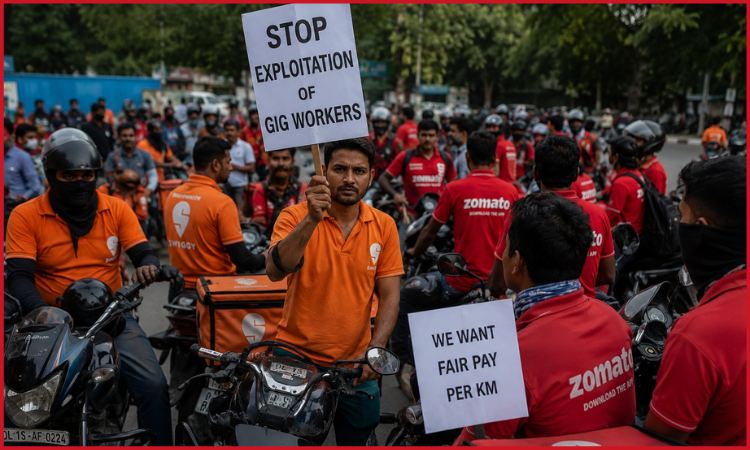
1.2 crore gig workers shut down apps for five hours as GIPSWU demands ₹20/km minimum payout and automatic fuel-linked revisions.
“The fuel price hike is a direct blow to workers who are already struggling with inflation and extreme heat,” said GIPSWU President Seema Singh.
That frustration has now translated into action. In protest against soaring fuel prices and stagnant payout structures, the Gig and Platform Service Workers Union has called a nationwide five-hour strike today, urging app-based delivery partners and drivers to halt all services between 12 pm and 5 pm.
What triggered the worker strike
The protest was triggered after oil marketing companies raised petrol and diesel prices by ₹3 per litre each nationwide — bringing petrol in Delhi to around ₹97.77 per litre and diesel to ₹90.67. M The hike comes amid rising global crude prices, disruptions in West Asia, and Strait of Hormuz shipping tensions.
For gig workers, the timing could not have been worse. Most depend on motorcycles or scooters, fuel is their biggest daily expense, and platforms have not proportionally increased their payouts. Many union representatives say, drive 50 to 70 km daily on 10 to 14-hour shifts, with no formal labour protections to fall back on.
What workers want
Among the union’s primary demands is a minimum service payout of ₹20 per kilometre. Workers are also demanding automatic fuel-cost-linked payment revisions, health and accident insurance, pension and social security benefits, limits on excessive working hours, and protection against arbitrary account suspensions.
Who is affected
Services on Swiggy, Zomato, Blinkit, and Zepto are expected to be disrupted. Ola, Uber, Rapido, and Amazon Flex are also likely to see impact, with major cities expected to bear the strongest effect.
The bigger picture
With a dedicated central law for gig workers’ rights still pending, the fuel price hike lands on a workforce that has no minimum wage protection and no formal recognition under traditional labour law.  The protest reflects a deeper structural issue in India’s platform economy: millions of workers powering app-based services remain highly vulnerable to inflation and fuel shocks.
According to NITI Aayog estimates, India had around 77 lakh gig workers in 2020-21 and that number could cross 2.3 crore by 2029-30.
GIPSWU places the current figure at 1.2 crore workers dependent on app-based income — a constituency too large for platforms or policymakers to keep sidelining.