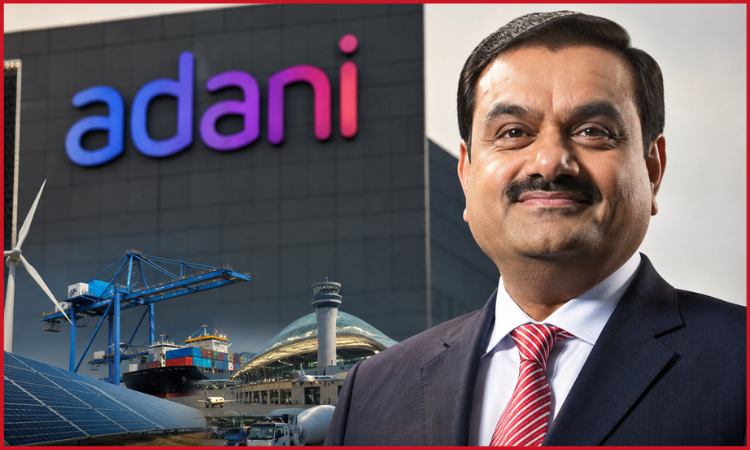
During the year 2022, Gautam Adani made 32 acquisitions valued at $17 billion or roughly ₹1.4 lakh crore. (Bloomberg / Gulf News, May 2022) It is equivalent to the GDP of 150 nations. In just one year, the Gujarati trader became Asia’s busiest acquirer by buying Swiss cement behemoths and Australian coal mines.
Over the last twenty years, the acquisition of companies has been the core of Adani Group’s success story. Apart from its slow but steady organic growth model, the group had been making big purchases in ports, airports, cement plants, renewable energy firms, logistic operations, power transmission companies, and mining entities. The conglomerate was able to get into the new business by acquiring companies in that sector.
After the Hindenburg Research allegation of 2023, the market value of the Adani Group plummeted to an unprecedented level. Nonetheless, even after the controversy, the company made huge acquisitions and signed major infrastructure projects, proving the availability of capital for such deals. PTI (December 26, 2025), quoting data and sources from the market reports that the conglomerate made 33 acquisitions worth almost ₹80,000 crore in less than two years starting January 2023.
Currently, Adani Group runs the biggest private port chain in India, manages big airports, runs one of the biggest cement companies in the country, and is now one of the biggest players in renewable energy in the country. All of this can be attributed to several big acquisitions done by the group.
The Acquisition Strategy: Inorganic Growth at Speed
Adani Group’s growth plans have been characterized by its ability to make strategic acquisitions of critical infrastructure assets with sustainable cash flows. The firm did not adopt a random approach to diversification but rather targeted sectors with close ties to India’s economic growth narrative, which included ports, logistics, energy, transport, cement, and utilities.
There were many benefits associated with this acquisition strategy.
First, acquisitions allowed for faster market penetration. This meant that unlike starting business operations from scratch, which might take years, the company could get access to scale, permits, operational infrastructure, and market presence through acquisitions.
Second, there were synergies created within the various firms acquired. Ports helped enhance logistics; logistics enhanced energy distribution; cement was necessary for infrastructure development, while airports enhanced the company’s transport network.
Third, the strategy was aligned with the government’s initiative of encouraging private participation in airports, ports, roads, renewable energy, and logistics.
Adani Group was noted to be more aggressive compared to others in taking advantage of this wave of infrastructure privatization.
Between 2021 and 2023, the company made several billion-dollar acquisitions while expanding internationally to countries such as Australia, Sri Lanka, Israel, and the Middle East.
Ultimately, through acquisitions, Adani grew from a regional infrastructure business to a global conglomerate with activities in the sectors of transport, energy, materials, and utilities.
Top 7 Biggest Adani Group Acquisitions by Value
| Acquisition | Estimated Value | Year | Sector | Strategic Impact |
| Ambuja Cements + ACC (Holcim stake) | $10.5 Billion | 2022 | Cement | Made Adani India’s second-largest cement producer |
| North Queensland Export Terminal | ₹21,700 crore | 2025 | Ports & Logistics | Strengthened export infrastructure and mining logistics |
| SB Energy India | $3.5 Billion | 2021 | Renewable Energy | Expanded Adani Green’s solar portfolio significantly |
| Mumbai International Airport stake expansion | Undisclosed | 2020-2021 | Airports | Strengthened Adani’s aviation infrastructure network |
| Six Indian Airport Privatization Projects | ₹2,440 crore bid commitment | 2019-2020 | Airports | Established Adani Airports as a major private operator |
| Carmichael / Galilee Coal Assets | $2.68 Billion | 2010-2013 | Mining | Expanded Adani’s international coal operations |
| Colombo West Container Terminal | $700 Million | 2021 | Ports | Expanded Adani Ports’ Indian Ocean presence |
1: Ambuja Cements + ACC ($10.5 Billion)
The acquisition of Ambuja Cements and ACC from Swiss cement giant Holcim in 2022 remains the Adani Group’s largest and most transformative deal. According to Adani Group’s official press release (May 15, 2022), the transaction was valued at approximately $10.5 billion. (Adani Group press release, May 15, 2022)
The deal instantly made Adani the second-largest cement producer in India, (Adani.com press release, Sep 16, 2022) providing control over a combined cement production capacity exceeding 70 million tonnes annually alongside extensive logistics and distribution infrastructure. (Business Standard / Adani official release, May 2022)
In terms of strategy, the acquisition was well thought out considering Adani Group’s future aspirations in the infrastructure sector. The need for cement in India is largely dependent on urbanization, roads, industrial belts, housing projects, ports, and airports, all of which are areas where Adani already had a large stake. Through the deal, Adani was able to complete vertical integration in its infrastructure business. By having the capacity to manufacture cement, Adani Group strengthened itself in the supply chain for its upcoming infrastructure projects without having to depend on outside vendors.
2: North Queensland Export Terminal (₹21,700 Crore)
Another significant international purchase for Adani Group is North Queensland Export Terminal located in Australia.
This particular acquisition plays a crucial role in the process of exporting coal from the rich Australian resources of Queensland. The acquisition contributed significantly to improving the logistics and mining operations related to the Australian coal business by the Adani Group, particularly regarding its Carmichael project. The company received an integrated export terminal that could be effectively used to ship commodities and conduct mining operations on the long term. The purchase became another example of the firm’s strategy concerning its control over essential infrastructure in global energy supply chains.
3: SB Energy India ($3.5 Billion)
Adani Green Energy purchased SB Energy India in the year 2021.
As per the official press release by Adani Green Energy dated October 4, 2021, the acquisition was worth around $3.5 billion and is considered the biggest acquisition made for renewable energy in India.
Through this purchase, Adani was able to add around 5 gigawatts worth of renewable energy assets to its portfolio (PV-Tech/Adani Green Energy press release, 2021). This acquisition allowed Adani to speed up its plan of becoming a top renewable energy company in the world, thus meeting the sustainable development needs of India and fulfilling the investment requirements of shareholders.
This particular purchase by Adani revealed how the company was trying to balance between its traditional fossil fuel-based business and renewable energy business.
4: Mumbai International Airport Stake Expansion
The increasing control of Adani in the Mumbai International Airport provided a boost to their aviation portfolio. The Mumbai Airport is considered one of the busiest aviation centers in India. Adani Airports increased their footprint in the growing aviation industry of India through the process of acquisitions and stake consolidations.
It served as a follow-up on the success that Adani had achieved before by acquiring and operating airports such as Ahmedabad, Lucknow, Jaipur, Mangaluru, Guwahati, and Thiruvananthapuram airports.
5: Six Indian Airport Privatization Projects
The right to construct and run the six Indian airports also was one such milestone in the growth plans of the company. The acquisition of these airports was done via a privatization drive conducted by the government, and involved the acquisition of six strategically important regional airports across India. This helped extend the portfolio of Adani Enterprises from just ports and power projects to other ventures related to travel and logistics, as well as airport infrastructure.
6: Carmichael and Galilee Coal Assets ($2.68 Billion)
The Carmichael coal mine and related Galilee Basin assets remain among Adani’s most controversial investments.
The large-scale Australian mining project faced years of environmental protests, regulatory delays, financing challenges, and international criticism from climate activists. However, Adani continued investing heavily in the project, viewing it as strategically important for long-term energy supply.
Despite controversy, the acquisition demonstrated the group’s willingness to pursue politically sensitive infrastructure investments with long investment horizons.
The project also reinforced Adani’s global mining and energy ambitions.
7: Colombo West Container Terminal ($700 Million)
Adani’s investment in the Colombo West International Terminal in Sri Lanka strengthened its regional maritime presence.
Sri Lanka occupies a strategically important position along global shipping routes connecting Asia, the Middle East, and Europe. The investment expanded Adani Ports’ international footprint and reinforced its ambition to become a dominant maritime infrastructure player across the Indian Ocean region.
The project also reflected India’s growing strategic interest in regional port infrastructure amid increasing geopolitical competition in South Asia.
Sector-Wise Breakdown: Ports, Cement, Power, Airports
A closer look at Adani’s acquisitions reveals a clear concentration around infrastructure-driven sectors.
Ports and Logistics
Ports remain the foundation of the Adani empire. Through acquisitions and greenfield expansion, Adani Ports and Special Economic Zone became India’s largest private port operator.
The company expanded beyond India into international maritime infrastructure assets in Sri Lanka, Israel, and Australia. These investments strengthened the group’s control over trade corridors and logistics chains.
Ports reportedly accounted for one of the largest portions of Adani’s acquisition spending in recent years.
Cement
The Holcim acquisition dramatically reshaped India’s cement industry landscape. Cement became one of Adani’s largest businesses almost overnight.
The group continues pursuing expansion opportunities in the sector as it aims to further increase production capacity and challenge market leaders.
The cement business also complements Adani’s broader infrastructure ecosystem, creating internal demand synergies across projects.
Power and Renewable Energy
Adani simultaneously expanded traditional energy operations and renewable infrastructure.
Acquisitions in solar and renewable energy positioned the group among India’s largest clean-energy players while maintaining significant exposure to thermal power and coal logistics.
This dual strategy reflects India’s broader energy transition reality, where renewable growth continues alongside conventional energy demand.
Airports and Transport Infrastructure
Airport privatization allowed Adani to enter a sector expected to benefit significantly from India’s long-term urbanization and rising middle-class consumption.
The airport business complements the group’s logistics ecosystem while also creating consumer-facing infrastructure exposure.
Post-Hindenburg: 33 Deals Worth ₹80,000 Crore
The Hindenburg Research report, published on January 24, 2023, (Hindenburg Research, Jan 24, 2023) accused the Adani Group of stock manipulation and accounting irregularities. The report triggered one of the sharpest corporate wealth declines in Indian history, erasing nearly $150 billion in market capitalization by February 2023 (market data, reported across Reuters, Bloomberg, and Business Standard) and intensifying scrutiny around leverage and governance standards.
However, the group’s acquisition activity did not stop.
According to PTI (December 26, 2025), citing market data and company sources, Adani completed approximately 33 acquisitions worth around ₹80,000 crore after the January 2023 Hindenburg controversy. This continued deal-making became a signal to investors that the conglomerate retained access to funding and strategic partnerships despite the allegations.
Major investments from institutions such as GQG Partners—which invested ₹15,446 crore ($1.87 billion) in March 2023 (Bloomberg / Business Today, March 2023)—and Abu Dhabi’s International Holding Company also helped stabilize market confidence.
The post-Hindenburg acquisitions demonstrated that despite reputational damage and regulatory scrutiny, Adani remained deeply embedded within India’s infrastructure and economic expansion story.
Controversies & Corporate Governance Concerns
The Adani Group’s rapid expansion has consistently attracted criticism alongside admiration.
Critics argue that the pace of acquisitions increased leverage risks and raised concerns about financial sustainability. Others questioned whether the group’s aggressive expansion created excessive concentration across strategic infrastructure sectors.
Environmental criticism also intensified around Adani’s coal-related projects, especially in Australia.
The Hindenburg allegations further amplified governance concerns, leading to regulatory investigations and increased investor caution.
Supporters of the group, however, argue that Adani’s investments accelerated India’s infrastructure development at a scale few private companies were willing to attempt. They also note that many acquisitions aligned closely with government privatization initiatives and long-term national infrastructure priorities.
The debate ultimately reflects a broader tension around the role of large conglomerates in emerging economies: balancing rapid infrastructure development with transparency, competition, and governance standards.
Future Outlook: $3B Cement Acquisition Pipeline
The Adani Group shows little sign of slowing its acquisition strategy.
The conglomerate has reportedly allocated billions of dollars for additional cement acquisitions as it attempts to further increase market share and production capacity.
Infrastructure, logistics, renewable energy, data centers, green hydrogen, and transportation are also expected to remain key focus areas for future expansion.
India’s long-term economic growth projections continue creating significant opportunities in these sectors. Rising urbanization, industrialization, manufacturing expansion, and government infrastructure spending are likely to sustain demand for large-scale infrastructure investments.
At the same time, the group faces growing pressure to improve transparency, reduce leverage concerns, and strengthen corporate governance standards.
The next phase of Adani’s growth may therefore depend not only on acquisition speed, but also on the group’s ability to balance expansion with investor confidence and regulatory credibility.
Few business groups in modern India have expanded as aggressively—or as controversially—as the Adani Group. Through a combination of acquisitions, privatization opportunities, and infrastructure investments, Gautam Adani built a conglomerate that now touches nearly every major pillar of India’s economy.
Whether viewed as a visionary infrastructure builder or an overly aggressive dealmaker, Adani’s acquisition strategy has undeniably reshaped India’s corporate and infrastructure landscape.
FAQ: Gautam Adani Acquisitions
Q: What is Adani Group’s largest acquisition?
A: The Adani Group’s largest acquisition was the purchase of Ambuja Cements and ACC from Holcim in 2022 for approximately $10.5 billion. The deal instantly made Adani the second-largest cement producer in India and significantly expanded its infrastructure portfolio.
Q: How many acquisitions did Adani complete after the Hindenburg report?
A: Reports suggest the Adani Group completed around 33 acquisitions worth nearly ₹80,000 crore after the January 2023 Hindenburg controversy, signaling continued expansion despite heightened scrutiny and market volatility.
Q: Which sectors has Adani invested in the most through acquisitions?
A: Adani’s acquisitions have primarily focused on infrastructure-driven sectors including ports and logistics, cement, renewable energy, power transmission, airports, mining, and transportation infrastructure. Ports and cement accounted for some of the largest acquisition spending.
Q: Did Adani acquire international assets?
A: Yes. The Adani Group expanded internationally through major investments in Australia, Sri Lanka, Israel, and other regions. Significant overseas acquisitions include the North Queensland Export Terminal in Australia, the Carmichael coal assets, and the Colombo West Container Terminal project in Sri Lanka.
Q: Why is Adani focused on acquisitions instead of only organic growth?
A: Acquisitions allow the Adani Group to scale rapidly, enter new sectors faster, acquire operational infrastructure, and create synergies across businesses such as ports, logistics, airports, cement, and energy.
Q: What was the strategic importance of the Holcim cement acquisition?
A: The Ambuja-ACC acquisition helped Adani vertically integrate its infrastructure ecosystem. Cement is closely linked to highways, housing, ports, industrial corridors, and urbanization, making it strategically valuable for a conglomerate focused heavily on infrastructure development.