A few years ago, an electric scooter on an Indian road was something people turned to look at. Today it is just another vehicle in traffic. Electric two-wheelers deliver our food, e-cars are slowly showing up in city parking lots, and fleet owners are quietly swapping diesel vans for electric ones. All of this has to plug in somewhere, and that is exactly why the EV charging station business 2026 has become such a popular topic among entrepreneurs, petrol pump owners, property owners and small investors.
So the question everyone asks is a fair one: is the EV charging business in India actually profitable right now, or is it just another trend people are getting excited about?
The honest answer is yes, it can be, but not automatically. Whether you make money depends on where you set up, what you pay for electricity, how often your chargers are in use, how much you put in at the start and who your customers are. If you simply buy a fast charger, put it up and wait for EV owners to show up, you will probably be disappointed. The real opportunity in the EV charging station business 2026 belongs to people who plan carefully, keep costs under control and build more than one source of income around the charger.
EV Charging Station Business 2026 at a Glance
| Factor | What you should know |
| Business model | Public, private, fleet or destination charging |
| EV charging station cost | From a few lakh rupees to ₹25 lakh or more, depending on scale |
| Major expenses | Chargers, electricity connection, land, civil work and maintenance |
| Income sources | Charging fees, subscriptions, fleet contracts and extra services |
| Best locations | Highways, commercial areas, offices, apartments, malls and fleet hubs |
| What decides profit | How much your chargers are actually used (utilisation) |
| Biggest hurdle | Low usage in the first few months |
| Long-term outlook | Strong, and it improves as more people buy EVs |
What Exactly Is an EV Charging Station Business?
In simple terms, you install charging equipment and let electric vehicle owners pay to recharge. That is the whole idea, but the way you do it can look very different from one operator to the next.
Some people open a standalone public station. Others put chargers inside a shopping centre, a hotel or an apartment society. Some set up a dedicated charging yard for commercial fleets such as delivery vans, taxis or buses. Each format needs different equipment and serves a different type of customer.
The vehicle type matters too. Two-wheelers need a much smaller setup. Electric cars need AC or DC chargers with more power. Buses and heavy commercial vehicles need serious electrical capacity and a stronger grid connection. This flexibility is one reason the EV charging business in India appeals to both a first-time entrepreneur with a small plot and a large investor looking at bigger electric vehicle charging infrastructure projects.
Why Demand for Charging Is Growing in India
India’s EV market has come a long way in a short time. Better vehicles, wider choice and growing interest from buyers are all pushing adoption up, and there is a visible effort to build electric vehicle charging infrastructure to support it.
Electric two-wheelers matter the most here. People use them for daily commuting and, increasingly, for delivery work where every rupee saved on fuel counts. Electric cars are also becoming a more common sight in the cities, and fleet operators are moving to EVs to bring down their running costs.
That creates a gap. Someone may be perfectly ready to buy an electric vehicle, but if they cannot charge it conveniently, they hesitate. Public charging fills that gap, especially in places where home charging is hard: apartment buildings, busy commercial districts, highways and crowded urban neighbourhoods. This gap is what makes a well-planned charging point a profitable EV business India can actually support.
How Much Does It Cost to Start an EV Charging Station?
There is no single number for EV charging station cost, because the range is wide. A small setup with limited capacity can start at just a few lakh rupees. A larger commercial site with several DC fast chargers, proper electrical work, parking space and basic facilities can run from ₹15 lakh to ₹25 lakh, and sometimes much more. Before you commit to any EV charging station investment, it helps to understand where the money goes.
1. Charging equipment
Chargers are usually your biggest purchase. AC chargers cost less and suit places where vehicles stay parked for hours. DC fast chargers cost more, but they can charge compatible vehicles far quicker.
2. Electricity connection
Your site needs an electricity connection that matches the power your station will draw. Depending on size and location, this can mean transformers, cables, panels, protection systems and other electrical equipment. People often underestimate this part of the EV charging station cost.
3. Land and parking
In a prime spot, land can swallow most of your budget. If you already own a suitable commercial property, you have a real head start over someone who has to rent or buy.
4. Civil and installation work
Expect spending on foundations, wiring, roofing, signage, lighting, drainage and parking layout.
5. Software and payments
Most modern stations need software for payments, remote monitoring, customer login and usage records.
6. Maintenance
Chargers need regular servicing and the occasional repair. A charger that is switched off earns nothing, so reliable technical support is not optional.
How Does an EV Charging Station Make Money?
The main income is the charging fee. Depending on your pricing model and the rules that apply, customers may pay for the electricity they use or for the time they spend charging. But operators who treat this as only an electricity-selling job usually struggle. The stronger EV charging station profit stories come from stations with more than one revenue stream.
- Charging revenue – This is the core of the business. The more your chargers are used, the more you earn from the same equipment.
- Fleet charging contracts – Delivery fleets, taxis and company vehicles come back again and again. A station near a fleet depot or delivery hub can see far better usage than one that depends on occasional private customers.
- Subscription plans – Regular users often prefer a monthly plan to paying every time. For you, that means steadier and more predictable income.
- Advertising – Charging screens, station signage and the area around the chargers can carry brand advertising for a fee.
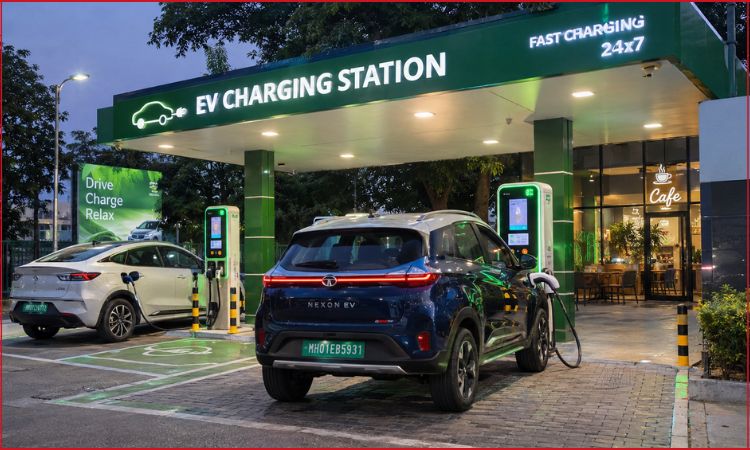
- Food and retail – A fast-charging customer may wait anywhere from 20 to 60 minutes depending on the vehicle and the charger. That is time to buy a coffee, a snack or something from a nearby shop. Cafés, convenience stores and vending machines can add income that has nothing to do with electricity sales.
EV Charging Station Profit: What Really Matters
Here is the biggest myth about this business: that installing a charger automatically makes you money. It does not.
Utilisation decides everything. A ₹15 lakh station that is busy every day can earn more than a ₹30 lakh station sitting in a quiet corner. When you work out your expected EV charging station profit, look at revenue per charger, utilisation rate and operating margin, not just the size of the installation.
Take a simple example. Say your station brings in ₹4,000 a day from charging. Over a month, that is about ₹1.2 lakh in gross revenue. It sounds good, but it is not your profit. You still have to pay for electricity, rent, salaries, maintenance, software, taxes and payment charges. If electricity and running costs eat up a large share of the income, what is left may be quite modest.
A Realistic Look at ROI
Let us use a hypothetical station that needs ₹15 lakh upfront. Suppose that once it settles, it earns ₹1.5 lakh a month. After electricity, rent, maintenance, staff and other costs, assume you keep ₹50,000 a month as operating profit. That works out to around ₹6 lakh a year, so you would recover your EV charging station investment in roughly two and a half years.
Please treat that as an illustration, not a promise. Real returns can look very different depending on your electricity tariff, land cost, pricing, financing cost, local demand and, above all, utilisation. The first few months are often the hardest, because customers are still discovering your station and usage stays low.
Best Locations for an EV Charging Station
Location can make or break the whole project. These are the places worth considering:
- Highways: They serve intercity EV users and commercial vehicles, but heavy traffic alone does not guarantee charging demand, so plan carefully.
- Shopping malls: Customers charge while they shop, eat or watch a film. This is the classic destination-charging model.
- Office complexes: Employees park for hours, which makes slower AC charging a natural fit.
- Hotels and restaurants: Charging becomes an extra service that attracts guests who own EVs.
- Residential communities: Many apartment residents have no convenient private charging, so this is a strong opportunity.
- Fleet hubs: Possibly the most attractive of all, because fleet vehicles create repeat demand every day.
AC vs DC Fast Charging: Which One Should You Choose?
Every new operator faces this decision. Should you install AC chargers, DC chargers or a mix of both?
| Feature | AC charging | DC fast charging |
| Equipment cost | Lower | Higher |
| Charging speed | Slower | Faster |
| Ideal locations | Offices, apartments, hotels | Highways, fleets, commercial hubs |
| Parking duration | Longer | Shorter |
| Infrastructure needed | Relatively lower | Higher |
| Investment risk | Lower | Higher |
Neither is better in every case. A highway station may do well with DC fast charging, while an office building could earn better returns from AC chargers. The right answer depends on how long your customers stay and what they do while they wait. Getting this choice right has a direct effect on both your EV charging station cost and your long-term returns.
Government Support and the Policy Picture
India has been pushing EV adoption and the growth of electric vehicle charging infrastructure through central and state-level initiatives. Policies can shape how chargers are deployed, how electricity connections are given, what incentives exist and how the economics of the business work out.
That said, do not build your entire plan around subsidies. Schemes and state incentives change over time. A good charging station should still make sense without them. Before you invest, check the latest central and state rules, your electricity tariff structure and any local approvals you will need.
The Biggest Challenges You Should Expect
The EV charging business in India has real potential, but it comes with real risks too.
- Low early utilisation: This is probably the number one challenge. EV adoption may be rising, but your particular station can still get few customers at first.
- High upfront cost: Fast chargers, electrical work and land need serious capital.
- Electricity expenses: Power is one of your largest recurring costs.
- Competition: Big charging networks, vehicle makers, fuel retailers and independent operators are all entering the market.
- Changing technology: Charging standards, batteries and vehicle design keep evolving, and what you buy today has to stay useful for years.
- Downtime: An offline charger earns nothing, which is why maintenance is so important.
How to Improve EV Charging Station Profit
Focus on usage, not on the number of chargers. Here is how most successful operators think about it.
- Choose the location carefully. Study traffic, nearby EV ownership, competing stations, parking availability and the local electricity infrastructure before you sign anything.
- Go after repeat customers. Fleet contracts and subscription plans give you steadier demand.
- Add a second business. A café, a small store or an advertising tie-up can lift the overall economics of the site.
- Use technology. Mobile apps, digital payments, remote monitoring and live charger availability make the experience smoother for drivers.
- Keep fixed costs in check. Excessive rent can wipe out your margin even when charging demand is strong.
Is the EV Charging Station Business Profitable in 2026?
Yes, but it is not a guaranteed high-profit business. The EV charging station business 2026 works best where EV use and charging demand are already visible. Stations serving electric fleets, highways, commercial districts and dense residential areas have a better shot at healthy utilisation than a poorly placed standalone charger.
If you are new to this, starting small and expanding after you see real demand is usually safer than putting in a large amount on day one. And always judge the project on actual numbers: expected charging sessions per day, average energy sold, electricity cost, rent, maintenance and financing expenses.
Final Verdict
The EV charging station business 2026 has real long-term potential, but profit depends much more on how well you execute than on the EV trend itself. You are not just selling electricity. You are building a convenient place where EV users naturally spend time.
If you have access to good real estate, dependable power and a base of repeat customers, a profitable EV business India can realistically be built around charging. But before you put in ₹10 lakh, ₹20 lakh or more as EV charging station investment, do a detailed feasibility study.
The formula is simple: high utilisation, controlled costs, a smart location and a charging experience drivers can rely on.
As India’s EV ecosystem matures, electric vehicle charging infrastructure is likely to become a bigger part of how the country moves and does business, and the people who plan well today will be best placed to benefit