A shuttered factory building in a Bengal town, empty for two years after its previous owner went bankrupt, became the unlikely starting point for one of India’s most recognised brands.
Tomas Bata chose Konnagar in 1931 for reasons that had nothing to do with sentiment cheap labour, rising import tariffs on foreign goods, and millions of Indians who owned no footwear at all. That gamble opens the Bata Success Story in India, a business that has now outlasted its founder, two world wars’ aftershocks, and the arrival of Nike, Adidas, and a wave of homegrown sneaker startups.
Bata himself never saw the company’s Indian growth story unfold. He died in a plane crash in 1932, barely a year after setting up the Konnagar unit, leaving behind a business built on affordable, mass-produced shoes for a population that had largely walked barefoot.
What survived him was a formula: manufacture locally, price for the masses, and build townships around factories. That formula still shapes how the company operates in India today.
Quick Glance
| Founder | Tomas Bata |
| Company | Bata India Limited |
| Founded | 1931, Konnagar, West Bengal |
| Sector | Footwear manufacturing and retail |
| Key Stat | ₹3,488.79 crore FY25 revenue (Business Standard, 2025) |
| Current Status | Publicly listed since 1973; largest footwear retailer in India |
The Early Journey
The Founding Vision (1894)
The Bata story doesn’t actually begin in India. It starts in 1894 in Zlin, where Tomas Bata and his siblings, Anna and Antonin, opened a small shoemaking workshop built on one idea good shoes shouldn’t be a luxury item.
Assembly-Line Innovation
That idea pushed the Bata siblings toward assembly-line shoe production years before most European manufacturers thought to organise a factory floor that way. The efficiency this created is a big part of why the company could later undercut competitors on price without cutting corners on durability, wherever it set up shop.
Looking Beyond Europe
By the time the Great Depression crushed export demand in the late 1920s, Tomas Bata was already looking past Europe for cheaper materials and untapped buyers. He found both in India.
Setting Up In Konnagar
Bata rented the old Anderson Company building in Konnagar, near Kolkata, in 1931 and flew in 75 experts from Czechoslovakia to get production running. Operations soon expanded into Batanagar, the company township that gave thousands of workers housing, healthcare, education, and steady employment a model of industrial welfare that was unusual for its time in India.
Early Struggles In India
The early years were still rough. Imported footwear dominated Indian shelves, organised distribution barely existed, and Bata had to convince a largely barefoot population that shoes were worth the price. By 1939, the company had grown to nearly 4,000 employees and 86 shops, selling roughly 3,500 pairs a week an early, overlooked chapter of Bata India history that set the template for everything after.
Within a few decades, that template had turned Bata stores into a familiar sight in almost every Indian city, well before most of its global rivals had figured out how to manufacture and sell at Indian price points.
Building The Business
Manufacturing First. Bata’s Indian operations were never a trading office bolted onto a foreign factory. Production started at Konnagar and later moved to the sprawling Batanagar township near Kolkata, founded in 1934 as a self-contained industrial colony with housing, schools, and hospitals for workers.
Pricing For Volume, Not Margin. The Bata business model has always leaned on volume over premium pricing, aimed at clerks, students, and factory workers rather than the elite. That approach built loyalty across generations of Indian families long before mass-market pricing became a strategy textbook term.
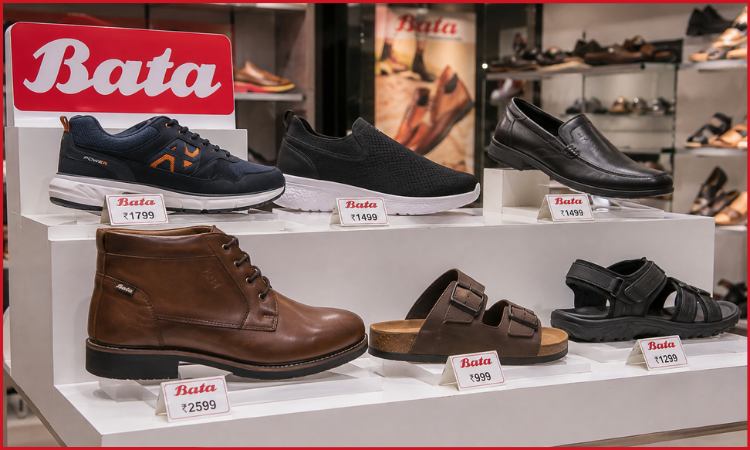
Retail Before Retail Was Common. Long before shopping malls existed, Bata opened its own stores in small towns where organised retail didn’t exist yet. That early bet on owned real estate still anchors Bata’s retail strategy, with a network stretching past 1,600 stores across urban and semi-urban India.
Bata Growth Story & Turning Points
| Year | Milestone |
| 1931 | Factory begins production in Konnagar |
| 1934 | Foundation of Batanagar township laid |
| 1936 | Production shifts fully to Batanagar; leather footwear begins |
| 1973 | Company lists publicly, renamed Bata India Limited |
| 2025 | FY25 revenue reaches ₹3,488.79 crore; profit up 46% YoY |
Each milestone marks a shift in ambition from a rented shed to a company town, then to a publicly traded manufacturer answering to shareholders instead of just a founding family.
The bigger structural shift came decades later, as Bata leaned into franchising to reach towns its company-owned stores couldn’t justify financially on their own. That single decision explains much of Bata’s growth story over the past fifteen years of expansion without the capital drag of owning every square foot.
Today the company holds close to a fifth of India’s organised footwear market by value, moving roughly 47 million pairs of shoes annually across price points and categories.
Challenges & Setbacks
- Legacy Perception – Bata’s biggest weakness has also been its biggest strength: legacy. The brand grew so identified with school shoes and basic formal wear that younger, fashion-first shoppers started treating it as their parents’ brand rather than their own.
- Margin Pressure – that perception gap shows up in the numbers. Net profit fell nearly 19 percent year-on-year in FY24 even as revenue stayed roughly flat, with margins compressed by input costs and share losses at the entry-level price band Bata once owned outright.
- Digital-First Competition – competing with digital-first sneaker labels and quick-commerce fashion retailers has strained a company still anchored to physical stores and long product-development cycles. Sub-brands like Floatz have helped close the gap, but shifting a Bata brand journey India built on durability toward one built on style remains unfinished business.
- Bata vs Global Footwear Giants- Bata’s dominance in India didn’t go unchallenged for long. As India’s economy opened up in the 1990s and 2000s, international players entered the fray, competing directly for wallet share in the Indian footwear market. While Bata leaned on affordability and mass reach, brands like Nike and Adidas built their positioning around performance and lifestyle appeal — a rivalry that continues to shape how Indian consumers choose their shoes today.
This shift also opened room for other global sportswear names to carve out space in India, each following a different playbook from Bata’s value-first approach.
Key Takeaways
- Manufacturing locally from year one gave Bata cost and distribution advantages competitors spent decades trying to replicate.
- Franchising, not just company-owned stores, is what let Bata’s retail strategy scale into small-town India without straining its balance sheet.
- Legacy brand equity cuts both ways: it built trust across generations but also made Bata slow to court younger, style-conscious buyers.
- Category diversification through sub-brands like Floatz has proven a faster fix than repositioning the core Bata brand.
- Volume leadership doesn’t guarantee margin leadership; Bata trails newer entrants on profitability even while leading on store count and pairs sold.
Conclusion
Nearly a century in, Bata’s real achievement isn’t longevity for its own sake; it’s staying structurally relevant while the footwear business around it changed almost beyond recognition. Few companies manufacture, retail, and franchise at Bata’s scale within a single Indian category.
What comes next will test whether Bata 100 years in India were a peak or a foundation. The brand’s next decade depends less on nostalgia and more on whether it can out-execute quick-commerce rivals on speed and digital-first competitors on style, without losing the mass-market trust that built the company in the first place.
Frequently Asked Questions
1. When was Bata established in India?
Bata launched their Indian production in 1931 with a factory in Konnagar, near Kolkata, in a former factory building of a failed company.
2. Who founded Bata, and is the founder still connected to the company?
Tomas Bata founded the parent company in Zlin in 1894 and personally set up its Indian operations in 1931, though he died in a plane crash the following year, before seeing the business reach its current scale.
3. How many stores does Bata India operate today?
Bata India operates well over 1,600 stores across urban and semi-urban India, combining company-owned outlets with a growing base of franchise partners.
4. What is Bata’s market share in India’s footwear industry?
Bata holds an estimated 15 to 20 percent share of India’s organised footwear market by value, making it the country’s largest footwear brand by store count and volume.
5. How has Bata adapted its business model for younger consumers?
Bata has introduced casual and sneaker-focused sub-brands, most notably Floatz, to compete with digital-first footwear labels while keeping its core value-for-money positioning intact.