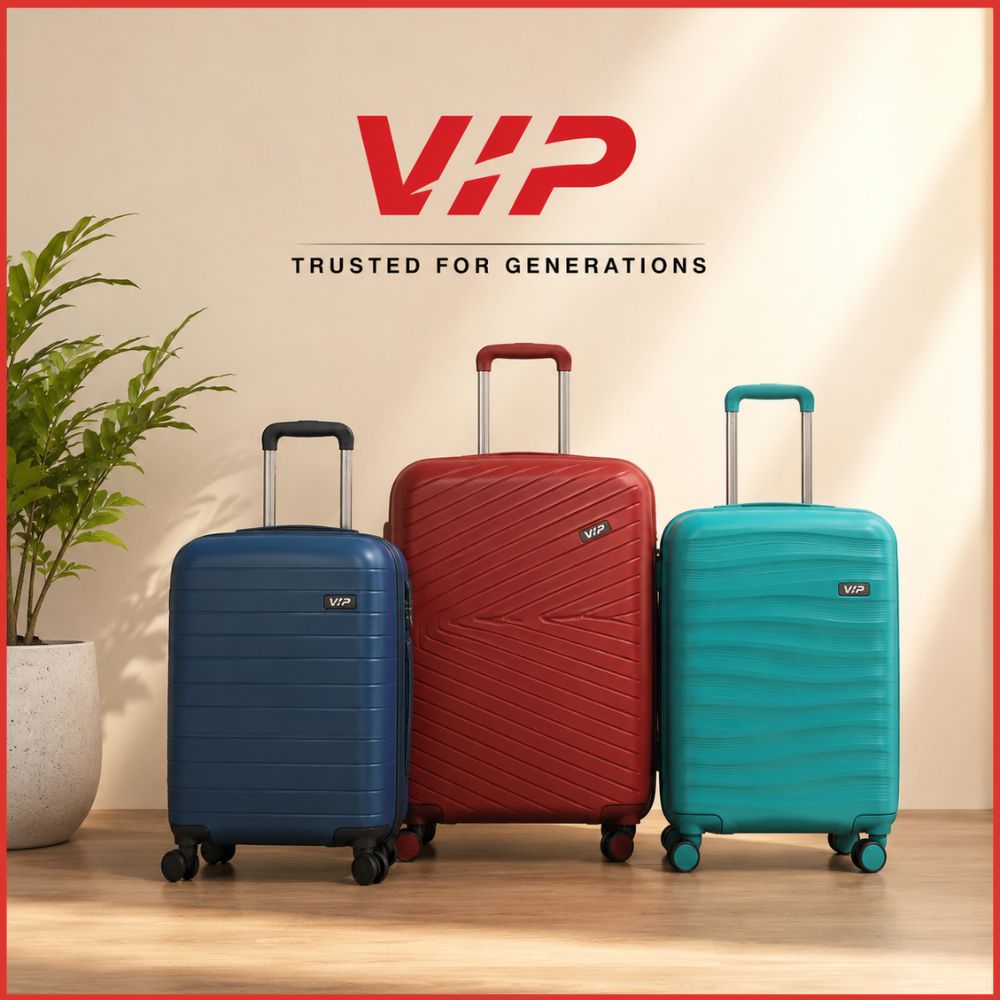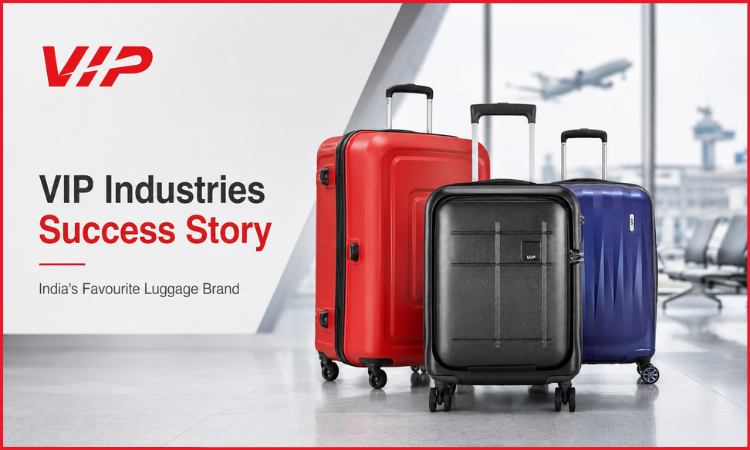
For more than five decades, VIP Industries has been the default answer to a simple question in Indian households: which suitcase should we buy? Long before Samsonite, American Tourister, or Safari became household names in India, VIP had already made the hard-sided suitcase a fixture in nearly every Indian home. Built by Dilip Piramal, a member of one of India’s most prominent business families, VIP Industries grew into Asia’s largest luggage manufacturer and the world’s second-largest, commanding retail presence across more than 8,000 outlets in India and distribution in over 45 countries.
Yet the VIP Industries story is not simply one of steady, uninterrupted growth. It is a story with a clear arc — bold founding, market dominance, brand-building genius, and, in its most recent and most consequential chapter, a deliberate and public decision by the founding family to hand over control to professional investors. For a business audience studying Indian family business success stories, VIP Industries offers something unusually candid: an on-the-record account, from the founder himself, of why a business built over half a century ultimately outgrew its founding family’s appetite to run it.
1968–1971: A Textile Family’s Unlikely Bet on Luggage
VIP Industries traces its roots to 1968, when a company called Aristo Plast Private Limited was incorporated in Mumbai. Aristo Plast was subsequently acquired by Blow Plast Limited in 1971, and it was under Blow Plast that the VIP brand and India’s first moulded plastic luggage line were introduced that same year.
A few details of that founding context are worth pausing on:
- A family split, not a startup. Dilip Piramal was born in Mumbai in 1949, the second of three sons of Gopikishan Piramal, a leading figure in India’s Marwari business community with roots in Bagar, Rajasthan.
- A pivot away from textiles. The broader Piramal family’s traditional business was rooted in textiles, but Dilip charted a distinct path, eventually taking full control of Blow Plast Limited following a family business split among the Piramal brothers.
- Timing that mattered. In the early 1970s, most Indians travelled with heavy iron trunks or wooden boxes. VIP’s introduction of a lightweight, durable, hard-sided suitcase was a genuine category creation moment in Indian retail, not an incremental product launch.
Dilip Piramal formally became Chairman and Managing Director of the company in 1980, following his father’s passing, and it was from this point that VIP Industries began its transformation into a national institution.
Building a National Monopoly on Indian Luggage
It was under Dilip Piramal’s stewardship through the ‘80s and ‘90s that the company rose from an upstart start-up to dominate the Indian luggage scene. Building factories in Nashik, Jalgaon, and Nagpur, VIP created its own production line while also developing its own retail outlets that penetrated every city and town across the country.
Listed on the BSE back then (in ’89) the firm tapped into the burgeoning availability of capital via public capital markets – at least until he sold them off to fund his growing investments elsewhere! But, by the end of the decade, VIP had taken more than 70 percent of the market share in the organised Indian luggage sector. And by the mid ’90s the entire nation’s luggage sales were split between the top two firms – one being VIP. So successful had they been that even today “VIP” has become synonymous with luggage in India just like so many other icons of Indian industry.
In fact this story is textbook when it comes to brand domination within specific sectors. From product innovation to mass manufacturing capability combined with massive distribution networks, the case study on how to be virtually monopolistic in your field couldn’t be better demonstrated anywhere else. One thing remains certain though – no matter what happened next those decades are etched into Indian retailing history forevermore.
The Multi-Brand Strategy: Aristocrat, Skybags, Carlton, and Caprese
Rather than relying on a single master brand across every price point, Dilip Piramal pursued a deliberate multi-brand architecture — a strategic choice that remains one of the most studied structural decisions in India’s branded consumer goods sector.
- Aristocrat acquisition (1988). With VIP at its commercial peak, Piramal moved to acquire the Aristocrat brand, partnering with longtime associate Mohan Lal Jatia, who brought deep sourcing and supply-chain experience to the deal.
- Segment-specific brands. Over subsequent decades, VIP’s portfolio expanded to include Skybags (targeted at younger, more casual buyers), Carlton (positioned at the premium end), and Caprese (handbags and women’s accessories), allowing the company to address distinct price points and consumer segments without diluting the core VIP brand.
- Category innovation under Skybags. Dilip Piramal is credited with introducing four-wheeled luggage technology to the Indian market, first implemented under the Skybags brand, a meaningful product innovation in a category that had previously relied on two-wheeled or wheel-less designs.
This multi-brand approach allowed VIP Industries to compete simultaneously in mass-market, youth, and premium luggage segments — a strategy that gave the company resilience against single-brand competitors for decades.
Radhika Piramal and the Push Toward Professional Growth
The next phase of growth for VIP Industries involved the arrival of the “next-gen”, specifically the eldest child of Dilip Piramal’s – his daughter Radhika Piramal. Holding a degree from Oxford along with an MBA from Harvard Business school, she joined the ranks of VIP Industries back in 2010 and quickly carved a niche as a Managing Director of the organisation.
Working closely with her father, she helped set aggressive growth targets for the company – even stating aspirations of reaching billion dollar revenues! But what makes Radhika Piramal stand out among other top executives are her unique traits that make her an extremely inspiring leader.
Coming from a very traditional society, being open about your sexuality isn’t easy – especially when you belong to India. And yet here’s Radhika Piramal who identifies herself as Gay and proudly presents her wife, Amanda, to whom she is married and lives with her in London! In fact, I would go ahead and say that Radhika Piramal is one of those rare few who are part of the ‘openly LGBTQ’ community in senior positions within a leading listed company in India!.
For a period, the father-daughter leadership combination positioned VIP Industries as a case study in successful generational transition — professional credentials layered onto founder-era brand equity.
Headwinds: Pandemic Disruption and Rising Competition
Despite its historic dominance, VIP Industries entered the 2020s facing a materially more difficult operating environment than the one in which it built its market position.
Global and domestic travel disruptions during the COVID-19 pandemic hit the luggage category with particular severity, given how directly demand is tied to travel volumes. What followed wasn’t a quick recovery: VIP Industries faced a sustained, multi-year decline in market share across five consecutive years, even as competitors such as Safari Industries and global players like Samsonite gained ground. The financial toll became difficult to ignore by FY2024–25, when the company reported a consolidated net loss that widened to approximately ₹27.36 crore in the fourth quarter alone, with revenue declining by roughly 4.28% year-on-year and losses recorded across all four quarters of the fiscal year. Underneath the numbers sat a structural competitive challenge, too — rivals with sharper digital-first marketing, leaner cost structures, and more aggressive e-commerce distribution had begun eroding the retail-network advantage that had defined VIP’s competitive moat for decades.
These pressures set the stage for the most significant development in VIP Industries’ recent history.
2025: The Piramal Family Steps Back From Control
In July 2025, Dilip Piramal (and his family) struck a deal to sell up to 32% of their stake in VIP Industries to a consortium led by Multiples Private Equity. That transaction has since been closed down, which effectively ends the founding family’s control over VIP Industries, which has spanned over five decades now.
The stake sale was valued at an approximate of ₹1,763 crore and priced at ₹388/share – 15% less than VIP’s market price when the news was announced. A mandatory open offer is also being made as per SEBI’s takeover rules, which requires the consortium to buy an extra 26% of shares on behalf of public shareholders. This will be worth an approximate value of ₹1,437.78 crore.
The other members of the buying consortium include Multiples Private Equity Fund IV, Multiples Private Equity Gift Fund IV, Samvibhag Securities, and even the founder of online jewelry marketplace CaratLane, Mithun Padam Sacheti and his brother Siddhartha Sacheti. The Competition Commission Of India cleared this transaction in the months that have passed since, while by the month-end of December 2025, the acquiring party is reported to have completed the acquisition through open-market transactions.
This brings down the Piramal-linked promoter entities’ combined holdings of shares to only a rough figure of 17% now. While Dilip Piramal steps into his new post as chairman emeritus, he can still nominate one family member to suggest a name to take over from him or appoint an independent director.
In an interview shortly after the announcement, Dilip Piramal offered a direct and notably candid explanation: “We are a family-owned business, and the next generation is not very keen on running it.” This absence of succession interest, combined with sustained market share erosion and consecutive quarters of financial losses, was cited as the central rationale for bringing in professional ownership rather than attempting a family-led turnaround.
By September 2025, following the board changes that accompanied the transaction, Radhika Piramal stepped down as Vice-Chairperson and Executive Director, marking the formal and complete conclusion of the founding family’s operational involvement in the company they had built.
VIP Industries by the Numbers
| Metric | Detail |
|---|---|
| Original incorporation | 1968, as Aristo Plast Pvt. Ltd. |
| VIP brand and luggage line launched | 1971, under Blow Plast Ltd. |
| Founder-led chairmanship began | 1980 (Dilip Piramal) |
| Listed on | BSE (507880), NSE (VIPIND) |
| Public listing year | 1989 |
| Headquarters | Mumbai, Maharashtra |
| Core brands | VIP, Aristocrat, Skybags, Carlton, Caprese |
| Peak organised-market share | 70%+ (late 1990s) |
| Retail presence | 8,000+ outlets in India; 45+ countries globally |
| Revenue (FY2024–25) | Approx. ₹2,170 crore (~US $255 million) |
| Employees | Approx. 5,000 |
| 2025 ownership change | Multiples PE-led consortium acquired ~32% stake (~₹1,763 crore); mandatory open offer for 26% more (~₹1,438 crore); transaction completed December 2025 |
| Founding family’s post-2025 role | Dilip Piramal as Chairman Emeritus; Radhika Piramal exited operational roles (September 2025) |
Note: Figures reflect publicly reported data available at the time of writing. VIP Industries has recently undergone a change in ownership structure; readers evaluating it as an investment should consult current exchange filings, company disclosures, and a qualified financial advisor rather than relying solely on this summary.
What the VIP Industries Story Teaches About Indian Family Businesses
- Category creation is a durable competitive advantage. VIP’s early 1970s introduction of lightweight moulded luggage gave it a multi-decade head start that pure marketing spend could not easily replicate.
- A multi-brand portfolio can extend a founder’s original insight far beyond its original scope. By building Aristocrat, Skybags, Carlton, and Caprese around the core VIP business, Dilip Piramal captured multiple price segments rather than ceding them to competitors.
- Market dominance is not permanent. Five consecutive years of share erosion, even against a backdrop of decades-long category leadership, is a reminder that no competitive position — however entrenched — is immune to shifting consumer behaviour and sharper rivals.
- Succession requires willingness, not just capability. Radhika Piramal’s professional credentials were never in question; the deciding factor in VIP’s ownership transition was the next generation’s stated lack of interest in running the business.
- Founder candour can be a strength, not a liability. Dilip Piramal’s public, on-the-record explanation for the stake sale — rather than a vague corporate statement — offers a rare, instructive level of transparency about why even category-defining Indian family businesses sometimes choose to professionalise ownership rather than force a generational handover.
Conclusion
VIP Industries did not fail. It succeeded for over fifty years, built a category from nothing, and put a hard-sided suitcase into more Indian homes than any competitor ever managed. What changed in 2025 was not the strength of the brand but the willingness of its founding family to keep running it — and Dilip Piramal deserves real credit for saying so plainly rather than dressing up an ownership sale in vague corporate language.
There is something quietly moving, honestly, about a founder choosing candour over spin at the very moment he is stepping away from the thing he spent forty-five years building. Most exits like this get wrapped in careful phrases about “strategic realignment” or “unlocking value.” Piramal simply said his children weren’t interested, and that was reason enough. It’s a small thing, but it says a great deal about the kind of leader he was. The lesson for Indian business readers is direct: a company’s greatest long-term risk is rarely competition alone. It is what happens when the generation built to inherit a legacy simply does not want it. VIP Industries’ next chapter now belongs to professional investors — but the luggage in Indian homes, for the foreseeable future, will still say VIP.
Frequently Asked Questions
Who founded VIP Industries?
VIP Industries traces its origins to Aristo Plast Private Limited, incorporated in 1968 and later acquired by Blow Plast Limited, under which the VIP luggage brand launched in 1971. Dilip Piramal became Chairman and Managing Director in 1980 and led the company’s transformation into India’s largest luggage manufacturer.
Is VIP Industries still owned by the Piramal family?
No, not in a controlling sense. In 2025, the Piramal family sold roughly 32% of its stake to a consortium led by Multiples Private Equity, a transaction that closed in December 2025 and transferred control of the company. Dilip Piramal now holds the title of Chairman Emeritus, while his daughter Radhika Piramal stepped down from her executive role in September 2025, ending the founding family’s operational involvement.
What brands does VIP Industries own?
VIP Industries’ portfolio includes the flagship VIP brand along with Aristocrat, Skybags, Carlton, and Caprese, each targeting a distinct price point or consumer segment within the luggage and bags market.
Why did the Piramal family sell VIP Industries?
Dilip Piramal has publicly stated that the next generation of the family was not interested in running the business, combined with several consecutive years of declining market share and financial losses, making professional ownership the preferred path to protect the company’s long-term value.
Is VIP Industries the largest luggage company in India?
VIP Industries has historically been described as Asia’s largest and the world’s second-largest luggage manufacturer, though it has faced increasing competition from rivals such as Safari Industries and Samsonite in recent years.