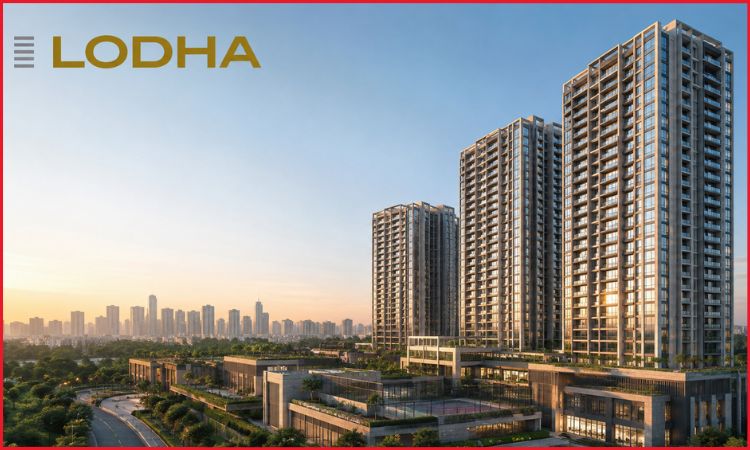
Founded in 1980 in Mumbai, the Lodha Group (Macrotech Developers) started off with modest ambitions. A group of investors aimed to provide affordable housing for middle-class families living in the outskirts of Mumbai. Over the decades, they have built their way up to becoming the leading real estate player in India, developing iconic structures such as Trump Tower in Mumbai, World One skyscraper, and other high-end residential buildings in many metros of India and even international locations.
Lodha’s journey serves as a microcosm of how successful real estate businesses are established and scaled across emerging economies. For those interested in following trends among Indian entrepreneurs, this article explores various facets of the group’s growth, from its initial land acquisition strategies to a professional leadership transition at the helm of a growing publicly-listed company.
Finally, we trace the evolution of India’s real estate landscape over time—from being primarily a private industry to increasingly regulated sectors influenced by public markets and institutional investors alike. We begin our account with Mangal Prabhat Lodha’s first housing ventures back then, ending with Macrotech Developers’ emergence today among the largest listed real-estate firms in India based upon market capitalization alone!
1980: A Lawyer From Jodhpur Enters Mumbai Real Estate
The Lodha Group’s origins begin not with a real estate background, but with a law degree. Mangal Prabhat Lodha, a native of Jodhpur, Rajasthan, moved to Mumbai and founded the company’s real estate business in 1980, at a time when the city’s aspirational middle class had few organised developers building homes specifically for them.
A few details of that founding context are worth sitting with, because they explain a lot about the company’s later instincts:
- A legal background, not a construction one. Lodha holds a law degree from the University of Jodhpur, an unconventional entry point into real estate development.
- A focus on Mumbai’s periphery. Rather than competing in the city’s already-crowded prime districts, Lodha began by constructing housing in Mumbai’s far-flung suburbs, where land was cheaper and demand from middle-income buyers was largely unmet.
- Early political involvement. Lodha would go on to become a long-serving Member of the Legislative Assembly (MLA) for Mumbai’s Malabar Hill constituency, a role that ran in parallel with his real estate career for decades.
This suburb-first, middle-class-first approach would define the company’s identity for its first two decades, well before the Lodha name became synonymous with luxury towers.
Building the Middle-Class Housing Foundation
For years prior to its emergence as an ultra-luxury real estate developer, the group focused on affordable and mid-income housing. These are still a substantial portion of their revenues today, which gives them the capacity to invest in larger and more complex development projects while also providing steady cash flows from these properties. Projects such as their township-style developments like Palava in the Navi Mumbai-Dombivali region or numerous other projects located throughout Thane were designed with affordability and scalability for middle-class buyers at the center of their design.
As detailed within their IPO documents, affordable and mid income housing made up more than half of their entire residential portfolio. It’s worth noting that although they may be best known now for luxury real estate, they started out offering what might be considered the exact opposite: low-end homes. This provided them with an extensive base of experience dealing with high-volume, large-scale residential construction.
The Second Generation: Abhishek Lodha Joins the Business
A defining inflection point in the Lodha Group’s history came in 2003, when Mangal Prabhat Lodha’s sons, Abhishek Lodha and Abhinandan Lodha, joined the family business. Their entry marked the beginning of a far more aggressive growth phase.
Abhishek Lodha studied industrial engineering at the Georgia Institute of Technology and later gained experience at McKinsey & Company, bringing a more institutional, data-driven approach to a business that had been built on relationship-driven land deals. Following the brothers’ entry, the company began aggressively acquiring prime land parcels, moving well beyond its original suburban, middle-class housing focus — a shift widely credited with diversifying the business and introducing more structured, scalable management practices.
Abhinandan Lodha would later leave the core business to found his own ventures, while Abhishek Lodha went on to lead the company as Managing Director and CEO through its most transformative years, including its eventual public listing.
Scaling Up: Landmark Acquisitions and Luxury Projects
With institutional capital and a more aggressive growth strategy in place, Lodha Group moved into a phase defined by high-profile land acquisitions and landmark luxury developments that reshaped Mumbai’s skyline.
- Deutsche Bank investment (2007). Deutsche Bank invested approximately ₹1,640 crore into Lodha’s subsidiary, Cowtown Land Development Limited, via compulsorily convertible debentures, signalling early institutional confidence in the company.
- Wadala land acquisition (2010). Lodha emerged as the highest bidder for a 22.5-acre plot in Wadala, Mumbai, paying approximately ₹4,053 crore to the Mumbai Metropolitan Region Development Authority — one of the largest land deals in Indian real estate at the time.
- Washington House acquisition (2012). The company acquired the former US consulate residential building on Altamount Road for roughly ₹341.82 crore, later developing it into the ultra-luxury Lodha Altamount project.
- Trump Tower Mumbai. Lodha developed Mumbai’s Trump Tower, a 78-storey luxury skyscraper within its larger “The Park” complex in the city’s midtown area, cementing the brand’s association with high-end residential real estate.
- World One / Lodha World Towers. Among the tallest residential towers in the world at the time of construction, this project became one of the clearest symbols of the company’s shift from suburban housing to landmark luxury development.
This period illustrates a pattern common among large Indian developers: using a stable, high-volume affordable housing business as a financial base from which to fund far riskier, capital-intensive luxury projects.
Global Ambitions: The London Expansion
Lodha Group’s ambitions were not confined to India. In 2013, the company made its first international move, entering the London real estate market with a landmark acquisition.
Lodha acquired MacDonald House, a landmark property at 1 Grosvenor Square in prime Central London, from the Canadian government for more than GBP 300 million — approximately ₹3,100 crore at the time. A year later, in 2014, the company acquired a second prime Central London site, New Court on Carey Street, for GBP 90 million. Even years afterward, these London projects continued to contribute meaningfully to results, with UK sales bookings running into hundreds of crores of rupees in individual quarters.
The London expansion positioned Lodha as one of the few Indian developers with a genuine international residential portfolio, adding a layer of geographic diversification well before the company pursued its Indian public listing.
2021: The Macrotech Developers IPO
Withdrawing their original attempt at going public many years ago, they finally succeeded by completing their initial public offering (IPO) in 2021 under the corporate name “Macrotech Developers Limited” by raising approximately Rs.2500 crore.
In addition to changing its name from “Lodha Developers” to “Macrotech Developers” in May 2019, right before the IPO, the group also retained the word “Lodha” to be used as their consumer-facing brand name for all its project names. The IPO allowed them to access a fresh source of funds – this time less dependent on private debt and promoter’s own money – for acquiring land and developing projects. For this reason, the promoters’ holdings were to be reduced down from about 88.5 per cent to 75 percent in three years as a part of their listing agreement.
Shortly after its listing, the company successfully raised another Rs.4000 crore in what’s called a “qualified institutional placement (QIP)” to fund its planned growth in under-represented markets. In conclusion, this IPO marks both a strategic and emotional changeover point for the family. Having started off making suburban housing projects over forty years ago, today they have gone full circle and are now listed publicly. This IPO represents the formal move from being a founder-family business to becoming a public company subject to quarterly disclosures and investor expectations.
Post-IPO Growth: Bengaluru, Pune, and Beyond
Following its public listing, Macrotech Developers aggressively pursued an explicit strategy of geographically diversifying its portfolio outside of MMR, citing the growing need for technology-driven housing solutions in the city. It put up ~₹3,000 crores worth of equity capital to break into the Bengaluru real-estate market while also increasing its footprint in the neighboring city of Pune.
Rather than buying land outrightly, the company made more use of capital light JDA’s (Joint Development Agreements), wherein they partnered with landowners in different parts of the country to develop projects on their behalf.
Macrotech Developers’ sales booking or pre-sales (annualised revenue) amounted to around ₹14,520 crs during FY24 and went up to ₹17,630 crs in FY25, outperforming expectations. For FY26, the company has set its sights at hitting ₹21,000 crores. This indicates the company has consistently experienced almost 20 per cent growth annually since its IPO.
The realty industry, including Macrotech Developers, is a notoriously cyclical and capital intensive sector where companies will vary their project launches every year depending on the nature of the markets. As such, we are seeing Macrotech Developers shift its focus towards building high-end residential complexes with higher margins, while still maintaining an aggressive expansion plan which explains the recent push for geographical diversification.
Notwithstanding all this positive momentum, one should bear in mind the huge fluctuations witnessed in its stock prices over the past few months – despite impressive growth numbers being recorded. Thus investors would be well advised to view their investments holistically, keeping in mind both macroeconomic factors as well as micro-industry trends when evaluating potential investment opportunities within this exciting yet challenging space.
A Landmark Philanthropic Commitment
The move has now been made: On October 2024 Abhishek Lodha, along with the rest of his family, made one of the biggest private philanthropic commitments in Indian corporate history when they moved approximately 18 per cent of their shareholding – valuing roughly around ₹20,000crore – in property developers Macrotech Developers to a new entity called the Lodha Philanthropic Foundation (LPF).
A quick look into why Abhishek Lodha decided to take such a huge leap would reveal why we think you should care. Shares are being shifted from promoter entity “Sambhavnath Infrabuild and Farms Private Limited” to the brand new non-profit called “Lodha Philanthropic Foundation”, which focuses on national and social upliftment causes. The LPF is expected to raise money to run its philanthropics via dividend income earned off its existing holding of shares in the company, and will not sell them off anytime soon either.
They’re also restricted from selling the shares until March 2026, nor can they sell any shares beyond 0.5 percent of Macrotech’s equity in the next three years. This is done in order to ensure the LPF does not liquidate holdings if market prices drop too low – i.e., making sure there’s always some capital left over for future causes. The initiative is inspired directly by the Tata family who gave away a huge chunk of their stake to the well-established Tata Trusts some century ago!
Abhishek Lodha explained, “I am happy to announce my family’s decision to give our holding in Macrotech Developers to ‘Lodha Philanthropic Foundation’… I’ve witnessed many other corporations do similar things, but I was inspired by seeing the way the Tata Family gave their whole holding to Tata Trusts.” He continued, “We felt it was time for us to give back to society.”
The move puts the Lodha family within an exclusive club of few Indian promoter families who have formalised large scale structured philanthropy using their listed company’s own equity.
Family Dispute: The Lodha Brothers’ Trademark Case
No comprehensive account of the Lodha Group’s recent history would be complete without acknowledging a significant, publicly reported dispute between the two Lodha brothers.
Macrotech Developers, led by Abhishek Lodha, approached the Bombay High Court to restrain the House of Abhinandan Lodha Estate Holdings — a separate real estate venture founded by younger brother Abhinandan Lodha — from using the “Lodha” brand name. The dispute subsequently expanded into public disagreement over the terms of a 2017 family settlement, with the two sides offering differing accounts of the amount Abhinandan received at the time of the brothers’ business separation.
It’s a slightly uncomfortable footnote to an otherwise polished growth story, and worth including for exactly that reason. For a business audience, the episode is a reminder that even well-structured, professionally managed family enterprises can carry unresolved tensions from earlier ownership transitions — tensions that can resurface publicly once both parties are running separate, competing ventures under related branding.
Lodha Group / Macrotech Developers by the Numbers
| Metric | Detail |
|---|---|
| Founded | 1980, Mumbai |
| Founder | Mangal Prabhat Lodha |
| Current CEO & MD | Abhishek Lodha |
| Corporate name | Macrotech Developers Limited (formerly Lodha Developers) |
| Consumer brand | Lodha |
| Listed on | NSE (LODHA), BSE (543287) |
| IPO year | 2021 (~₹2,500 crore raised) |
| Revenue (FY2025) | Approx. ₹13,779 crore (~US $1.4 billion) |
| Net income (FY2025) | Approx. ₹2,764 crore (~US $290 million) |
| Employees | Approx. 18,600+ |
| Core markets | Mumbai Metropolitan Region, Pune, Bengaluru, London |
| Notable projects | Trump Tower Mumbai, World One, Lodha Altamount, Lodha Park, Palava |
| 2024 philanthropic pledge | ~18% promoter stake (~₹20,000 crore) to Lodha Philanthropic Foundation |
Note: Figures reflect publicly reported data available at the time of writing and are provided for general informational purposes. Macrotech Developers is a publicly traded company; readers considering an investment should consult current company filings, stock exchange disclosures, and a qualified financial advisor rather than relying solely on this summary.
What the Lodha Group Story Teaches About Indian Real Estate
- A stable base segment can fund riskier ambitions. Lodha’s affordable and mid-income housing business generated the volume and cash flow that later financed its luxury and international projects.
- Second-generation leadership can be a genuine growth catalyst. Abhishek Lodha’s entry in 2003 coincided with the company’s shift from a regional builder to an aggressive, land-acquisition-driven developer.
- Going public is a strategic tool, not just an exit. The 2021 IPO gave Macrotech Developers a broader capital base to fund geographic expansion into Bengaluru and beyond, rather than serving primarily as a promoter liquidity event.
- Geographic and segment diversification reduces single-market risk. Expansion into Pune, Bengaluru, Delhi-NCR, and London has made the company less dependent on any single city’s real estate cycle.
- Family enterprises benefit from clear, documented succession terms. The public dispute between the Lodha brothers over their 2017 settlement underscores why clarity in family business separations matters, even years after the fact.
Conclusion
The Lodha Group’s evolution into Macrotech Developers reflects a broader story of how Indian real estate itself has matured — from relationship-driven, largely unregulated construction businesses into professionally managed, publicly listed enterprises operating under institutional scrutiny. What began in 1980 as one lawyer-turned-builder’s bet on Mumbai’s middle-class suburbs has grown into a company with landmark luxury towers, an international footprint in London, a public listing on India’s stock exchanges, and one of the largest private philanthropic commitments in the country’s corporate history.
There’s something genuinely striking, honestly, about a lawyer with no construction background choosing to build homes on the edges of a city rather than compete for its prime addresses — and then, four decades later, watching his son give away a fifth of the family’s stake in the very company that grew from that first bet. It’s the kind of arc that doesn’t come along often in Indian business, and it’s easy to romanticise. But like any large family-founded enterprise navigating succession and scale, the company’s journey has not been without visible friction, and the public rift between the Lodha brothers is a fair reminder that growth on this scale rarely comes without some cost to the people involved. Even so, the underlying trajectory remains one of the more instructive growth stories in Indian real estate — not because it was tidy, but because it wasn’t, and the company kept building anyway.
Frequently Asked Questions
Who founded the Lodha Group?
The Lodha Group was founded in Mumbai in 1980 by Mangal Prabhat Lodha, who began by building middle-class housing in the city’s outer suburbs.
What is the difference between Lodha Group and Macrotech Developers?
Macrotech Developers is the formal corporate name of the company (adopted in 2019, ahead of its 2021 IPO), while “Lodha” remains the consumer-facing brand under which its residential and commercial projects are marketed.
Who currently runs the Lodha Group / Macrotech Developers?
Abhishek Lodha, son of founder Mangal Prabhat Lodha, serves as Managing Director and CEO, having joined the business in 2003 and led its expansion into luxury real estate, international markets, and its public listing.
When did Macrotech Developers go public?
Macrotech Developers completed its initial public offering in 2021, raising approximately ₹2,500 crore and listing on the NSE and BSE.
What are some of Lodha Group’s most famous projects?
Notable Lodha Group projects include Trump Tower Mumbai, World One (Lodha World Towers), Lodha Altamount, Lodha Park, and the large-scale Palava township near Navi Mumbai.
Does Lodha Group operate outside India?
Yes. The company entered the London real estate market in 2013 with the acquisition of MacDonald House in Central London, followed by additional prime London acquisitions, and continues to generate sales from its UK residential projects.