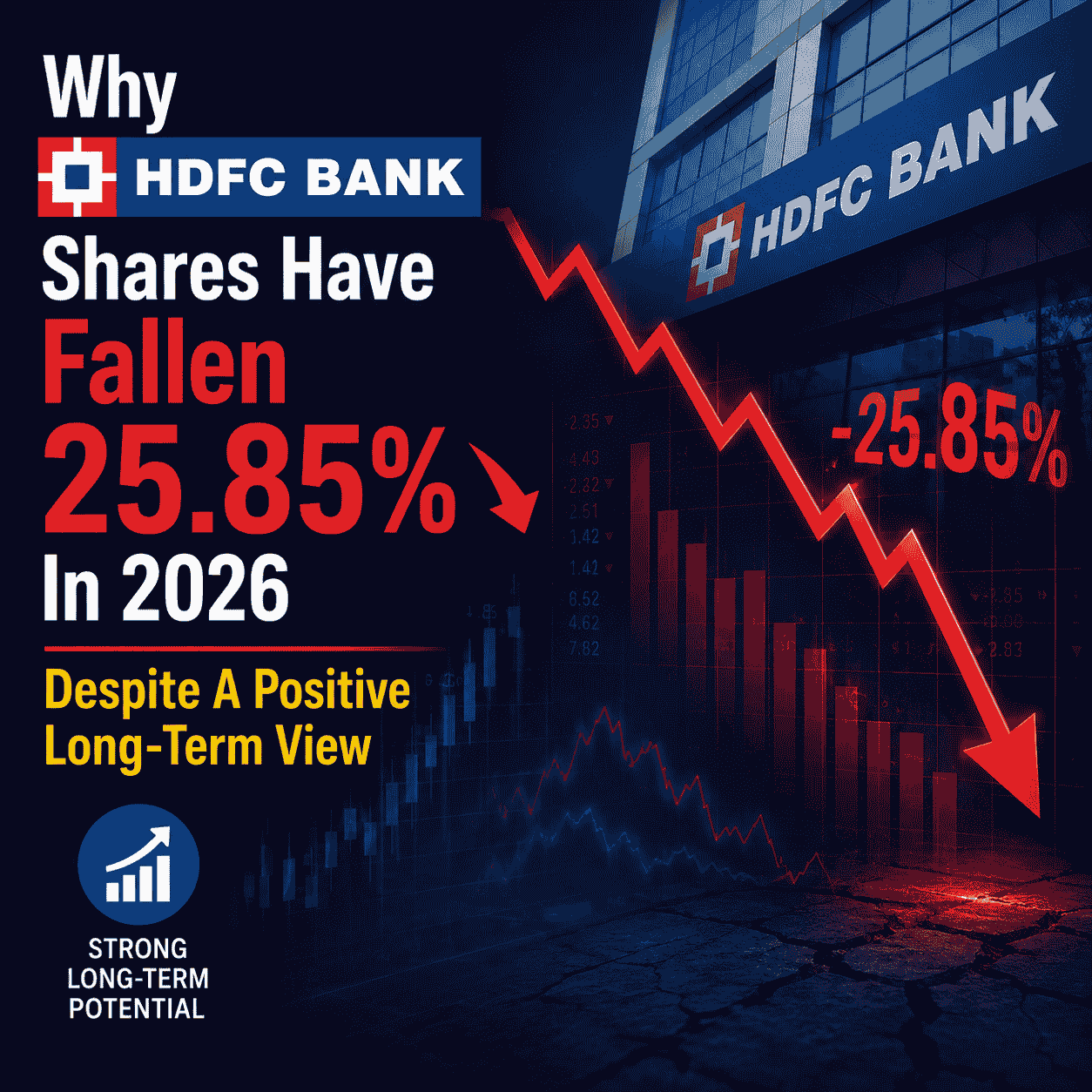
Investors who entered 2026 expecting India’s largest private lender to regain momentum have instead watched its market value shrink sharply. HDFC Bank shares fell 25.85% between December 31, 2025, and August 5, 2026, according to ACE Equity data cited by Business Standard.
The price dropped from ₹991.20 to ₹735. Market capitalisation fell by ₹3.9 trillion to ₹11.32 trillion, raising questions about why the profitable lender has struggled.
The Decline In Numbers
The sell-off in HDFC Bank shares has affected a broad shareholder base. BSE data showed foreign investors held 41.8% in June, while mutual funds owned 30.6% and retail investors 10.32%.
| Indicator | Reported Figure |
| Share price on December 31, 2025 | ₹991.20 |
| Share price on August 5, 2026 | ₹735 |
| Calendar-year decline | 25.85% |
| Market value erased | ₹3.9 trillion |
| Remaining market capitalisation | ₹11.32 trillion |
Jefferies strategist Christopher Wood heightened caution by exiting the lender for MCX and Lenskart. His move underlined how far investor patience had been tested.
Reason One: The Merger Changed The Funding Mix
The July 2023 reverse merger with HDFC nearly doubled the bank’s balance sheet and lifted its credit-deposit ratio. It also brought a sizeable portfolio of wholesale, non-CASA borrowings into the combined business.
Low-cost current and savings deposits did not keep pace with the enlarged loan book. The bank therefore relied more on expensive funding, lifting its costs.
Vinit Bolinjkar, head of research at Ventura Securities, said this combination had “structurally” raised the cost of funds. Until the deposit mix improves, HDFC Bank stock may struggle to receive the valuation premium it enjoyed before the merger.
Reason Two: Net Interest Margins Remain Compressed
Higher funding costs squeezed net interest margin, the difference between lending income and interest paid to depositors. Analysts cited in the report said margins had fallen from pre-merger highs to below 3.3%.
A larger loan book does not guarantee comparable earnings when each rupee lent produces a thinner spread. Bonanza analyst Khushi Mistry said earnings slowed as management prioritised balance-sheet normalisation.
The June-quarter results reinforced those worries, and HDFC Bank shares remained sensitive to any evidence that the margin recovery could take longer than expected.
Reason Three: Governance Questions Hurt Confidence
The resignation of former part-time chairman and independent director Atanu Chakraborty, who referred to ethical concerns, created another layer of uncertainty. Analysts argued that the episode weakened sentiment even if its direct financial impact was limited.
Bank valuations depend heavily on trust. For HDFC Bank stock, the concern extended beyond one departure to a wider perception of execution risk during a difficult post-merger phase.
The bank has pushed back against broader concerns. Chairman Rajiv Kumar said there were “no governance-related concerns at the systemic level” and described the balance sheet as pristine.
What The CEO And Analysts Have Said
CEO Sashidhar Jagdishan told investors in July that Kumar’s appointment had created “a sense of stability” and signalled that uncertainties were being reduced. He said the bank was ready for its next growth stage as management looked ahead.
The outlook from analysts is cautious rather than uniformly negative:
- Asset quality remains a major source of support.
- Management expects credit growth to continue through FY27.
- Retail and small and mid-market lending could provide momentum.
- Better CASA deposits and firmer margins are needed for a meaningful re-rating.
Bolinjkar described HDFC Bank stock as a “patient compounder,” suggesting that investors may need a medium-term horizon rather than expect a rapid rebound.
What To Expect Next
The next phase depends on visible progress. Investors will watch whether low-cost deposits grow faster, margins stabilise, credit expansion remains disciplined and management maintains transparency on governance.
HDFC Bank shares may appear attractive after their fall, particularly to investors who trust the franchise and its asset quality. Yet a cheaper valuation is not the same as an immediate catalyst.
If CASA improves, funding costs ease and FY27 earnings accelerate, HDFC Bank shares could rebuild their lost premium. Until then, recovery requires evidence, time and patience.