A jewellery brand that once commanded a market value running into thousands of crores, then spent years defending itself against loan-default proceedings, doesn’t usually get to write a comeback chapter. PC Jeweller has, and its FY26 numbers suggest that chapter is still being written.
This PC Jeweller success story is less about a spotless rise and more about survival an organised jewellery retailer built by two brothers from Delhi, nearly undone by a banking crisis, and now rebuilding around a leaner store network and a different funding model.
At the centre of it is Balram Garg, the PC Jeweller founder and Managing Director since incorporation, and the public face of both its rapid growth and its recovery.
For anyone tracking Indian retail or studying how promoters survive a debt crisis, Garg’s path through PC Jeweller history offers more nuance than most founder profiles.
Quick Glance
| Founder | Balram Garg (with Padam Chand Gupta) |
| Company | PC Jeweller Ltd |
| Founded | 2005, New Delhi |
| Sector | Organised jewellery retail |
| Key Stat | FY26 consolidated net profit of ₹714.46 crore (Business Standard, 2026) |
| Current Status | Listed on NSE/BSE; bank debt cut by over 90%; targeting debt-free status and franchise-led expansion |
Who Is Balram Garg?
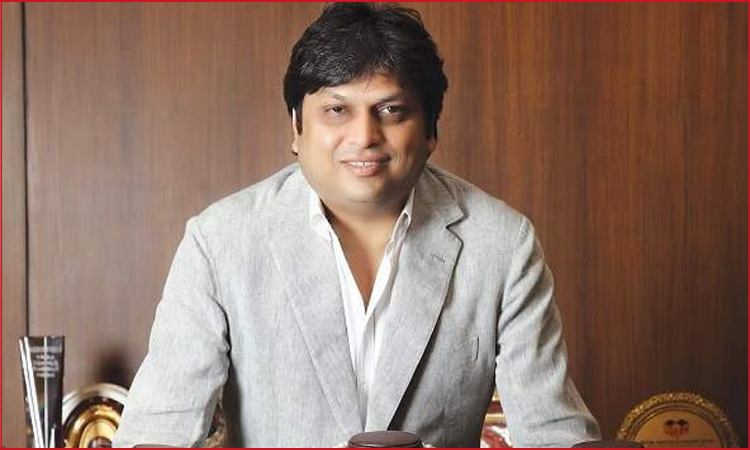
Balram Garg holds a bachelor’s degree in commerce from the University of Delhi. He has spent more than three decades in the jewellery trade, according to his official biography, which gave him a working understanding of India’s unorganised gold market well before he tried to formalise a slice of it. That decades-long grounding in the trade is often cited as the foundation of the Balram Garg success story that followed.
He co-founded PC Jeweller in 2005 with his brother, Padam Chand Gupta, and has served as Managing Director since incorporation. Long before the IPO, this was his daily business running showroom operations, sourcing gold, and managing supplier relationships.
The Balram Garg business journey is a first-generation one. Neither brother inherited an existing jewellery chain; they built the showroom network from a single store.
How PC Jeweller Started
PC Jeweller opened its first showroom in April 2005 in Karol Bagh, one of Delhi’s older wholesale and retail jewellery markets. The location mattered Karol Bagh already had steady footfall from gold buyers, and a new large-format store there could compete directly with the smaller family-run counters around it.
The founding bet was simple: sell only hallmarked gold and certified diamond jewellery, at a time when most Indian buyers had no reliable way to check purity beyond a long personal relationship with a jeweller. That positioning became central to the PC Jeweller business model years before hallmarking became compulsory nationwide.
Early challenges were the ones any capital-intensive retail business runs into funding inventory, building credibility without decades of reputation behind it, and competing against unorganised players who could undercut on price. Growth was steady rather than explosive at first, but the company had reached 30 showrooms across 23 cities by 2012, enough to draw institutional investor interest.
The Growth of PC Jeweller
PC Jeweller went public in December 2012, listing on the NSE and BSE on December 27 after an IPO priced at the top of its ₹125–135 band. The issue was subscribed 6.85 times, a strong signal that investors saw a scalable, branded story in a segment usually dominated by unlisted family businesses a subscription number still cited as a reference point in PC Jeweller history.
Store expansion picked up pace after listing. By March 2018, the company operated close to 92 showrooms, and had already launched WearYourShine.com in 2014–15 to extend its diamond and wedding jewellery catalogue online an early move for an Indian jewellery business at the time.
The PC Jeweller growth story peaked in FY18. Revenue from operations rose 33% year-on-year to ₹2,119 crore in the June 2017 quarter, and the stock touched a record high on the back of that performance (Business Standard, 2017). Within months, that momentum reversed sharply.
PC Jeweller Business Model
The company’s revenue model rests on large-format showrooms in high-street locations, stocking gold, diamond and silver jewellery across price points, with a deliberate tilt toward higher-margin diamond and wedding collections. Manufacturing happens largely in-house across facilities in North India, which keeps a bigger share of the margin within the company rather than with third-party job workers a structure fairly typical of a large Indian jewellery business built around owned production.
Exports add a secondary, more volatile revenue stream, while the online platform remains a smaller channel supplementing the showroom-led format rather than replacing it.
What sets the PC Jeweller business model apart from many peers in the jewellery retail business in India is how early it leaned on certification as a brand promise rather than a compliance box to tick an approach that still defines the company’s marketing today.
Balram Garg’s Business Strategy
Garg’s approach through the growth years leaned heavily on scale more showrooms, larger formats, and reliance on bank funding to finance inventory and expansion. That strategy worked well while sales kept climbing and credit was easy to access.
His leadership style, by most public accounts, has been hands-on and founder-centric. PC Jeweller is still described as a founder-led organisation, with Garg remaining the primary voice in investor calls and regulatory disclosures even through its most difficult years.
The sharper strategic shift came after 2018, when Garg moved from owned-showroom expansion toward a more capital-light franchise model, and from cash-only debt repayment toward structured settlements combined with equity conversion for lenders a materially different approach from the one that built the company in the first place. This phase of the Balram Garg business journey shows a founder adapting strategy under real financial pressure rather than sticking to the playbook that made the company big in the first place.
Major Challenges and Setbacks
In February 2018, Balram Garg, the PC Jeweller founder, was arrested by the Enforcement Directorate over alleged bank fraud, part of a wider crackdown on jewellers that followed the Nirav Modi–Punjab National Bank scandal the same year. The allegations were serious enough to trigger months of negative coverage, though they represent accusations rather than a proven conviction.
Customer trust, the one asset a jewellery brand can’t borrow its way out of losing, took the hardest hit. Domestic turnover fell from close to ₹10,000 crore in FY18 to around ₹3,000 crore by FY21, according to a detailed account published by business-analysis platform Finshots in 2026.
Separately, SEBI issued a show-cause notice to family members of the promoters over alleged insider trading connected to a withdrawn 2018 buyback offer, and the company settled a related disclosure lapse for ₹19,12,500 in 2019 (Business Standard, 2019). By June 2021, loan accounts across the 14-bank consortium led by SBI were classified as Non-Performing Assets, with total exposure near ₹4,100 crore as of March 2024.
The company disputed parts of the underlying claims and kept operating throughout, closing underperforming stores rather than shutting down, even as its network shrank from the 2018 peak to around 52–55 showrooms.
PC Jeweller’s Current Growth Strategy
The turnaround gathered real pace from FY25 onward. PC Jeweller executed a settlement with its 14 consortium lenders, combining structured cash payments with debt-to-equity conversion through preferential warrant allotments a route that deleveraged the company faster than repayment from operating cash flow alone would have.
FY26 marked a clearer turning point in PC Jeweller financial performance. Consolidated net profit rose to ₹714.46 crore from ₹577.70 crore a year earlier, while total income climbed to ₹3,549.58 crore from ₹2,371.87 crore (Business Standard, 2026). Bank debt was cut by more than 90% by mid-2026, with management targeting a fully debt-free balance sheet soon after.
Garg has said the company plans to open up to 100 new large-format franchise showrooms over the next 12–18 months once the remaining debt is cleared a notable shift in PC Jeweller expansion strategy, since franchise partners now carry a larger share of the capital risk than the owned-store model that drove growth before 2018.
Growth & Turning Points
| 2005 | Company founded with one showroom in Karol Bagh, New Delhi |
| 2012 | Listed on NSE and BSE on December 27 after an oversubscribed IPO |
| 2014–15 | Launched WearYourShine.com, an online retail extension |
| 2018 | Revenue from operations rose 33% YoY to ₹2,119 crore in Q1 FY18; stock hit a record high before the ED probe (Business Standard, 2017) |
| 2021 | Bank accounts classified as Non-Performing Assets from June, triggering a multi-year resolution process |
| 2024 | Executed a settlement agreement with a 14-bank consortium led by SBI to resolve nearly ₹4,100 crore in dues |
| 2026 | FY26 consolidated net profit rose to ₹714.46 crore from ₹577.70 crore, with bank debt cut by more than 90% (Business Standard, 2026) |
Conclusion
PC Jeweller’s story doesn’t fit neatly into a triumph or a cautionary tale. It scaled fast on borrowed money, got caught by allegations against its founder at the worst possible moment, and spent years working through the fallout before PC Jeweller financial performance turned around.
If the franchise-led expansion holds and the company reaches debt-free status as planned, the PC Jeweller growth story could become one of the more instructive examples in the jewellery retail business in India of how far a founder can pull a company back from the edge and how long that actually takes.
FAQs
1. Who is the founder of PC Jeweller?
PC Jeweller was founded in April 2005 by brothers Balram Garg and Padam Chand Gupta. Garg, the PC Jeweller founder and Managing Director since incorporation, remains its most recognisable public face.
2. When did PC Jeweller go public?
PC Jeweller listed on the NSE and BSE on December 27, 2012, after an IPO subscribed 6.85 times. The listing helped fund the company’s early store expansion across northern and central India.
3. Why was Balram Garg arrested in 2018?
Garg was arrested by the Enforcement Directorate in February 2018 over alleged bank fraud, part of a wider investigation into Indian jewellers following the Nirav Modi–Punjab National Bank scandal. The case became a difficult chapter in the wider Balram Garg success story, damaging consumer trust and contributing to a sharp fall in sales over the following years.
4. What is PC Jeweller’s expansion plan going forward?
The company has said it plans to add up to 100 new showrooms through franchise partnerships over the next 12–18 months, once its debt obligations are cleared. This marks a shift in PC Jeweller expansion strategy, away from the owned-store model that defined its growth before 2018.