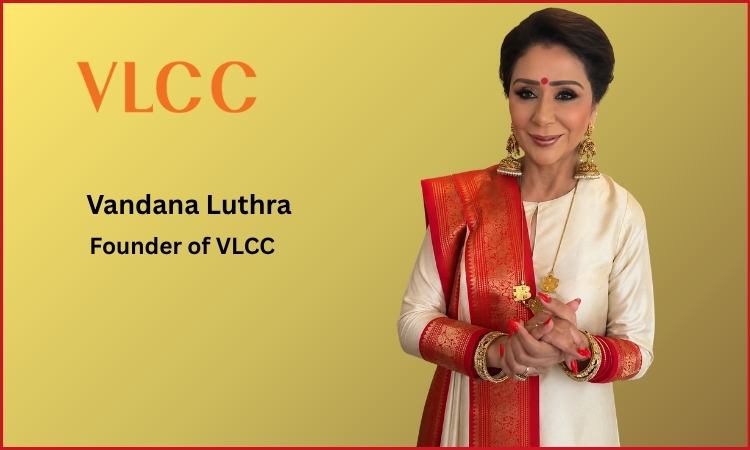
The Vandana Luthra Success Story proves that a great business doesn’t always start with huge investments. In 1989, Vandana Luthra started VLCC with just a ₹3 lakh bank loan and a vision to change the way Indians looked at beauty and wellness. What began as a single wellness centre in New Delhi has grown into a globally recognised brand with 300+ wellness centres across multiple countries.
At a time when beauty, fitness, nutrition, and healthcare were offered separately, she introduced an innovative, science-backed wellness model that brought all these services together under one roof. This unique approach helped VLCC earn the trust of millions and become one of India’s leading beauty and wellness companies.
Today, Vandana Luthra is widely recognised as one of the top women entrepreneurs in India. Her entrepreneurial journey is an inspiring example of how vision, innovation, and a customer-first approach can build a business that lasts for decades. In this article, you’ll discover how she built VLCC, the challenges she overcame, the strategies behind its global expansion, and the key business lessons entrepreneurs can learn from her remarkable success.
Vandana Luthra & VLCC: Key Highlights
| Aspect | Details |
| Founder | Vandana Luthra |
| Company | VLCC |
| Founded | 1989 |
| Headquarters | Gurugram, Haryana, India |
| Industry | Beauty, Wellness, Healthcare, Personal Care |
| Initial Investment | ₹3 lakh bank loan |
| First Wellness Centre | Safdarjung Enclave, New Delhi |
| Core Services | Weight management, skincare, hair care, nutrition, fitness, dermatology, and aesthetic procedures |
| Business Expansion | Wellness centres, beauty and nutrition clinics, personal care products, and international operations |
| Global Presence | More than 300 wellness centres across multiple countries |
| Key Milestones | Private equity investment, international expansion, strategic acquisitions |
| Success Formula | Science-based wellness, customer trust, diversification, strategic expansion, and continuous innovation |
Who Is Vandana Luthra?
Vandana Luthra was born in New Delhi in 1959. She grew up in a highly educated family that strongly valued healthcare. Her father was a mechanical engineer, while her mother was an Ayurvedic doctor. Watching her mother’s positive impact on people’s lives inspired her from an early age to appreciate the importance of health and well-being.
After graduating from the Polytechnic for Women in New Delhi, she travelled across Europe to study beauty care, nutrition, fitness, and skincare. During her time in Germany, the United Kingdom, and France, she observed how wellness was increasingly combining beauty with medical science through integrated lifestyle management. She recognised that such a model did not yet exist in India and envisioned adapting these global practices to meet Indian consumers’ needs.
Instead of following conventional career paths, Luthra returned to India determined to establish an integrated wellness model that promoted long-term health rather than temporary cosmetic solutions. Today, her inspiring journey has established her as one of the successful women entrepreneurs in India, admired for building VLCC into a globally recognised wellness brand.
Identifying a Market Opportunity
The Indian beauty and wellness industry looked very different in the late 1980s. Beauty parlours focused mainly on grooming, hospitals treated illnesses, while nutrition counselling, fitness coaching, skincare, and weight management services were offered separately by different professionals. Consumers had no integrated wellness solution.
Luthra viewed this fragmented market as a significant business opportunity. As urban incomes rose, health awareness increased, and lifestyles changed, she believed consumers would increasingly seek professional wellness services that addressed both appearance and overall health.
Instead of opening another beauty salon, she envisioned a centre where trained nutritionists, therapists, and skincare specialists worked together to create personalised wellness programmes. This integrated approach later became VLCC’s biggest competitive advantage and helped distinguish it from traditional beauty salons across India.
Launching VLCC
In 1989, Vandana Luthra opened the first VLCC (Vandana Luthra Curls & Curves) wellness centre in Safdarjung Enclave, New Delhi. It was not an ordinary salon, but a wellness centre offering weight management, nutrition counselling, fitness programmes, and science-based skin and hair care treatments under one roof.
Launching the venture was far from easy. She started with a ₹3 lakh bank loan, as reported by Forbes India, while creating an entirely new business category. She also faced the challenge of educating consumers, as preventive wellness was still relatively unfamiliar in India.
Rather than relying heavily on advertising, Luthra focused on delivering measurable customer results. Positive word-of-mouth recommendations helped establish VLCC’s early reputation. Professional consultations, standardised treatment protocols, and personalised wellness programmes help build customer trust and credibility.
Overcoming Early Challenges
Launching a completely new business model meant overcoming significant consumer skepticism. Many customers initially viewed wellness as a luxury rather than an essential part of preventive healthcare, making it difficult to explain why nutrition, fitness, and skincare should be treated as one integrated solution.
Another major challenge was building medical credibility. Luthra believed well-trained nutritionists, physiotherapists, and skincare specialists should form the foundation of her business. Recruiting qualified professionals for a new wellness company required patience and sustained effort.
As a woman entrepreneur in the late 1980s, she also faced skepticism about whether a female founder could successfully build and manage a healthcare-focused business. Rather than allowing these challenges to slow her progress, Luthra remained focused on service quality, investing in skilled professionals, and ensuring customer satisfaction. This commitment to quality became one of the key reasons behind VLCC’s growing reputation.
Building a Business Beyond Beauty
After proving the model in Delhi, Vandana Luthra expanded VLCC while preserving its core philosophy. Unlike traditional beauty salon chains, she positioned VLCC as a science-backed wellness company offering weight management, skincare, nutrition, fitness, and aesthetic procedures under one roof. This differentiated positioning helped build long-term customer trust.
Over time, the company’s wellness centres expanded to include dermatology, laser treatments, hair care, spa therapies, physiotherapy, nutraceuticals, and personalised wellness programmes. By adopting this integrated approach, VLCC successfully positioned itself as a holistic health and wellness partner rather than simply a beauty services provider.
Growing consumer awareness of preventive healthcare continues to support the company’s long-term expansion while laying the foundation for its growth into international markets.
Diversifying Revenue Streams
Luthra recognised that relying solely on wellness centres would limit the company’s long-term growth. To build a more diversified business, she expanded into several complementary segments.
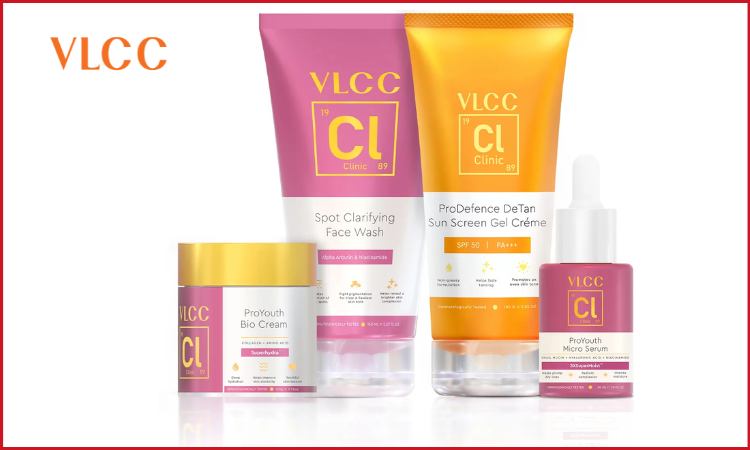
VLCC introduced a wide range of personal care products, including skincare, haircare, body care, and well-being products. The company later expanded into health foods such as honey, muesli, stevia, and psyllium husk, positioning them as products that support healthy lifestyles rather than simply food items.
Education also became an important pillar of VLCC’s growth strategy. Through the VLCC Institute of Beauty & Nutrition, the company trained thousands of students for careers in the beauty and wellness industry. This created an additional revenue stream while helping address the industry’s shortage of skilled professionals.
By expanding into products and education, VLCC reduced its dependence on wellness centres alone while strengthening its overall business model.
Expanding Beyond India
After establishing a strong presence in India, VLCC pursued an ambitious international expansion strategy.
The company entered markets across the Indian subcontinent, Southeast Asia, the Middle East, and East Africa, recognising growing demand for organised wellness services as disposable incomes and health awareness increased.
VLCC expanded through both organic growth and strategic acquisitions. In 2013, it acquired Global Vantage Innovative Group in Singapore to strengthen its product manufacturing and distribution capabilities. During the same year, it also acquired Wyann International in Malaysia, accelerating its entry into Southeast Asia.
These acquisitions strengthened VLCC’s international presence while expanding its product portfolio and distribution network.
Today, the VLCC Group operates hundreds of wellness centres across multiple countries, making it one of India’s most successful global wellness brands.
Strategic Investments Fuelled Growth
As VLCC continued expanding, it attracted increasing interest from private equity investors.
CLSA became the company’s first institutional investor in 2004 by acquiring a minority stake. Several years later, Everstone Capital invested in VLCC, providing fresh capital to support expansion, acquisitions, and product innovation. Rather than changing the company’s long-term direction, these investments accelerated its existing growth strategy.
The company also explored the possibility of an initial public offering (IPO) as part of its long-term vision, reflecting growing investor confidence in both VLCC’s business model and India’s expanding wellness industry.
Leadership That Prioritised Trust
One of Vandana Luthra’s most important leadership decisions was to build customer trust before pursuing rapid expansion.
From the beginning, she ensured that doctors, nutritionists, physiotherapists, and trained wellness professionals played a central role in delivering VLCC’s services. This science-backed approach helped distinguish VLCC from many competitors that focused primarily on cosmetic treatments.
She also placed strong emphasis on continuous training by investing in VLCC’s educational institutions. Throughout her career, Luthra has consistently emphasised that building a trusted brand requires discipline, ethical business practices, continuous learning, and long-term commitment rather than pursuing short-term growth.
This commitment to trust became one of VLCC’s strongest competitive advantages.
Awards and Industry Recognition
Vandana Luthra has received numerous national and international honours for her contributions to the beauty and wellness industry.
In 2013, she was awarded the Padma Shri, India’s fourth-highest civilian honour, for her contribution to trade and industry. In 2016, Forbes Asia recognised her among its 50 Power Businesswomen, and she also became the inaugural Chairperson of the Beauty & Wellness Sector Skill Council, supporting skill development across India’s beauty and wellness industry.
VLCC’s Journey Continues in 2026
More than 35 years after its founding, VLCC continues to be one of India’s leading beauty and wellness companies. The organisation remains focused on wellness services, skincare and personal care products, professional education, and aesthetic treatments. According to the company’s profile, VLCC employs more than 3,800 people, making it one of the largest organisations in India’s organised wellness industry.
Industry interest in the company also remains strong. Reports indicate that private equity investors continue evaluating strategic investment opportunities as VLCC explores its next phase of long-term growth.
In recent interviews, Vandana Luthra has continued to emphasise the importance of resilience, empathy, and continuous innovation in building sustainable businesses. She also encourages the next generation of entrepreneurs to build businesses with purpose, long-term thinking, and a commitment to creating lasting value.
As preventive healthcare and holistic wellness continue gaining importance, VLCC remains well positioned to benefit from the growing demand for integrated wellness solutions in India and international markets.
2026 Snapshot
| Aspect | 2026 Update |
| Company Age | 35+ years |
| Employees | Approximately 3,800 |
| Business Segments | Wellness Centres, Skin Clinics, Personal Care Products, Beauty & Nutrition Institutes |
| Industry Position | Among India’s leading organised beauty and wellness brands |
| Current Focus | Brand building, wellness innovation, leadership development, and sustainable growth |
Key Lessons from Vandana Luthra’s Success Story
Vandana Luthra’s entrepreneurial journey offers several valuable lessons for aspiring business leaders:
- Identify genuine gaps in the market and build solutions around real customer needs.
- Build credibility through expertise and customer trust rather than branding alone.
- Develop multiple revenue streams instead of relying on a single business segment.
- Expand strategically through acquisitions and long-term partnerships.
- Invest in employee training and customer trust to support sustainable long-term growth.
- Continue innovating while remaining aligned with the company’s long-term vision.
Conclusion
Vandana Luthra’s entrepreneurial journey demonstrates how identifying an untapped market opportunity can create an entirely new industry. By introducing a science-backed wellness model instead of a traditional beauty salon, she built VLCC into one of India’s most recognised beauty and wellness companies.
Through disciplined business diversification, international expansion, and an unwavering focus on quality and customer trust, she successfully transformed VLCC into a multinational organisation with operations across multiple countries.
Her journey shows that long-term business success is rarely built on short-lived trends or individual products. Instead, it comes from understanding customer needs, adapting to changing market conditions, continuously innovating, and delivering consistent value over time.
For entrepreneurs seeking to build enduring businesses, Vandana Luthra’s story remains a strong example of vision, resilience, disciplined execution, and long-term thinking.
FAQs
1. Who is Vandana Luthra?
Vandana Luthra is an Indian entrepreneur and the founder of VLCC, one of India’s leading beauty and wellness companies. She established the company with the vision of integrating beauty, nutrition, fitness, and preventive healthcare into a single wellness brand.
2. Why did Vandana Luthra start VLCC?
She recognised a major gap between beauty services and healthcare in India and created VLCC to offer integrated, science-backed wellness solutions that combined nutrition, skincare, fitness, and preventive healthcare under one roof.
3. When was VLCC founded?
VLCC was founded in 1989 in New Delhi. Its first wellness centre opened in Safdarjung Enclave, offering weight management, skincare, nutrition, and fitness services.
4. How did VLCC become a global wellness brand?
VLCC expanded through a combination of wellness centres, personal care products, professional education, strategic acquisitions, international expansion, and private equity investments, helping establish its presence across Asia, the Middle East, and Africa.
5. What makes VLCC different from traditional beauty salons?
Unlike traditional beauty salons, VLCC follows a science-backed wellness model that integrates nutrition, dermatology, fitness, weight management, skincare, and preventive healthcare. This holistic approach has helped the company build long-term customer trust.
6. What awards has Vandana Luthra received?
Vandana Luthra received the Padma Shri in 2013 for her contribution to trade and industry. She was also recognised among Forbes Asia’s 50 Power Businesswomen and has played an important role in advancing India’s beauty and wellness industry.
7. What are the key business lessons from Vandana Luthra’s success story?
Her journey highlights the importance of identifying market opportunities, building customer trust through expertise, creating multiple revenue streams, expanding strategically, investing in people, and maintaining a long-term vision while continuously adapting to changing customer needs.