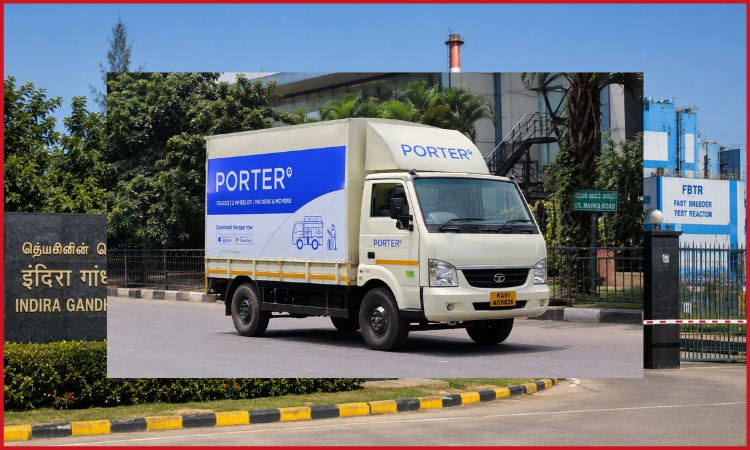
India’s logistics sector remains highly fragmented and inefficient, with businesses often struggling to find reliable transportation partners while vehicle owners face challenges in securing consistent demand. This creates a significant opportunity for technology-driven solutions.
Porter has seized this opportunity by revolutionizing urban logistics. Established in 2014 by three entrepreneurs, namely, Pranav Goel, Uttam Digga, and Vikas Choudhary, Porter is building a technology-driven logistics ecosystem that connects customers and buyers with driver partners through a frictionless digital platform.
Currently, Porter caters to millions of customers, has a network of 3 lakh+ driver-partners, supports 20 lakh+ SME customer base, runs 30+ cities in India, and is entering the global markets. The company has also joined the unicorn club after raising significant funding and becoming profitable, an achievement that many startups aspire to. Most notably, Porter reported FY25 revenue of ₹4,306 crore and a net profit of ₹55.2 crore.
With the increasing growth of India’s logistics industry, Porter is emerging as one of the key players transforming last-mile and intra-city transportation.
Porter at a Glance
| Particulars | Details |
| Founded | 2014 |
| Founders | Pranav Goel, Uttam Digga, Vikas Choudhary |
| Headquarters | Bengaluru |
| Industry | Logistics Technology |
| Business Model | On-Demand Logistics Marketplace |
| Presence | 30+ Indian Cities |
| Driver Partners | 3 Lakh+ |
| SME Customers | 20 Lakh+ |
| Valuation | Approximately $1.2 Billion |
Meet the Founders Behind Porter
Every successful startup begins with a problem worth solving. For Porter founders Pranav Goel, Uttam Digga, and Vikas Choudhary, that problem is India’s highly fragmented logistics sector.
The founders recognized that small businesses and individual customers often faced challenges in arranging reliable transportation for goods movement. At the same time, vehicle owners struggled to secure a steady stream of orders and maximize vehicle utilization.
Instead of building a traditional transportation company, the trio developed a technology platform that efficiently connects demand and supply. This marketplace-driven approach allows Porter to scale rapidly without owning a large fleet of vehicles, creating value for both customers and driver partners.
Their vision continues to guide the company as it expands its logistics ecosystem across India and strengthens its presence in international markets.
The Market Gap Porter Identifies
Despite its massive size, India’s logistics industry remains largely unorganized, particularly in the intra-city transportation segment.
Common challenges include:
- Limited visibility into vehicle availability
- Unpredictable pricing
- Delayed deliveries
- Poor tracking systems
- Low vehicle utilization rates
- Difficulty scaling logistics operations
These inefficiencies are addressed through technology platforms that enable easy vehicle booking, route planning, transparent pricing, and delivery tracking.
What Is Porter?
Porter is often described as an Uber for trucking and has been operating since 2014. It is an on-demand logistics platform where a customer can hire the transportation service using a mobile application.
The company offers:
- Mini truck transportation
- Two-wheeler deliveries
- Three-wheeler logistics services
- Packers and movers solutions
- Enterprise logistics
- Intercity courier services
Working across several logistics categories through a technology platform goes some way to creating a comprehensive offering or ‘ecosystem’ for both businesses and consumers alike.
Porter Business Model: How the Company Makes Money
The Porter business model is an asset-light marketplace concept.
The company instead contracts with independent vehicle owners and driver partners to avoid owning a large fleet.
Revenue Streams
Commission-Based Marketplace Model
The commissions consist of a percentage of a completed booking, which is made via Porter’s platform.
Enterprise Logistics Solutions
Large companies use Porter for recurring transportation services and supply chain requirements.
Intercity Logistics
The company earns money by transporting parcels and goods (long-distance).
Packers and Movers Services
Porter has expanded beyond traditional logistics by serving customers who are relocating homes and offices.
Value-Added Logistics Services
Additional revenue comes from technology-based solutions and value-added logistics offerings.
Porter Funding Journey
Investor confidence is a significant factor in Porter’s growth.
Over the years, the company has received funding from well-known investors, including Tiger Global and Vitruvian Partners.
A major milestone comes in 2025 when Porter raises $200 million in a Series F funding round led by Kedaara Capital and Wellington Management. The round catapults Porter into the coveted unicorn club, with a valuation of over a billion dollars.
The funding gives Porter even more resources to expand its geographic reach, technology infrastructure, and market penetration.
Porter Revenue, Profit, and Valuation
Porter’s financial performance further demonstrates strong growth and improved efficiency since its foundation. As of this writing, Porter’s FY26 financial results are not publicly available, but recent filings suggest that Porter’s transition from growth-hungry startup to profitable unicorn has been successful.
| Metric | FY24 | FY25 |
| Revenue | ₹2,733.7 Crore | ₹4,306.2 Crore |
| Net Profit/Loss | ₹95.7 Crore Loss | ₹55.2 Crore Profit |
| EBITDA | ₹80 Crore Loss | ₹83.6 Crore |
| Revenue Growth | — | 57.5% |
As per the most recent financial filings, Porter has declared revenue of 4,306.2 crore and net profit of 55.2 crore in FY25. The company’s post-loss leap to profits signifies impressive growth as it scales and solidifies its foothold in the Indian logistics space.
Note: No FY26 numbers are available for public release at the time of writing. The figures listed above represent Porter’s latest available reported financial performance.
Porter’s Growth Journey
The fact that Porter has benefited as the world shifted towards e-commerce shows the company’s adaptability and ability to scale from a logistics startup in Bengaluru to a unicorn with an expanded reach across the country. Portrayed below are the steps the company took to expand its reach and address the logistics needs of businesses and individuals.
| Year | Milestone |
| 2014 | Porter was founded by Pranav Goel, Uttam Digga, and Vikas Choudhary. |
| 2015–2018 | The business expands across major Indian cities while strengthening its logistics infrastructure. |
| 2021 | Porter receives substantial funding to support growth and technology development. |
| 2025 | The company enters the unicorn club after a $200 million Series F funding round. |
| 2026 | Porter continues expanding in India while strengthening its international presence. |
Several factors continue to drive Porter’s growth:
- High SME Concentration: Porter targets small and medium-sized enterprises that are looking for affordable and reliable logistics services.
- Asset-Light Business Model: The company scales efficiently by collaborating with vehicle owners instead of owning a large fleet.
- Technology-Led Operations: Technology-enabled features such as online booking, real-time tracking, and route optimization improve operational efficiency.
- Wide Range of Services: Porter’s services encompass multiple logistics segments, including mini-truck transportation, intercity deliveries, and enterprise logistics.
- Expanding Driver-Partner Network: A growing network of driver partners helps improve service availability and supports expansion into new markets.
Challenges and Competition
Despite being relatively young, Porter still operates in a highly competitive market.
Key competitors include:
- Delhivery
- Borzo
- LetsTransport
- Uber’s logistics offerings
- Shadowfax
The company remains committed to ongoing investment in technology, customer experience, driver-partner engagement, and other investments necessary to sustain its leadership.
Key Lessons From Porter’s Success Story
Porter’s journey offers valuable lessons for entrepreneurs:
- Solve a large, persistent problem in the market.
- Design and develop technology solutions that will help minimize work wastage.
- Think about scalability early in your design.
- Provide value to all stakeholders.
- Diversify sources of income.
Conclusion
Porter is no longer an on-demand truck booking app. Porter is creating a logistics ecosystem that helps move goods for businesses and consumers across India.
As a unicorn, a profitable business with rapidly extending revenues, millions of users, and a growing logistics network, Porter proves how technology can revolutionize one of the most traditional industries.
With the rapid evolution of India’s logistics industry, Porter is one of the companies that has been establishing itself as a defining player in the new-age urban logistics sector.
FAQs
Who are the founders of Porter?
Porter was founded by Pranav Goel, Uttam Digga, and Vikas Choudhary. The three entrepreneurs visualized a technology-enabled platform for customer-to-driver-partner connections in the highly fragmented logistics space in India. The idea of making urban logistics truly dynamic, efficient, and available in a transparent manner helped Porter grow.
What is Porter’s business model?
Porter is a digital on-demand marketplace providing logistics solutions that connect customers and driver partners. Porter’s key source of earning is commission-based booking. Porter’s additional revenue comes from offering enterprise logistics solutions, intercity transport, and value-added logistics services to customers.
What is Porter’s valuation?
Porter, which is valued at around $1.2 billion, is one of India’s largest logistics unicorns. The company attained this valuation after a significant funding round led by Kedaara Capital and Wellington Management.
What is Porter’s most recent revenue?
Based on the most recently available financial filings by the company, the revenue recorded by Porter in FY25 is ₹4306.2 crore. The strong financial results are indicative of the expanding need for technology-enabled logistics services throughout India.
Is Porter profitable?
Yes, Porter is earning profits. The net profit of the company for FY25 is recorded at ₹55.2 crore and is considered a significant milestone in its growth journey, with consistently improving operational efficiency.
What is the reason behind Porter’s success?
Porter has been able to succeed from its technology-driven initiatives, asset-light business model, deep penetration among SMEs, and strong network of drivers. Porter has been able to deeply solve real-world issues in logistics and transportation by using digital innovation at scale.