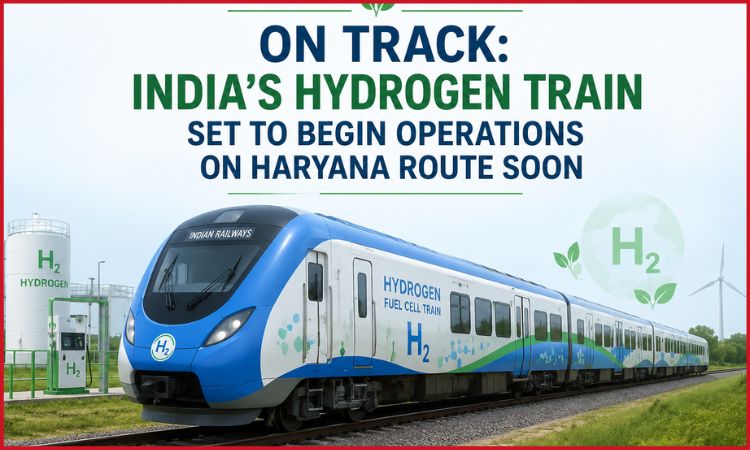
In a major step towards green and sustainable transportation, Indian Railways has approved the introduction of a 10-car Hydrogen Fuel Cell-based trainset on the dedicated Jind-Sonipat section of Northern Railway.
The trainset, powered by a 1200 KW hydrogen fuel cell propulsion system, will operate at a maximum speed of 75 kmph and represents a significant milestone in India’s push toward decarbonizing its rail network.
Indigenous 10-car trainset with 1200 KW engine approved for Jind-Sonipat section
The move places India alongside an elite group of nations—Germany, Japan, China, and the United States—experimenting with hydrogen-powered rail systems. The technology, however, remains nascent.
“Hydrogen fuel cell technology generates electricity through a chemical reaction using hydrogen, with water vapour as the only emission, making it a clean alternative to conventional fossil fuel-based traction systems.”
Unlike diesel trains, which emit carbon and particulate matter, hydrogen fuel cells produce only water vapor, leaving no environmental footprint.
The Jind-Sonipat section in Haryana has been chosen as the pilot route. An indigenous hydrogen storage and refuelling facility has been set up at Jind, licensed by the Petroleum and Explosives Safety Organisation (PESO) for storing and dispensing compressed hydrogen gas.
The infrastructure includes a hydrogen compression system, a standby compressor unit, and multiple safety sensors—hydrogen leak detectors and flame detectors—positioned throughout the production, storage, and dispensing facility.
“Various safety sensors, including hydrogen leak detectors and flame detectors installed at the hydrogen production, storage and dispensing facility, will be regularly inspected and cleaned to prevent dust accumulation and ensure safe operation,” the Ministry of Railways said.
Indian Railways has mandated rigorous operational protocols. The hydrogen refuelling system will be monitored 24/7, with trained and certified personnel overseeing critical operations. During initial operations, technical staff will accompany the train. Operation and maintenance manuals, approved by the Rail India Technical and Economic Service (RDSO), have been prepared for both the trainset and the hydrogen plant. The maintenance facility will be based at Shakurbasti.
The initiative aligns with India’s broader clean energy ambitions and net-zero carbon emission targets, signalling the country’s intent to modernize its rail infrastructure while reducing its environmental footprint.