Velvet ropes, imported glass, and a price tag north of 70,000 dollars were Tesla’s welcome card to India. It arrived at the Bandra Kurla Complex in Mumbai on July 15, 2025, nine years after the first Indian customer paid a deposit for a car that hadn’t yet landed.
Outside that showroom, on the same evening, a Tata Nexon EV was probably stuck in the same traffic. Ordinary, unglamorous, and already familiar to thousands of Indian drivers.
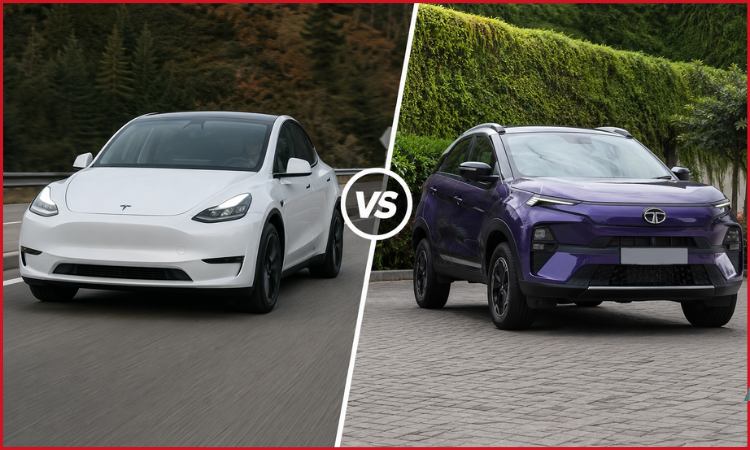
That contrast is really what the Tesla vs Tata Motors EV question comes down to. One company builds the car every EV enthusiast wants to talk about. The other builds the car every fleet manager, cab aggregator, and first-time EV buyer in India actually drives.
Tesla was founded in 2003 and turned Elon Musk into the world’s most recognisable EV evangelist. Tata Motors traces back to 1945, when it began life as a locomotive and engineering company before growing into India’s biggest homegrown carmaker and, since October 2025, a demerged entity built specifically around passenger vehicles, EVs, and Jaguar Land Rover.
Neither company is chasing the same customer today, but both are betting on the same future of EVs. This piece breaks down the business models, the numbers, and the strategy behind the Tesla vs Tata Motors in India rivalry, and why the real answer depends on which market you’re asking about.
Two different playbooks, one shared prize: dominance over the EV market in India and a real say in how the future of EVs actually unfolds here.
Tesla Vs Tata Motors In India
| Parameter | Tesla, Inc. | Tata Motors Passenger Vehicles Ltd |
| Founded | 2003, California, USA | 1945 (as Tata Engineering and Locomotive Company) |
| Leadership | Elon Musk, Chairman & CEO since 2008 | N. Chandrasekaran, Chairman, Tata Sons |
| India Presence | One showroom, Mumbai (BKC), since July 15, 2025 | Nationwide dealer and service network |
| Flagship India EV(s) | Model Y (imported) | Nexon EV, Punch EV, Tiago EV, Curvv EV, Sierra EV |
| India Entry Price | About Rs 59.9 lakh | About Rs 6 lakh (Tiago EV) |
| India EV Market Share (H1 2026) | Negligible, luxury niche | About 39% (Autocar India, 2026) |
| Global Scale (2025) | 1.64 million deliveries, down 8.6% YoY | Passenger + EV volumes concentrated in India |
| Market Cap (July 2026) | About $1.24 trillion (stockanalysis.com) | About Rs 1.19 lakh crore (Tickertape) |
| India Manufacturing | None committed | Multiple domestic plants |
| Known For | Direct-to-consumer EVs, Supercharger network, Autopilot/FSD | Widest EV portfolio and service reach in India |
Tesla’s Long-Delayed Entry Into India
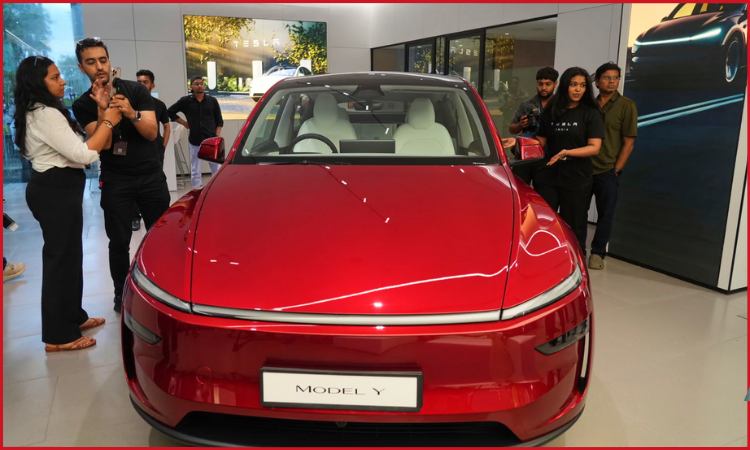
The Tesla India entry story is really a story about waiting. Musk first floated an India launch back in 2016. It took until mid-2025 for a showroom to actually open.
The delay cost Tesla goodwill. Early depositors who had put down money in 2016 told Rest of World in 2025 that the brand had lost ground to newer EVs launched in the same price bracket while Tesla stayed on the sidelines.
When Tesla finally launched, it didn’t chase volume. The Model Y went on sale at close to double its US price, thanks to import duties that can run near 70 percent on fully built EVs entering India.
According to CNBC, in 2025, India does offer a reduced 15 percent duty on EVs priced above $35,000, but only to manufacturers that commit at least $500 million to local production. Tesla has made no such commitment.
That single decision defines Tesla’s India playbook inside the wider Tesla vs Tata Motors EV conversation. It is testing demand among affluent buyers, not building a mass-market business. Analysts have called the Mumbai showroom a soft-power move rather than a genuine market entry, and the Model Y is positioned to compete with BMW and Mercedes-Benz, not with Tata or Mahindra.
Nine years of delay is the real headline of the Tesla India entry story. It explains why the brand walked into a market that had already moved on without it, and why its opening-week pricing looked so out of step with local buying power.
Tata Motors’ Home-Turf Advantage
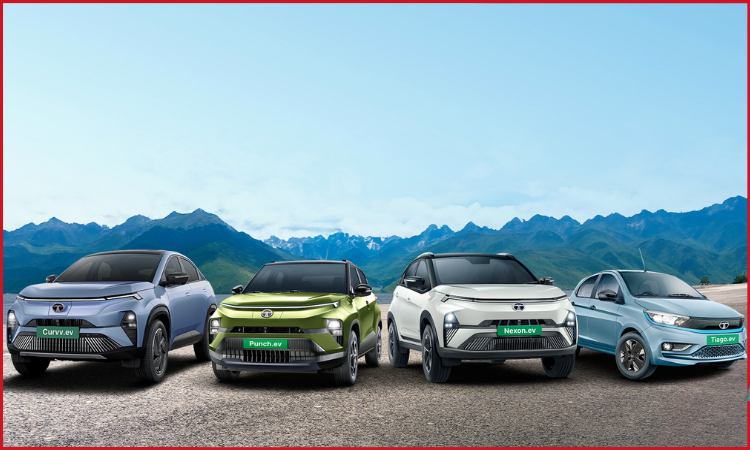
Tata Motors didn’t need a global playbook. Its Tata EV strategy was built from scratch, in India, for Indian roads and Indian budgets.
The company has led India’s EV market since it launched the Nexon EV in early 2020, and it still does. In the first half of 2026, Tata sold 57,370 electric passenger vehicles, holding roughly 39 percent of the EV market in India, according to Autocar India, 2026.
India’s overall EV passenger car segment is growing fast, up 79 percent year-on-year to about 148,000 units in H1 2026. Tata’s lead is real, but it isn’t unchallenged.
Mahindra grew its EV sales by 147 percent in the same period, taking its market share from 17 percent to 23 percent, per Autocar India, 2026. Tata’s own FY26 share had actually eased down from over 50 percent in FY25, a sign that rivals are closing in even as the overall pie expands.
Tata’s edge comes from range, not a single hero product. Tiago EV and Punch EV bring in volume at entry price points. Nexon EV remains the workhorse. Curvv EV, Harrier EV, and the newly launched Sierra EV push the brand upmarket, closer to where Mahindra and MG are fighting hardest.
That breadth is the whole point of the Tata EV strategy: cover every price bracket so no single rival can out-flank it, and keep leading the EV market in India even as new entrants chip away at the edges.
Tesla Vs Tata Motors EV – India Snapshot, 2026
| Parameter | Tesla | Tata Motors |
| India Strategy | Import, premium, low volume | Manufacture locally, mass market |
| Entry Price (India) | About Rs 59.9 lakh | About Rs 6 lakh (Tiago EV) |
| H1 2026 India EV Share | Negligible, luxury niche | About 39% |
| Local Manufacturing | None committed | Multiple domestic plants |
| Primary Competitor Set | BMW, Mercedes-Benz, Kia | Mahindra, MG, Maruti Suzuki |
| Core Global Challenge | Falling deliveries, BYD overtaking | Profit still led by JLR, not EVs |
Business Model And Strategy Compared
Strip away the marketing, and the two companies are running almost opposite playbooks in the Tesla vs Tata Motors in India contest. The table below breaks the strategy down element by element, so it’s easy to see where each company is actually placing its bets.
Business Strategy And Model
| Business Element | Tesla | Tata Motors |
| Core Strategy | One global platform, sold everywhere at similar pricing logic | India-first design, built around local budgets and duty structure |
| Pricing Philosophy | Premium, brand- and software-led pricing | Entry-level to mid-range, volume-led pricing |
| Distribution | Direct-to-consumer, single showroom model | Dealer and service network built over decades |
| Revenue Engine | Vehicle sales plus software (FSD) and energy storage | Passenger vehicles and EVs, with Jaguar Land Rover as the group’s profit anchor |
| Profit Reality | Automotive margins under pressure from price cuts | JLR contributed about 90% of FY25 profit; India PV and EV added about 10% (Business Standard, 2025) |
| Growth Lever | Autonomy and robotics, not vehicle volume | Wider EV portfolio and expanding EV adoption in India |
Tesla leans on software, Supercharger infrastructure, and brand pull rather than affordability. Tata leans on smaller battery packs, lower price points, and a service network already built for its combustion-engine cars.
That profit split is worth sitting with: Tata’s EV dominance is a market-share story right now, not yet the company’s biggest profit engine. Tesla, meanwhile, is under its own pressure globally. Its worldwide deliveries fell 8.6 percent in 2025 to about 1.64 million vehicles, a second straight annual decline, while China’s BYD overtook it as the world’s largest EV seller with 2.26 million battery-electric vehicles sold, up 28 percent.
One sharp way to put it: Tesla is fighting to defend a global EV crown it has already lost, while Tata is fighting to defend a domestic one that rivals are only beginning to challenge. That is the real shape of Tesla vs Tata Motors EV competition today, two different battles, on two different scoreboards.
EV Battery Technology And Manufacturing
Tesla’s advantage was never just the car. It was the battery supply chain, in-house cell development, and a charging network most rivals still can’t match outside China, and it remains central to how Tesla approaches EV battery technology worldwide.
India complicates that advantage. Tesla has no cell or pack manufacturing commitment in the country, no Supercharger corridor beyond a handful of planned sites in Mumbai and Delhi, and no local assembly to offset import duty.
Tata’s approach is more incremental. It sources cells from global battery makers while working to localise packs and add-ons through Tata group companies, and it uses its existing dealer and service network as EV charging and service touchpoints.
Cheaper, better EV battery technology is also the fastest route to faster EV adoption in India, since battery cost is still the single biggest reason electric cars cost more than petrol or diesel equivalents here.
Neither company has fully cracked India’s biggest battery problem: affordable, high-density cells manufactured at home. Whoever solves that first will set the real pace for EV battery technology and EV adoption in India over the next five years.
Challenges Each Company Faces
Tesla’s Challenges
- High import duties: Fully built EVs face duties near 70 percent, which keeps the Model Y priced well above domestic rivals and out of reach for most Indian buyers.
- No local manufacturing: Without a $500 million investment commitment, Tesla can’t access India’s reduced 15 percent duty slab, so its India prices stay structurally uncompetitive.
- Political headwinds abroad: Musk’s political profile has weighed on European sales, which fell sharply through 2025 and dragged down Tesla’s global delivery numbers.
- Strategic distraction: Company leadership has signalled that its real growth bet is autonomy and robotics, not vehicle volume, which raises questions about how much focus India actually gets.
- Marginal presence in the mainstream: With only one showroom, Tesla barely registers in the broader EV market in India, which is dominated by domestic, mass-market players.
Tata Motors’ Challenges
- Faster-growing rivals: Mahindra’s EV sales grew 147% YoY in 2026, more than twice Tata’s own growth rate, and is the real threat to Tata’s leadership.
- Profit dependency on JLR: Jaguar Land Rover funds most of the group’s profit, so a slowdown at JLR can overshadow strong EV volume growth at home.
- JLR’s own global headwinds: A 2025 cyberattack-related production disruption, intense competition in China, and a consumer slowdown in North America and Europe all weigh on JLR’s performance.
- Shrinking market share: Tata’s FY26 EV share eased from over 50 percent in FY25 to around 39 to 40 percent, showing that its early-mover advantage is narrowing as new entrants scale up.
- Execution pressure on the Tata EV strategy: Sustaining leadership now means constant new launches like the Sierra EV, since the Tata EV strategy can no longer rely on being first to market alone.
Conclusion
Tesla vs Tata Motors in India is not a fair fight on paper, and it was never meant to be one. Tesla is protecting a premium brand and a global business model under pressure from cheaper Chinese rivals. Tata is defending a domestic lead built on price, range, and service reach, while a demerged corporate structure sharpens its focus on passenger vehicles and EVs specifically.
For investors and industry watchers tracking the future of EVs in India, the more useful question isn’t who sells more cars this quarter. It’s who controls the two things that will decide this decade: local battery manufacturing and affordable pricing at scale. On both counts, Tata currently holds the stronger hand, but Mahindra, not Tesla, is the company actually closing the gap in EV adoption in India.
FAQs
1. Does Tata Motors compete directly with Tesla in India?
Not really. Tesla’s Model Y is priced against luxury imports like the BMW iX and Mercedes EQ range, while Tata’s EVs compete with Mahindra, MG, and Maruti Suzuki in the mass and mid-market segments.
2. Who leads the EV market in India in 2026?
Tata Motors leads the EV market in India with roughly a 39 percent share of the electric passenger vehicle segment in H1 2026, according to Autocar India, ahead of Mahindra and JSW MG Motor.
3. Why did Tata Motors split into two companies?
Tata Motors demerged its passenger vehicle business, including EVs and Jaguar Land Rover, from its commercial vehicle business on October 1, 2025, to give each division sharper strategic and financial focus.
4. Will better EV battery technology speed up EV adoption in India?
Yes. Battery cost is still the biggest gap between electric and petrol vehicle pricing in India, so cheaper EV battery technology, whether from Tesla, Tata, or a new entrant, is likely to accelerate EV adoption in India faster than any single new model launch.