“Predicting the future is not magic, it’s artificial intelligence”- Dave Waters.
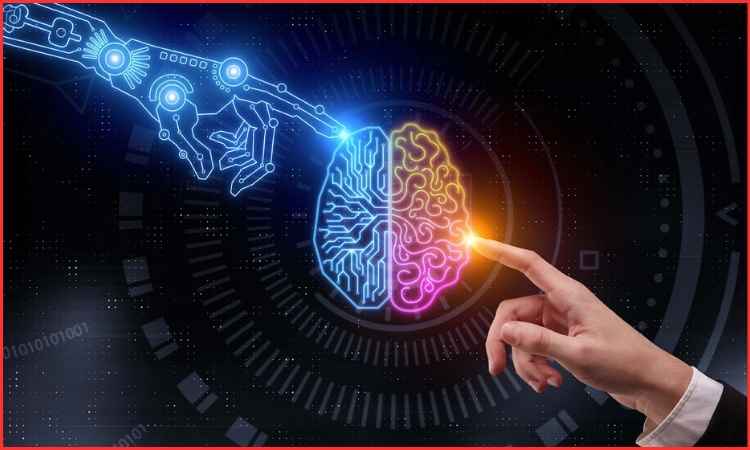
Artificial Intelligence has brought a transformative revolution, enabling the quick adaptation of innovative technology in business. As of 2026, AI has become a business necessity. Whether it’s a startup or a multinational company, businesses that fail to integrate AI into their fundamentals risk losing their competitiveness in the market. But why does every business need to adopt an AI Strategy? What is AI offering that every business is integrating? This article explores why every business needs a well-defined AI strategy in 2025, regardless of size, industry, or business experience.
Key points for businesses to consider while adopting to an AI strategy
- Have clear goals of what you want to achieve with AI.
- Make sure to use clean, accessible, and ethically sourced data for analysis.
- Select tools that align with business needs and capabilities.
- Train employees to upskill for collaborative work with AI.
- Strictly follow guidelines for ethical and safe use of AI.
- Keep tracking outcomes and changing strategies when needed.
- Ensure to make a roadmap for long-term success with AI.
Reasons for every business adopting an AI strategy in 2025:
The Universality of AI

As of 2026, AI has been deeply positioned in everyday work, with smart assistance, generative content, predictive analysis, customized recommendations, autonomous AI agents that can complete multi-step tasks with minimal supervision, and AI’s cybersecurity. This reflects the rising, unprecedented demand for AI due to its potential across all business sectors.
According to McKinsey’s latest Global Survey on AI, 88% of organizations now use AI in at least one business function, and 62% are at least experimenting with AI agents — a clear signal that AI strategy is no longer optional groundwork, but active competitive infrastructure.
AI’s transformative impact on businesses
- Increased Efficiency

With the help of AI, many business tasks are being automated, delivering more efficient outcomes than manual work. This reduces the time to complete the task and also eliminates the possibility of human error.
For example, data entry consumes a lot of time to be done and also reduces the interest and motivation of employees consecutively. With the help of automation, this boring task is being done by AI in real time, leading employees to focus on creative and innovative work.
- Reduction in Cost

Artificial Intelligence is helping businesses speed up the production process and other operations of the businesses. It also helps in managing the waste of the production process by offering advanced equipment. Thus, there is an overall reduction in the cost of the businesses.
For example, AI is able to streamline the quality control procedures of the manufacturing process by recognizing patterns with its technology, reducing the cost of human intervention, and delivering a higher quality product.
- Accuracy in Decision-making

Source: Google Images
AI offers the delivery of accurate data in real time with interactive and smart insights. The data is based on current market fluctuations and so far, future expected affecting factors. This data helps business leaders to make quick decisions with confidence and accuracy.
For example, Marketing leaders want to know how the ad campaign is performing so far. With the help of AI, the current data can be sorted and presented in the form of an interactive analysis in a few minutes, for leaders to make further decisions.
- Enhanced Customer Experience

It’s not possible for businesses to immediately answer customer queries, but customers expect them to do so. With the help of Natural Language Processing [NLP], automated chatbots, and now agentic AI assistants that can complete the transaction rather than just answer the question, businesses are able to manage customer queries 24/7, making the customer experience better.
For example, businesses can answer customer messages and email queries instantly with the help of NLP instead of employees answering them only during working hours. AI is now even able to offer highly personalized answers and customer experience.
- New Revenue Streams

With the help of AI, businesses are developing innovative products and services based on current and future market trends. This helps businesses to earn revenue from various other streams. Additionally, AI is also being used for redesigning products and attracting more revenue to the business.
For example, many businesses are running on 3D printing technology models due to their flexibility, creativity, and reduced waste. These businesses are generating substantial revenue by offering custom-designed products across various business sectors.
- Advanced Security

AI-enabled security systems are too good at detecting abnormal actions, instantly operating their defensive systems, and protecting business software. This AI-enabled security is made possible due to unmatched real-time monitoring of actions and analysis of potential threats in the future.
For example, with the help of AI tools, unexpected human movements can be immediately detected with their human detection feature. This helps humans to take instant action. Additionally, it also offers emergency services if it detects its need.
- Predictive Analysis

AI uses past data, statistical algorithms, and machine learning techniques to identify unexpected future outcomes. It provides quick and accurate analysis of huge datasets, identifying complex patterns that might be missed by humans, helping businesses to implement decisions based on current market shifts.
For example, food businesses are able to track the food preferences of their customers with the help of AI, analysing the quarterly specific food demands of the business, helping them to manage their inventory for that quarter.
- Demand for Precision
As of 2026, customers are expecting precision in the products and services of the business. They demand for seamless interactions, quick responses, and personalized experiences. Multinational companies are already raising consumers’ expectations by offering these tailored services, using AI-enabled systems such as chatbots, personalized messages, and predictive analysis. Thus, businesses without these AI-enabled systems seem to appear outdated, unresponsive, or insufficient.
Final Thoughts: AI Strategy for Business in 2026
Businesses adopting AI is not a wealthy move, but a strategic one. From optimizing operations to driving innovation, AI is well-connected with each part of modern business. Businesses adopting a comprehensive AI strategy can only embrace the full potential of artificial intelligence. Thus, whether you are a startup or a unicorn company, build your AI strategy today for innovation, resilience, and long-term success, because soon the differentiator between businesses will not be size but how strategically they use intelligence.
FAQs
1. Why does every business need an AI strategy in 2026?
Because AI has moved from being a nice-to-have to being how competitive businesses actually operate. Without a clear strategy, companies end up using AI tools randomly instead of purposefully, missing out on the efficiency, cost savings, and customer experience gains that a planned approach delivers. In short: businesses without an AI strategy aren’t avoiding AI, they’re just using it badly.
2. What is the first step in building an AI strategy for a small business?
Start with a clear goal, not a tool. Decide what problem you actually want AI to solve, whether that’s speeding up data entry, improving customer response times, or cutting production costs, before you pick any software. Businesses that buy AI tools first and figure out the goal later usually end up with expensive tech that nobody uses properly.
3. How is AI different in 2026 compared to a couple of years ago?
The biggest shift is from AI that responds to AI that acts. Earlier, AI mostly answered questions or generated content when asked. In 2026, agentic AI can complete entire tasks on its own, like booking, scheduling, or resolving a customer issue end-to-end, with minimal human involvement. That’s why AI strategy today needs to think beyond chatbots and dashboards.
4. Do small businesses and startups really need an AI strategy, or is it just for big companies?
Small businesses need it just as much, if not more. AI actually levels the playing field, letting a small team automate tasks, analyze data, and offer personalized customer experiences that used to require a much bigger workforce. Skipping an AI strategy as a small business doesn’t save money, it just means competitors using AI pull ahead faster.