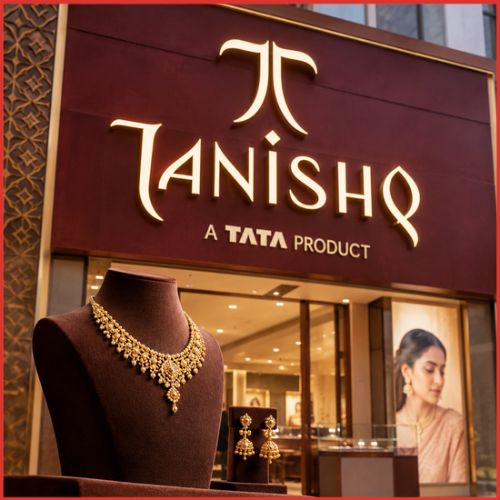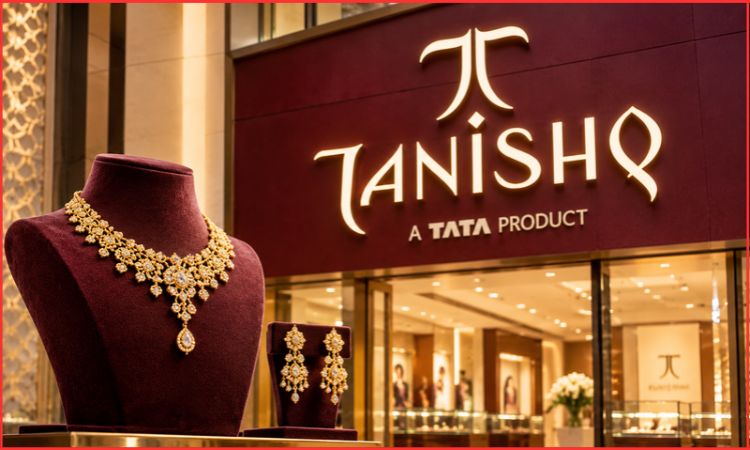
Ask most Indian families where they’d buy a wedding necklace and you’ll hear the name of a jeweller they’ve known for decades. Trust was the whole game. That is exactly the gap the Tanishq business model was built to fill.
Tanishq, owned by Tata-backed Titan, took a scattered, relationship-driven trade and turned it into a branded retail business. Today it sits at the centre of the Titan jewellery business and is among the best-known names in the Indian jewellery market. This article looks at how Tanishq makes money, how the Tanishq revenue model holds together, and what the Tanishq retail strategy can teach any founder or investor about building trust at scale.
How Titan Entered Jewellery
Titan Company began in 1984 as a joint venture between the Tata Group and the Tamil Nadu Industrial Development Corporation. Watches came first, and Titan became a household name there. Jewellery was the next logical bet, though a risky one.
Tanishq launched in 1995 into an Indian jewellery market that was huge but messy. Most buyers dealt with a neighbourhood jeweller. Purity claims were hard to verify, prices varied from shop to shop, and making charges were rarely explained. Customers paid for gold largely on faith.
Titan’s answer was simple: make the purchase checkable. Tanishq brought in-store purity testing with a karatmeter, clearer pricing and proper billing, and it sold 22-carat jewellery with a promise shoppers could see for themselves. That single move gave the Titan Company business model a second growth engine. Over the years, jewellery grew into the largest part of Titan’s overall sales, and Tanishq became the face of organised retail in the Indian jewellery market.
How the Tanishq Business Model Works
At its core, the Tanishq business model is branded retail. Tanishq designs and sources jewellery, sells it through its own showrooms and franchise partners, and stands behind it with a purity guarantee. It isn’t a marketplace. When something goes wrong, there’s one name responsible.
Four pieces hold the Titan jewellery business together:
Design and range
Gold, diamond, platinum and gemstone pieces across wedding, festive and everyday categories.
Sourcing and manufacturing
Titan works with its own facilities and partner artisans, so quality checks happen before a piece reaches the shelf.
Retail network
Stores give customers a place to touch, try and compare, which matters a great deal when the purchase runs into lakhs.
Trust and service
Hallmarked jewellery, exchange options and repair support bring people back.
What separates this from a local jeweller is consistency. A shopper in Jaipur and a shopper in Coimbatore get broadly the same experience, the same billing logic and the same quality promise. In the Indian jewellery market, where every shop used to work a little differently, that sameness is a real selling point.
Why Trust Is the Real Advantage
Strip away the stores and the ad films, and the Tanishq business model comes down to one thing: people believe the gold is what the bill says it is. In a category where one purchase can equal a family’s savings for a year, that belief is worth more than a small discount.
Three habits protect it. Purity is tested in front of the customer instead of simply claimed. The Tata name gives nervous first-time buyers a reason to walk in. And after-sales support, from exchanges to repairs, signals that the relationship doesn’t end at the billing counter.
This is also why the Tanishq retail strategy rarely competes on price alone. A rival can match a making-charge offer within a week, but it can’t copy decades of reputation. For the Titan jewellery business, that reputation is the asset that makes every other part of the model, from franchise expansion to new collections, easier to scale.
How Tanishq Makes Money
The plain answer to how Tanishq makes money is that it sells jewellery for more than it costs to make, source and deliver. The details of the Tanishq revenue model are more interesting than that sentence suggests.
Jewellery sales
Most revenue comes from gold jewellery, followed by diamond and studded pieces. A bill is built from the value of the metal and stones plus making charges, so the final price moves with the gold rate.
Making charges and studded margins
Plain gold is a thin-margin product because the metal’s price is largely passed through. Design, craftsmanship and stones are where retailers earn more. That’s why Tanishq pushes diamonds, bridal sets and designer collaborations.
Exchange and savings schemes
Gold exchange lets customers trade old jewellery for new, which creates repeat buyers. Monthly savings plans work in a similar way by locking in future purchases.
Managing gold price risk
Jewellers carry expensive stock. Titan has used gold-on-lease arrangements, where gold is borrowed rather than bought outright, to ease working capital and reduce exposure to price swings.
Revenue and profit aren’t the same thing here. A ₹1 lakh necklace doesn’t mean ₹1 lakh of profit, because most of the bill is the cost of gold. That is why inventory discipline and store productivity matter more than headline sales in the Titan Company business model.
The Tanishq Retail Strategy
The Tanishq retail strategy rests on three ideas: be present, be trusted, and be relevant to the occasion.
Presence
Tanishq has grown through company-owned stores and, more recently, franchise partners. Franchising lets local entrepreneurs fund and run stores under Titan’s brand and operating standards. That speeds up expansion into smaller towns without Titan carrying every rupee of capital. Terms differ by store type, so check Titan’s franchise page for current details.
Trust
Standard store formats, transparent billing and quality checks make a Tanishq showroom feel familiar anywhere in the country.
Occasion-led marketing
Indian jewellery is bought around weddings, Akshaya Tritiya, Dhanteras and Diwali, and Tanishq plans campaigns around those moments. Rivaah, its bridal line, offers collections inspired by regional wedding traditions, so a Bengali bride and a Punjabi bride aren’t handed the same catalogue. Its ad films also lean on emotion and social themes more than on discounts.
Omnichannel selling
Many shoppers now discover designs on Instagram or Google, then visit a store to buy. Tanishq’s website, virtual consultations and store appointments connect the two steps. Digital rarely closes a jewellery sale on its own, but it shapes the decision.
Titan’s Wider Jewellery Portfolio
Tanishq is the flagship, but the Titan jewellery business is deliberately multi-brand. Mia by Tanishq targets lightweight, everyday and workwear jewellery. Zoya sits at the luxury end. CaratLane, owned by Titan, is a digital-first brand that appeals to younger buyers.
The logic is straightforward. A 25-year-old buying diamond studs from Mia or CaratLane may well come back to Tanishq for a wedding set a few years later. Meanwhile, the brands share sourcing, supply chain, customer insights and retail know-how. This portfolio approach is a big part of the Titan Company business model, and it lets the group serve the whole Indian jewellery market instead of a single slice of it. It also spreads risk: if bridal demand softens, everyday and online sales can help fill the gap.
Challenges and What Comes Next
No business in the Indian jewellery market has an easy ride, and Tanishq is no exception.
Gold prices
When gold climbs, buyers choose lighter pieces, delay purchases or exchange old jewellery.
Competition
Kalyan Jewellers, Malabar Gold & Diamonds, Senco Gold and thousands of family jewellers compete hard on price and local relationships.
Working capital
Expensive inventory ties up money, and a poor design call can leave it sitting on the shelf.
Consistency at scale
Faster franchise growth makes it harder to keep every showroom at the same standard.
Changing tastes
Younger buyers want lightweight, versatile designs, not only heavy bridal gold.
The opportunities are just as real. More buyers are moving from unorganised to organised jewellers, helped by mandatory hallmarking, which suits a brand built on purity. International stores serve the Indian diaspora. Everyday-wear jewellery could stretch Tanishq beyond weddings and festivals. If the brand keeps pairing trust with fresh design, the Tanishq revenue model has plenty of room to grow.
Conclusion
The Tanishq business model shows what happens when a company treats trust as a product feature. Titan took a market that ran on personal relationships and added purity checks, clear billing and consistent stores. It then layered on franchise growth, occasion-led marketing and sister brands.
Understanding how Tanishq makes money comes down to this: sales volume matters, but margin, inventory control and repeat customers matter more. For anyone studying the Titan Company business model, the Tanishq retail strategy or the wider Indian jewellery market, the lesson holds. Brand trust, built patiently, compounds.