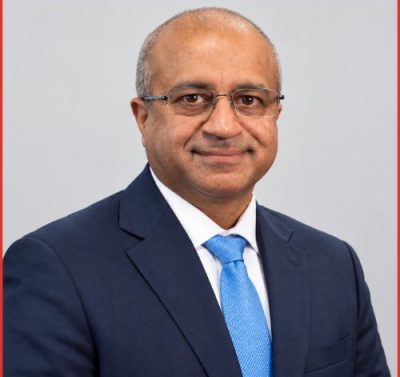
Hyderabad-based rocket startup crosses $1.1 billion valuation ahead of Vikram-1’s historic orbital launch
In a landmark moment for India’s private space sector, Skyroot Aerospace has officially become the country’s first space-technology unicorn, crossing a valuation of $1.1 billion after closing a $60 million funding round. The announcement was made on May 7, 2026, marking a significant inflection point not just for the company, but for India’s ambitions as a global space power.
The fresh capital injection — equivalent to approximately Rs 570 crore — was co-led by Sherpalo Ventures, founded by Ram Shriram, and Singapore’s sovereign wealth fund GIC. The round also saw participation from BlackRock, Greenko Group founders, Arkam Ventures, Playbook Partners, and Shanghvi Family Office. Notably, as part of the investment, Ram Shriram will join Skyroot’s board — a move that underscores the credibility and strategic confidence that global investors are placing in the startup.
Skyroot’s valuation has more than doubled since 2023, when the company was valued at around $550 million following a $27 million pre-Series C round. With this latest round, Skyroot’s total funding has crossed $160 million, or around Rs 1,500 crore.
A Historic Milestone in India’s Startup Ecosystem
The unicorn tag carries special weight in the space sector, where capital requirements are immense and timelines long. Skyroot has become the fourth Indian startup to enter the unicorn club in 2026, following KreditBee last month, Neysa in February, and Juspay, which attained a $1 billion valuation after a $50 million round led by WestBridge in January.
Founded in 2018 by former Indian Space Research Organisation scientists Pawan Kumar Chandana and Naga Bharath Daka, Skyroot develops small and medium-lift launch vehicles targeting the global satellite market. The startup has already made history once — in 2022, Skyroot became the first Indian private firm to launch a rocket into space with its Vikram-S sub-orbital mission.
The Vikram series is designed for small satellite launches and incorporates 3D-printed engines and carbon-fibre structures. The company also operates the Infinity Campus, described as India’s first private integrated rocket development facility.
How the Capital Will Be Deployed
The fresh funding will be used to increase the frequency of Vikram-1 launches, expand manufacturing capacity, and accelerate development of Vikram-2 — a 1-tonne class launch vehicle powered by an advanced cryogenic stage — enabling the company to serve a wider range of missions and customers.
Vikram-1 itself stands at the center of India’s next space milestone. The rocket, described as India’s first private orbital-class launch vehicle, is being readied for its maiden orbital flight.
Founder and Investor Voices
Pawan Kumar Chandana, co-founder and CEO of Skyroot Aerospace, expressed enthusiasm about the upcoming launch and what this funding signals to the broader world.
“We at Skyroot are excited about the upcoming Vikram-1 launch, India’s first private orbital rocket, marking a significant milestone both for India and the global space sector. This investment signals confidence from some of the world’s most reputed investors in Skyroot,” said Chandana.
Ram Shriram was equally emphatic about his long-held conviction in the team. “Skyroot is building the foundational infrastructure for that future with the best cost-to-performance ratio in the orbital-launch industry, and what the team has achieved is remarkable. I am proud to deepen my partnership with them as they take their next giant leap,” he said.
Still Pre-Revenue, But Investors Are Betting Big
Despite the milestone valuation, Skyroot’s financial journey reflects the capital-intensive nature of the space business. The company remained in the pre-revenue stage by the end of FY25, and its losses widened to Rs 99.70 crore during the year due to continued investments in research and development.
Yet for investors, the bet isn’t on today’s revenue — it’s on the infrastructure Skyroot is building for tomorrow’s space economy. Other well-funded spacetech startups in India include Agnikul, Pixxel, and Digantara, but Skyroot now stands apart as the sector’s first billion-dollar company.
With the Vikram-1 launch on the horizon and heavyweight global backers firmly on board, Skyroot Aerospace is no longer just India’s most promising space startup — it is now the benchmark every one of them aspires to reach.