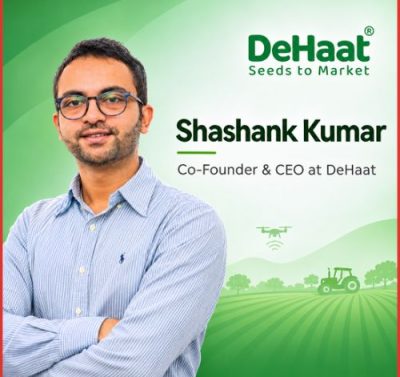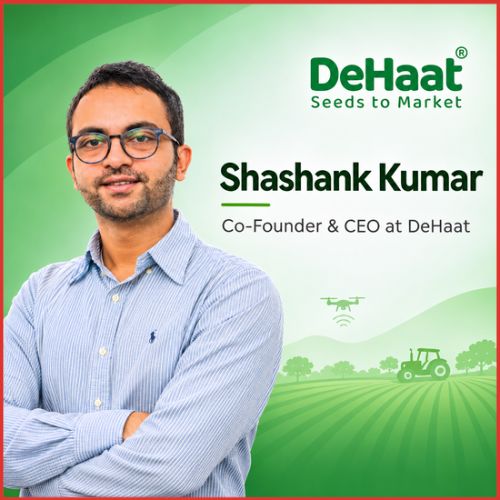
Agriculture remains one of India’s largest economic sectors, but farmers continue to face challenges beyond cultivation. This is the problem that Shashank Kumar, co-founder and CEO of DeHaat, set out to address in 2012. Limited access to quality agricultural inputs, fragmented supply chains, inadequate crop advisory and difficulties in finding profitable markets often affect farm productivity and income. Addressing these structural problems requires more than introducing technology. It requires connecting different parts of the agricultural value chain.
An initiative to improve agricultural services that started in rural Bihar gradually developed into a full-stack agritech platform connecting farmers with agricultural inputs, technology-driven advisory, financial services and institutional buyers.
Today, DeHaat represents an important example of how technology, physical distribution networks and rural entrepreneurship can work together to improve India’s agricultural ecosystem.
DeHaat: Company Overview
DeHaat is an Indian agritech firm that offers integrated agricultural services using digital technologies and physical service centers. Its business concept connects farmers with agricultural input providers, crop experts, financing institutions, and buyers of agricultural products.
| Company Details | Information |
|---|---|
| Company | DeHaat |
| Founded | 2012 |
| Co-founder and CEO | Shashank Kumar |
| Industry | Agritech |
| Business Model | Business to Farmer (B2F) |
| Initial Market | Bihar |
| Core Services | Agricultural inputs, crop advisory and market linkages |
| Additional Services | Soil testing, financial services, drone spraying and food processing |
According to its official website, DeHaat operates over more than 12 agricultural states, with a network of over 14,000 DeHaat Centres and 503 farmer producer organisations (FPOs). Its services cover different stages of agricultural production, from soil testing and input procurement to marketing and distribution of farm produce .
Who Is Shashank Kumar? The Journey Behind DeHaat
Shashank Kumar was born into a farming family in Bihar’s Chhapra district. Growing up in an agricultural environment gave him an understanding of the difficulties faced by farmers, particularly those operating small landholdings.
After completing his early education in Bihar, Kumar moved outside the state for better academic opportunities. He graduated from the Indian Institute of Technology Delhi in 2008 and subsequently worked as a business consultant in the supply chain industry.
His professional experience included working with established companies such as Unilever, Mother Dairy, Britannia and PepsiCo. This exposure helped him understand how large businesses manage procurement, distribution and consumer markets.
However, he also recognised a significant difference between organised supply chains and India’s agricultural ecosystem. While businesses had established distribution networks and market information systems, farmers often depended on fragmented local channels for agricultural inputs and the sale of their produce.
This observation influenced his decision to return to Bihar and explore solutions for the agricultural sector.
In 2012, Kumar co-founded DeHaat with a team of professionals from technology and management backgrounds. The objective was to develop a business model that could connect farmers with essential agricultural services rather than addressing individual problems through separate platforms.
His journey highlights how professional experience, combined with an understanding of rural challenges, contributed to the development of one of India’s prominent agritech businesses.
Why Did Shashank Kumar Start DeHaat?
The concept of DeHaat was born due to inefficiencies inherent in the agricultural supply chain of India.
Agricultural producers usually rely on numerous intermediaries when it comes to buying seeds, fertilizers, pesticides, and farm equipment. In addition, the farming process requires timely provision of weather reports, disease information and knowledge about irrigation techniques.
Unfortunately, all of these processes are fragmented – an agricultural input retailer does not know much about the soil conditions of the particular farm while a produce buyer cannot be able to reach out to farmers directly.
It becomes obvious that there are inefficiencies throughout the whole agricultural cycle.
Therefore, the concept of DeHaat was based on connecting all fragmented services within one agricultural ecosystem.
Initially, DeHaat started working in such Indian states as Bihar, Odisha and eastern part of Uttar Pradesh where smallholder farming and lack of organized agricultural services created room for innovation.
Instead of creating just a digital market place, the founders of DeHaat built an innovative business model with use of local entrepreneurs and physical warehouses.
How Does DeHaat’s Business Model Work?
DeHaat follows a business to farmer model that connects agricultural supply, farm advisory and market access. Its objective is to provide services throughout the agricultural production cycle.
The platform operates through a combination of mobile applications, warehouses, distribution networks and locally managed DeHaat Centres.
Its major business activities include:
| Business Segment | Services Offered | Value to Farmers |
|---|---|---|
| Agricultural Inputs | Seeds, fertilisers, pesticides and equipment | Access to quality farming products |
| Crop Advisory | Crop management and agronomic recommendations | Better informed farming decisions |
| Market Linkages | Connections with institutional buyers and traders | Improved access to agricultural markets |
| Financial Services | Connections with banks and financial institutions | Access to institutional financial services |
| Value Addition | Food processing, packaging and exports | Wider market opportunities for agricultural produce |
1. Agricultural Input Distribution
Access to quality agricultural inputs is essential for improving crop productivity. DeHaat connects farmers with manufacturers and suppliers of seeds, fertilisers, crop protection products and other farming equipment.
Through its distribution network, farmers can access agricultural products without depending entirely on traditional local intermediaries.
The company also offers products under its own and partner brands, strengthening its position in the agricultural input market.
2. Technology Driven Crop Advisory
Agricultural decisions depend on several factors, including soil conditions, crop varieties, weather patterns and pest activity.
DeHaat uses technology to provide crop specific recommendations to farmers. Its advisory services cover cultivation practices, irrigation, pest management and nutrient requirements.
A case study published on NITI Aayog’s Frontier Tech platform describes how DeHaat uses satellite imagery, weather information, soil profiles and pest incidence records to develop crop stage specific recommendations.
This approach demonstrates how artificial intelligence and agricultural data can support precision farming and improve access to timely agricultural information.
3. Agricultural Market Linkages
Finding buyers at competitive prices remains an important challenge for farmers.
DeHaat addresses this problem by connecting agricultural producers with institutional buyers, processors, exporters and retailers.
The platform also facilitates the aggregation and procurement of agricultural produce, creating a more organised connection between farms and markets.
This reduces dependence on fragmented selling channels and gives farmers additional opportunities to market their produce.
4. Rural Entrepreneurship Through DeHaat Centres
One of the important aspects of DeHaat’s business model is its network of local entrepreneurs.
The company works with individuals who have knowledge of agriculture and established connections within their communities. These entrepreneurs operate DeHaat Centres, providing farmers with access to products and services.
According to Fortune India, these local partners receive institutional support, product procurement assistance and business opportunities through the company’s network.
This model allows DeHaat to expand its rural presence while creating entrepreneurship opportunities within agricultural communities.
How DeHaat Uses Technology to Transform Indian Agriculture
Technology is an important part of DeHaat’s operating model. However, its approach goes beyond developing a mobile application for farmers.
The company combines digital agricultural services with physical infrastructure to address problems that require local engagement.
Its technology ecosystem supports several activities:
- Artificial Intelligence: Agricultural data helps generate recommendations based on crop conditions and farming requirements.
- Satellite Imagery: Remote monitoring helps assess agricultural land and support crop related decisions.
- Digital Platforms: Farmers can access agricultural products, advisory services and market connections.
- Data Analytics: Information about crops, soil and weather supports more informed agricultural decisions.
- Supply Chain Management: Digital systems help coordinate input distribution, procurement and agricultural logistics.
The combination of these technologies with local service centres is particularly important in rural markets, where farmers may not have consistent access to digital services or specialised agricultural knowledge.
DeHaat’s Expansion Beyond Traditional Agritech Services
DeHaat’s growth strategy has gradually expanded beyond agricultural input distribution and crop advisory.
The company is moving towards a more integrated agricultural value chain by investing in food processing, packaging, exports and proprietary agricultural products.
According to Fortune India’s October 2026 report, DeHaat exports agricultural produce to 26 countries, including bananas, grapes, pomegranates, rice, spices and makhana.
The company has also developed food processing capabilities across different agricultural categories, including fruits, vegetables, pulses and spices.
Its reported annual food processing capacity exceeds 52,000 metric tonnes, with more than 850 domestic and international buyers.
This expansion reflects an important development in the agritech business model. Instead of connecting farmers only with input suppliers and agricultural buyers, companies like DeHaat are increasingly participating in different stages of the food supply chain.
By entering processing and exports, DeHaat aims to improve the commercial value of agricultural produce and diversify its revenue streams.
What Makes Shashank Kumar’s DeHaat Different?
There are several agritech firms in India, each specializing in their own niche areas, such as agricultural input markets, advisory, equipment rental, and produce procurement.
The unique characteristic of DeHaat is its holistic nature.
It combines agricultural inputs, technology-based advisory, rural distribution, financial service providers, and institutional buyers into one ecosystem.
Physical infrastructure also makes the business model unique among other digital agriculture models. Entrepreneurs and DeHaat Centres play an important role in establishing a relationship with the farmers, while technology helps in procurement, advisory and logistics.
This model is addressing not only an agriculture-related opportunity but also a broader economic opportunity of developing rural entrepreneurship.
Yet, sustaining such a network requires significant investments in logistics, warehouses, technology, procurement and field operations. The demand for agriculture products depends on crop, geography, climate and seasons.
Thus, in order to grow the company will have to expand not only the number of its farmer customers but also develop sustainable agriculture services.
The Future of DeHaat and India’s Agritech Industry
DeHaat has grown under Shashank Kumar’s stewardship from being an agricultural venture that was restricted to the state of Bihar into a technology-driven agriculture company.
The fact that DeHaat has now diversified into processing, export and branded agricultural products shows that the company is increasingly getting involved in the agricultural value chain.
The bigger opportunity for the agritech sector in India would be to bring farmers closer to technology, good quality agricultural inputs, institutional financing and organized markets.
The next step for DeHaat would be to build on what it has done so far and develop its business model further.
The entrepreneurial career of Shashank Kumar shows that innovation in agriculture need not always start with a high-end technology product. It could start with solving the practical problems of farmers.
DeHaat’s development reflects this approach, combining technology, local entrepreneurship and supply chain integration to address some of the longstanding challenges in Indian agriculture.
Frequently Asked Questions (FAQs)
1. Who is Shashank Kumar of DeHaat?
Shashank Kumar is the co-founder and CEO of DeHaat, an Indian agritech company established in 2012. An alumnus of IIT Delhi, he founded the company to improve farmers’ access to agricultural inputs, crop advisory and organised markets.
2. What does DeHaat do for farmers?
DeHaat provides agricultural inputs, crop advisory, soil testing, financial service connections and market linkages. It also connects farmers with institutional buyers and offers access to services such as drone spraying and agricultural equipment.
3. What services does DeHaat offer to farmers?
DeHaat supplies agriculture inputs, crop advice, soil testing services, financial service linkages, and market linkages. In addition, it links the farmers to institutional buyers and links them to services such as aerial spraying and agriculture equipment.
4. How does DeHaat earn revenue?
DeHaat earns revenue from distribution of agriculture inputs, purchasing and selling of farm produce, its proprietary products, processing and exporting of foods. Other agricultural value chain services earn revenue from the business model of DeHaat.