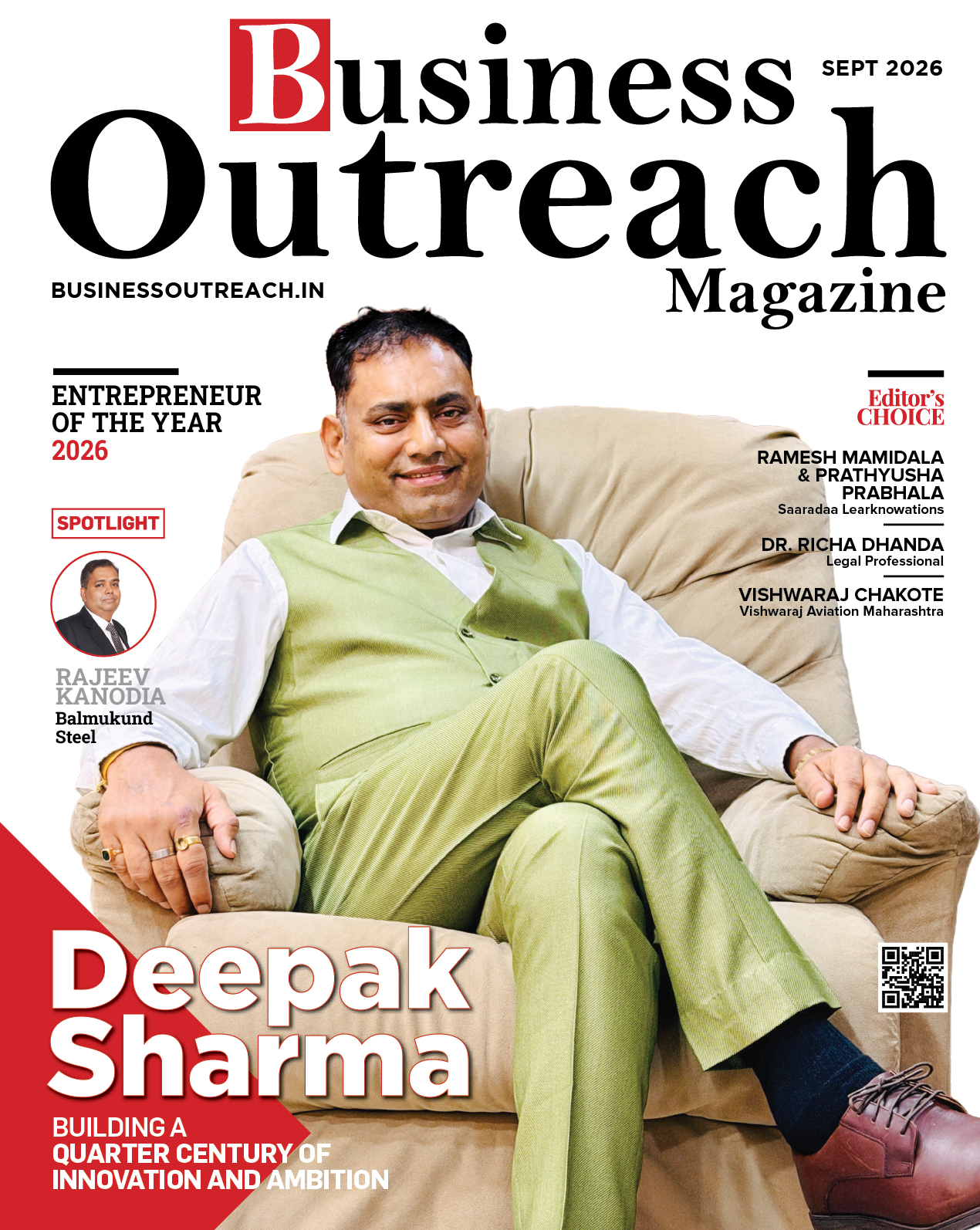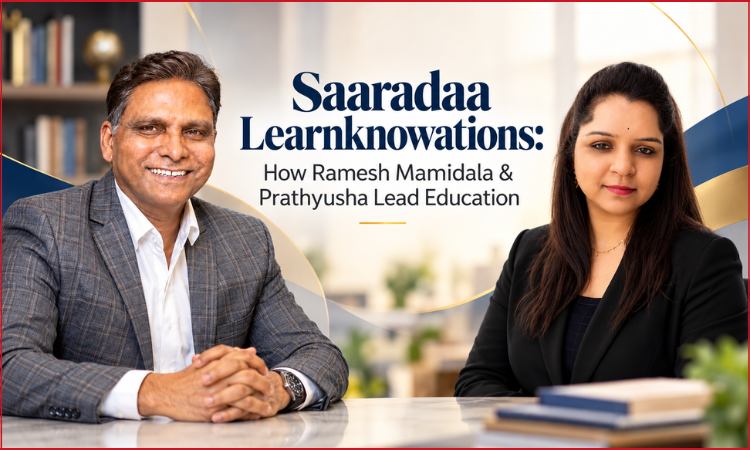
How Ramesh Mamidala and Prathyusha Prabhala are building an integrated learning ecosystem that brings together education, research, technology, and real-world skills
Education is changing faster than the traditional classroom can keep pace with. Students today are expected not only to perform academically but also to communicate effectively, think critically, conduct research, solve problems, and adapt to an increasingly complex world. Yet, in many learning environments, these capabilities remain secondary to examinations, textbooks, and conventional classroom instruction.
It is this gap that Saaradaa Learknowations is attempting to address.
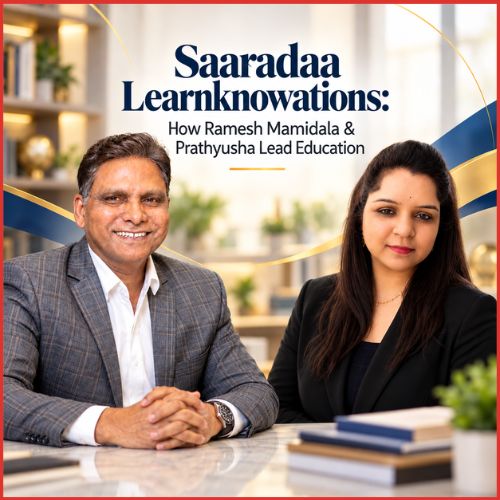
Founded by Ramesh Mamidala and Prathyusha Prabhala, Saaradaa Learknowations is developing an education ecosystem that goes beyond conventional content delivery. Its focus is on creating meaningful learning experiences that connect academic knowledge with research, communication, technology, leadership, and future-ready skills.
The strength of Saaradaa Learknowations lies in the complementary backgrounds of its founders.
With more than 26 years of experience teaching English in engineering education, Ramesh Mamidala has spent much of his career observing the challenges students face beyond their textbooks. A gold medalist in English, he has worked extensively in teaching, training, and academic development. He is also the editor-in-chief of the Saaradaa Journal of Interdisciplinary Studies and The GenZ Times, a trainer of trainers, and the author of five books.
His experience has reinforced a simple belief: students need more than subject knowledge. They need the ability to communicate their ideas, analyze information, think independently, and present their work with confidence.
Prathyusha Prabhala brings a different but equally important perspective. Her experience spans teaching across multiple curricula, including CBSE, ICSE, IGCSE, and IB, alongside multidisciplinary exposure to molecular biology, functional genomics, bioinformatics, and precision medicine. Her involvement in international research projects, including research work at Roskilde University in Denmark, has further shaped her approach to learning.
Together, the founders describe their approach as bringing together “the classroom and the laboratory, teaching and research, and experience and experimentation.”
One of the organization’s key ideas is that exposure to research should not begin only at university.
Students can start developing research-oriented thinking much earlier by learning how to observe, question, investigate, analyze evidence, and communicate conclusions. Saaradaa Learknowations seeks to create those opportunities through research-oriented science programs, academic projects, publishing initiatives, laboratory visits, and other experiential learning activities.
This approach also reflects a broader shift in education. As information becomes increasingly accessible through technology and artificial intelligence, the value of education is moving towards how students evaluate information, connect ideas, solve problems, and create new knowledge.
Saaradaa Learknowations provides UPSC foundation programs for Grades 6–10, research-oriented science programs, English communication programs, online examinations, faculty development, student leadership programs, research-paper publishing, book fairs, future-ready skills workshops, school radio, LMS solutions, counselling, science experiment kits, and laboratory visits.
Rather than imposing a single model, Saaradaa aims to work with educational institutions to develop solutions that can be adapted to their individual requirements while retaining a strong academic framework.
Technology with a human purpose
The term “EdTech” has become synonymous with educational innovation. However, Saaradaa Learknowations sees technology as an enabler rather than the destination.
Digital examinations, learning-management systems, and other technology-enabled resources can improve accessibility, organization, and efficiency. But technology alone cannot replace mentorship, curiosity, discussion, experimentation, or meaningful interaction between teachers and students.
The organization’s approach is therefore centered on combining technology with human guidance.
This is particularly important at a time when schools are being asked to prepare students for careers that may not even exist in their current form. Future-ready education requires adaptability—and adaptability is built through curiosity, confidence, and the willingness to keep learning.
Building for long-term impact
For Ramesh and Prathyusha, growth in education cannot be measured only by numbers.
Their approach places considerable emphasis on long-term institutional relationships and creating solutions that genuinely improve the learning experience. Rather than treating education as a conventional product-delivery business, they see Saaradaa as a platform through which schools, teachers, students, and researchers can interact and learn from one another.
The objective is ambitious but clear: to make critical thinking, research exposure, and real-world learning part of the educational journey rather than activities reserved for a select few.
The road ahead
The convergence of education and technology presents enormous opportunities, but it also creates an important responsibility: to ensure that innovation actually improves learning.
Saaradaa Learknowations sees significant potential in this intersection of education, technology, research, and personalized learning. Schools increasingly need solutions that extend beyond conventional content—from assessment and teacher development to communication skills, research exposure, competitive foundations, and future-ready capabilities.
For Saaradaa, the opportunity lies in bringing these requirements together into a coherent ecosystem.
The journey is still evolving, but the underlying idea remains consistent: education must prepare students not merely for the examinations they will take today, but for the questions they will face tomorrow.
As the founders put it:
“Education is not about filling minds with information; it is about creating the curiosity, confidence, and capability to discover what comes next.”
That philosophy perhaps best captures what Saaradaa Learknowations is trying to build—a learning ecosystem where knowledge is only the beginning, and where students are encouraged to become thinkers, researchers, communicators, and creators.