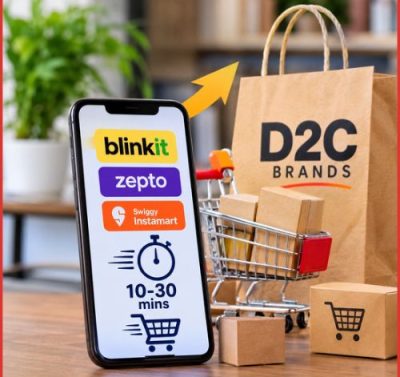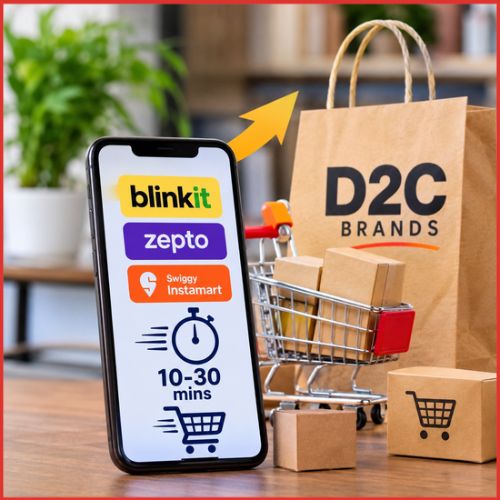
Picture an 11 pm craving for a protein bar, or a face wash that ran out this morning. A few years ago, neither would have reached your door within the hour. Now it takes about ten minutes, and Indian D2C brands have noticed. Quick commerce in India has moved well past groceries. For many startups it has become a second storefront, sitting beside the brand’s own website and Instagram ads. Whether it pays off depends on how a brand enters, which products it picks and how closely it watches the maths.
Quick Glance
| Platform | Daily orders (Aug 2026) | FY26 orders | Avg order value | Worth testing for |
| Blinkit | 3.4 to 3.6 million | 916.6 million | ₹518 (June quarter) | Volume and wide category reach |
| Zepto | 2.4 to 2.6 million | 640.2 million | About ₹300 to 350 | Snacks, drinks, convenience buys |
| Swiggy Instamart | 1.3 to 1.45 million | 412.2 million | ₹691 (June quarter) | Larger baskets, premium products |
Sources: Datum Intelligence via Entrepreneur India (Aug 2026); Zepto’s updated DRHP via Apparel Resources; Moneycontrol data via NewsBytes.
Quick Commerce in India and Why D2C Brands in India Care
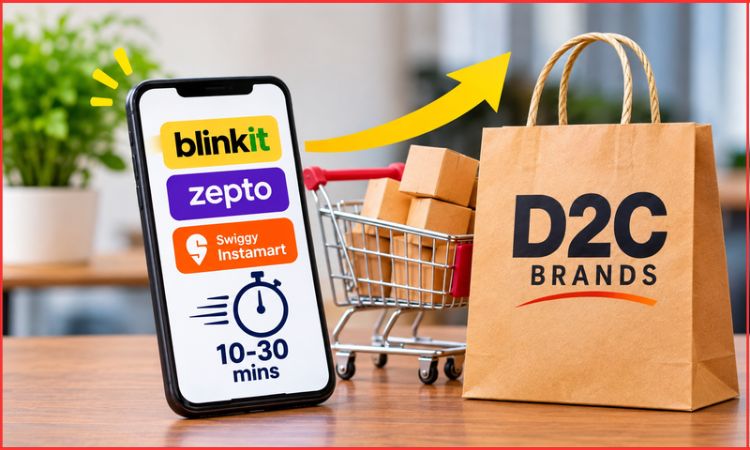
Quick commerce, or q-commerce, delivers everyday products in roughly 10 to 30 minutes. Orders come from dark stores, which are small neighbourhood warehouses that don’t take walk-in customers. A regular online order offers a huge catalogue and a delivery window of days. Q-commerce flips that deal: a narrower range, but right now.
The scale is hard to ignore. Datum Intelligence reported in August 2026 that quick commerce platforms crossed 9 million orders a day, with Blinkit at 3.4 to 3.6 million, Zepto at 2.4 to 2.6 million and Swiggy Instamart at 1.3 to 1.45 million (as reported by Entrepreneur India). A separate Equirus report put market growth at about 40 per cent year on year.
For D2C brands in India the reason to care is simple. Shoppers already open these apps every day, so a brand doesn’t have to drag them somewhere new. That changes how direct-to-consumer marketing works. Instead of paying to pull strangers onto a website, a brand can show up where people are already buying, and let the product speak at the moment of need.
Even so, quick commerce in India isn’t a magic switch. Dark stores carry limited stock, shoppers compare prices in seconds and the apps decide which products get seen first. Indian D2C brands that treat the channel as a test, not a rescue plan, tend to learn faster and waste less money.
How Indian D2C Brands Use Quick Commerce to Grow
Borrowing an audience instead of building one
A young brand can spend months, and plenty of ad money, pulling people to its own website. Listing on quick commerce platforms skips part of that climb. The shopper is already there, already logged in and already used to paying. A first-time buyer might spot a new protein bar sitting next to the big names, which is a trial sale the brand never had to chase through a paid ad.
Winning impulse and refill purchases
Fast delivery suits things people buy often or buy in a hurry: snacks, cold drinks, instant coffee, face wash, sunscreen, pet treats, cleaning supplies. Packaging matters because the customer scrolls quickly. A clear label and an obvious benefit can decide the sale in two seconds.
Using the app as a discovery shelf
Traditional direct-to-consumer marketing follows a long route: an ad, a landing page, a cart, a checkout. Inside a q-commerce app, search, discovery and payment sit on one screen. Brands improve their odds with clear product titles, sharp photos, fair pricing, good ratings and sponsored placements. Visibility can’t be bought alone, though. If a product is out of stock nearby or priced above rivals, ads won’t rescue it.
Deloitte India partner Praveen Govindu has cautioned, in a January 2026 industry report, that quick commerce helps D2C brands get discovered, especially in food and beverages, but can’t carry growth on its own.
Quick Commerce Platforms and the Blinkit Business Model
Not all quick commerce platforms work the same way, and brands should know how the money flows before signing up. The Blinkit business model, as commonly described, rests on three income streams: commission on each sale, advertising fees from brands that want better placement, and charges paid by customers such as delivery and handling fees. Terms differ by category and change over time, so confirm current rates with the platform.
Blinkit, owned by Zomato’s parent Eternal, is the volume leader. Disclosures in Zepto’s updated draft red herring prospectus show Blinkit handled 916.6 million orders in FY26, against 640.2 million for Zepto and 412.2 million for Swiggy Instamart. Instamart’s share among the big three slipped from 34.3 per cent in FY24 to 20.9 per cent.
Reading the Blinkit business model also explains why brands feel pressure on pricing. Every rupee of commission or ad spend has to be earned back through volume, so thin-margin products struggle. Brands should ask each of the quick commerce platforms for current terms, and compare them side by side.
Zepto and Swiggy Instamart are both worth testing, for different reasons. Zepto is growing fast and often suits food, drinks and convenience buys. Instamart’s average order value was ₹691 in the June quarter against Blinkit’s ₹518, according to industry data cited by Moneycontrol, which hints at shoppers who spend more per basket.
Indian D2C Brands Already Selling on Quick Commerce
A few names show how different categories fit. These are examples of category fit, not claims that quick commerce is any brand’s biggest channel.
- Blue Tokai Coffee Roasters: specialty beans and ground coffee for urban drinkers who run out unexpectedly.
- The Whole Truth Foods: protein bars and snacks, easy to try while ordering essentials.
- Mamaearth: skincare and haircare products people buy again and again.
- Heads Up For Tails: pet treats and supplies between larger planned orders.
Where the Margin Goes: Challenges for Indian D2C Brands
Commissions, discounts and ad spend
A rising sales graph can hide a thin or negative margin. Platform fees, promotional discounts and sponsored placements all eat into each order. Work out contribution margin for every product on every platform before scaling.
What brands can do
Start with limited campaigns, target high-intent searches and skip discounts that create sales but steady losses.
Stock-outs and local inventory
A listing means nothing if the nearest dark store has run dry. Forecast demand by city, watch stock daily and refill fast-moving products early.
Customer ownership and platform dependence
When a sale happens inside someone else’s app, the brand may get little customer data. Policies, fees and algorithms can also shift overnight. The platforms are still spending heavily to grow, too: Instamart reported an adjusted EBITDA loss of ₹3,511 crore on ₹3,859 crore of revenue in FY26, though Swiggy’s accounting isn’t directly comparable. Use quick commerce to win trials, then build repeat buying through your own site and other channels.
A Practical Plan for Emerging Indian D2C Brands
- Choose the products. Pick two to five SKUs with steady demand, fair prices and healthy margins.
- Test small. Start with one platform and a few pincodes. Confirm demand before adding stock.
- Fix the listing. Sharpen titles, images and keywords. Try small sponsored campaigns only once stock is reliable.
- Review weekly. Track sales, repeat orders where visible, stock availability, ad returns and contribution margin. Expand only when the numbers hold.
Think of quick commerce as one lane among several, next to your own website, marketplaces and offline retail. The strongest Indian D2C brands pair these apps with email, WhatsApp and social media, so direct-to-consumer marketing keeps building a relationship after the first fast delivery. A founder choosing between Zepto and Swiggy Instamart doesn’t need a perfect answer on day one. A small, measured test in one city will say more than any forecast.
Key Takeaways
- Quick commerce in India crossed 9 million daily orders in August 2026.
- Indian D2C brands use it for discovery, trial purchases and refill sales.
- Blinkit leads on volume, while Zepto and Swiggy Instamart suit different baskets.
- Sales growth doesn’t equal profit, so track contribution margin first.
- Treat quick commerce platforms as one channel, not the whole strategy.
Conclusion
Quick commerce is changing how Indian D2C brands find customers, and Blinkit, Zepto and Swiggy Instamart now sit close to everyday shopping habits. Speed alone won’t build a business, though. Brands that choose products carefully, protect their margins and pair this channel with their own websites and direct-to-consumer marketing will grow on firmer ground than those chasing listings for their own sake.