India’s expanding infrastructure and manufacturing sectors are driving sustained demand for steel. Be it highways, railway infrastructure, renewable energy, or urban conurbations, the Indian economy is still heavily dependent on steel.
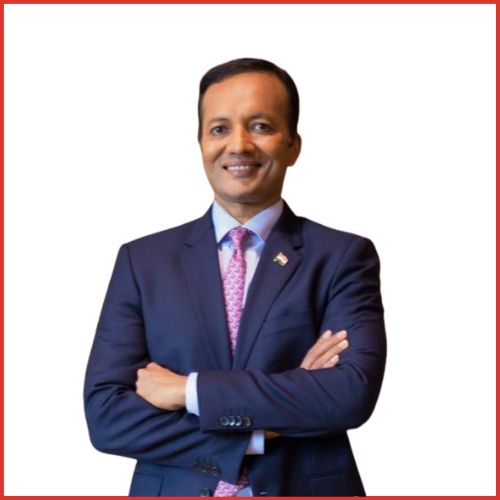
One of the key companies driving this transformation is Jindal Steel. Under the leadership of Chairman Naveen Jindal, the company has evolved over the past three decades into one of India’s leading integrated steel producers through long-term investments, disciplined operations, and continuous capacity expansion.
His strategy extends beyond simply increasing steel production. Jindal Steel can dominate the supply chain by combining steelmaking, power generation, mines, and logistics all within one firm, which increases efficiency and lowers production costs. This model is still working effectively in stabilizing the company during erratic market cycles.
This article explores Naveen Jindal’s journey, his leadership philosophy, and the business strategies that have transformed Jindal Steel into one of India’s largest integrated steel manufacturers.
Quick Glance
| FY2026 Highlights | Details |
| Annual Steel Production | 9.25 million tonnes (up 14% YoY) |
| Steel Sales | 8.68 million tonnes (record high) |
| Steelmaking Capacity | 15.6 MTPA after the Angul plant expansion |
| Gross Revenue | ₹62,412 crore |
| Profit After Tax | ₹3,361 crore |
| Long-Term Vision | “India could surpass 300 million tonnes of steelmaking capacity over the next 7–8 years,” according to Naveen Jindal. |
These milestones are clear validation of Jindal Steel’s medium-to-long-term strategy. As the company continues expanding its manufacturing facilities through disciplined investments and operational efficiency, Jindal Steel is well-positioned to strengthen its leadership in India’s growing steel industry.
Early Life and Education
Naveen Jindal was born on 9 March 1970 in Hisar, Haryana, to industrialist O.P. Jindal and Savitri Jindal. Growing up in one of India’s leading industrial families gave him early exposure to manufacturing, entrepreneurship, and business leadership. Savitri Jindal later became Chairperson Emeritus of the Jindal Group and is one of India’s most prominent business leaders.
He completed a Bachelor of Commerce from Hansraj College, University of Delhi, followed by an MBA from the University of Texas at Dallas. While studying in the United States, he served as President of the Student Government Association at the University of Texas at Dallas, where he developed leadership and organizational skills.
Rather than building a career overseas, Jindal returned to India to expand the family business and strengthen its position in the country’s evolving steel industry.
Taking Jindal Steel to the Next Level
Entering the family business in the early 1990s, Naveen Jindal capitalized on a new era of industrial opportunity brought about by liberalization in the Indian economy. Instead of focusing solely on expanding production capacity, Jindal emphasized three priorities: vertical integration, technology, and large-scale manufacturing.
From the beginning, one of his initiatives was to cut down on outside suppliers. By expanding into mining, power generation, and logistics, the company became better positioned to withstand supply chain disruptions.
Meanwhile, Jindal Steel invested in state-of-the-art manufacturing facilities rather than expanding capacity only in response to rising demand. This enables the company to increase production and have total command of raw materials.
As India continues to ramp up investments in infrastructure, the company has continued expanding manufacturing capacity through ongoing capacity additions and technology upgrades. These are the keys to enabling Jindal Steel to deliver record FY26 results and a growth story.
Building an Integrated Steel Giant
A key strength of Naveen Jindal’s leadership is his focus on building an integrated business rather than simply expanding steel production.
Currently, Jindal Steel is involved in different divisions of the value chain, such as mining, steel, power, and logistics. It provides them with more control over the raw materials and less dependency on outside suppliers.
Another advantage is increased efficiency. Over most of the production process, Jindal Steel can self-supply and thus control the first-hand costs. This would enable the firm to utilize the available production factors efficiently and adapt quickly to the market circumstances.
Another concern is the technology. The firm keeps investing in up-to-date steelmaking installations, automation, and process improvement to enhance productivity and development.
Further, these investments helped Jindal Steel establish itself as one of India’s prominent integrated steel manufacturers.
Record-Breaking FY2026 Performance
Jindal Steel’s financial safeguards over the long term are a blueprint for sustainable investing: they produce solid results by FY2026.
The company recorded annual steel production of 9.25 million tonnes, up 14% year over year. Steel sales hit a record 8.68 million tonnes, driven by healthy domestic demand and stable capacity utilization.
This has been driven by commissioning additional BOF converters and increasing the steelmaking capacity to 15.6 MTPA.
The company also records a much better financial performance for the financial year. In the fourth quarter of FY2026, the revenue shot up to ₹16,217.93 crore, while the net profit recorded a big jump to ₹1,041.24 crore. This sets off much better volumes, higher plant utilization, and operating leverage, which are the major contributors.
Instead of relying on buoyant steel prices, Jindal Steel’s steadfast efficiency enhancement ensures continuous growth for the business even in fierce competition.
Expanding Capacity for Future Growth
Capacity expansion has long been one of Naveen Jindal’s strategic priorities.
The company continues to invest in state-of-the-art steelmaking facilities, new equipment, and manufacturing improvements to expand production capacity.
The Angul steel plant, Jindal Steel’s flagship manufacturing facility, plays a central role in this strategy. Following its latest expansion, the plant has significantly increased the company’s steelmaking capacity and strengthened its long-term production capabilities.
By investing during industry downturns, Jindal Steel positions itself to capitalize on future demand driven by infrastructure, construction, renewable energy, and manufacturing growth.
Naveen Jindal’s Vision for India’s Steel Industry
Naveen Jindal believes that India’s steel industry is poised for sustained long-term growth.
Speaking at the 2026 Global Steel Dynamics Forum in New York, he stated that India could add more than 300 million tonnes of steelmaking capacity over the next seven to eight years.
He attributes this outlook to rapid urbanization, expanding infrastructure development, rising housing demand, and continued growth in India’s manufacturing sector.
Jindal also believes that India’s relatively low per-capita steel consumption compared with the global average provides significant room for long-term demand growth.
This optimistic outlook reinforces Jindal Steel’s strategy of expanding capacity today to meet future demand.
Strengthening Investor Confidence
Jindal Steel’s strong FY2026 performance has further strengthened investor confidence.
Many market analysts remain optimistic about the company’s future, citing stronger earnings, expanded production capacity, and long-term opportunities created by India’s infrastructure growth.
The company also maintains regular communication with investors through analyst meetings, corporate governance reports, credit rating updates, and periodic business disclosures.
These initiatives enhance transparency while reinforcing investor confidence in Jindal Steel’s long-term strategic direction.
Leadership Beyond Business
Along with heading Jindal Steel, Naveen Jindal also remains a Member of Parliament for Kurukshetra.
He is also the Founding Chancellor of O.P. Jindal Global University, which aims to promote higher education, research, and skill enhancement through several educational programs.
His contributions extend beyond business through initiatives in education, public service, and social development.
Conclusion
Naveen Jindal’s leadership demonstrates the value of long-term strategic planning in building a successful industrial enterprise.
Rather than seek quick profits, he develops an integrated manufacturing ecosystem with ongoing investment, operations, and technological excellence.
This strategy has paid off handsomely, as evidenced by Jindal Steel’s record-breaking FY2026 performance. With India set to further develop its infrastructure and manufacturing base, this company is well placed to exploit the opportunities that they create.
With a disciplined growth strategy, continued capacity expansion, and a clear long-term vision for the steel industry, Naveen Jindal continues to lead Jindal Steel’s next phase of growth.
FAQs
1. Who is Naveen Jindal?
Naveen Jindal, Indian billionaire entrepreneur, Chairman of Jindal Steel, Member of Parliament, Kurukshetra, and Founding Chancellor of O.P. Jindal Global University. Naveen Jindal has helped the company grow through long-term investments, integrated manufacturing, and technology-enabled growth.
2. What is Naveen Jindal’s business strategy?
Naveen Jindal prioritizes long-term value creation through vertical integration, capacity expansion, operational efficiency, and investment in advanced manufacturing technologies. This way, Jindal Steel is able to cut costs, enhance the supply chain, and increase its returns.
3. What were Jindal Steel’s major achievements in FY2026?
For FY2026, Jindal Steel achieved its best-ever annual steel production of 9.25 MTPA and steel sales of 8.68 MTPA. Jindal Steel’s steel-making capacity increased to 15.6 MTPA, continued to see growth in revenue and profitability.
4. What is Naveen Jindal’s vision for India’s steel industry?
Naveen Jindal is confident that Indian steel capacity will cross 300 million tonnes in the next seven to eight years. He foresees another round of growth in India’s steel sector supported by the growth in infrastructure, housing, urbanization & manufacturing.
5. How does Jindal Steel maintain its competitive advantage?
Jindal Steel sustains competitiveness by an integrated business operation along the value chain of mining, steel manufacturing, power plant, and logistics, together with persistent investment in capacity expansion, technology, and operational efficiency.