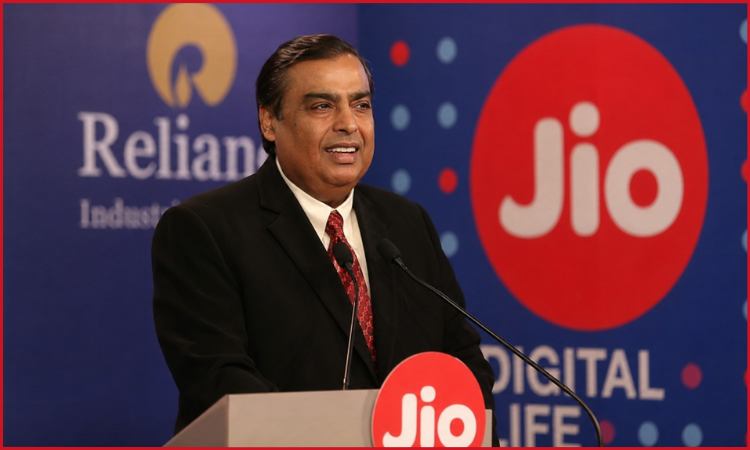
Reliance Jio has secured a technical go-ahead from India’s space regulator for its planned 1,600–1,650-satellite low Earth orbit (LEO) constellation, moving the Mukesh Ambani-led company a step closer to becoming the first Indian firm to build and operate its own satellite network, according to a report in the Economic Times published Friday.
The constellation, to be housed under Jio Platforms, is meant to deliver broadband and direct-to-device (D2D) connectivity across India over the next two to three years, with the satellites positioned at an altitude of roughly 650 km.
IN-SPACe evaluation and next steps
The Indian National Space Promotion and Authorisation Centre (IN-SPACe) has been reviewing the configuration and architecture of Jio’s proposed network, and has now signed off on the technical design, the report said.
The next milestones are a formal regulatory nod from IN-SPACe and a filing with the International Telecommunication Union (ITU) through the Department of Telecommunications (DoT) to secure orbital slots and spectrum — a process the government is reportedly expected to support given Jio’s status as a strategic domestic entrant to the sector.
A crowded global field
If it goes ahead, Jio’s constellation would mark the first large-scale entry by an Indian private player into a segment currently dominated by Elon Musk’s Starlink, which operates close to 10,000 satellites, and Amazon’s Project Kuiper, which is deploying roughly 3,200.
Bharti Group is the second-largest shareholder in Eutelsat OneWeb, which runs around 654 satellites. Jio itself already runs a separate satellite joint venture with Luxembourg’s SES, though that operates in geostationary and medium Earth orbit rather than LEO.
Strategic and cost calculus
Industry estimates cited in the report peg the investment required for a constellation of this scale at $10–15 billion, or roughly ₹95,000 crore to ₹1.42 lakh crore.
A person aware of the plan told the Economic Times the company is weighing multiple routes to get there, saying it could have LEO satellites in place “either by organic or inorganic means.” The push is also being framed in New Delhi as a matter of digital sovereignty, with officials citing concerns over dependence on foreign satellite operators for a strategic communications layer.