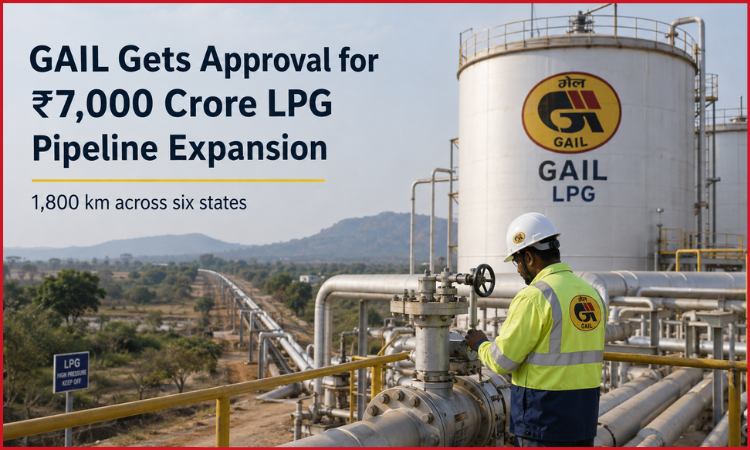
India’s petroleum regulator has approved three major LPG pipeline projects covering about 1,800 kilometres across six states, with an estimated investment of ₹7,000 crore.
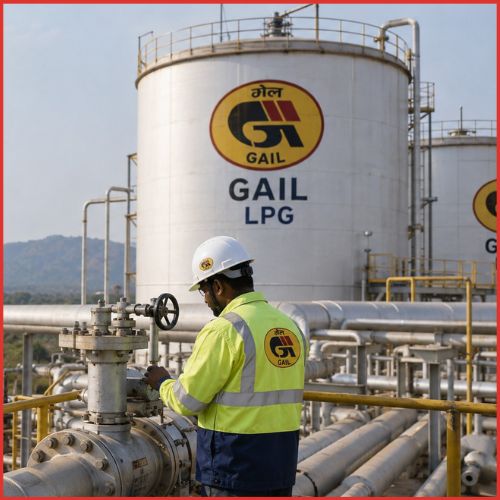
The Petroleum and Natural Gas Regulatory Board has authorised GAIL (India) Limited to develop the pipelines across Telangana, Maharashtra, Uttar Pradesh, Uttarakhand, Karnataka and Goa.
Once completed, the projects will increase the country’s authorised common-carrier LPG pipeline network from approximately 7,700 km to 9,500 km. That represents an expansion of nearly 23.5%.
The approval is aimed at reducing the movement of bulk liquefied petroleum gas by road. LPG is currently transported from refineries and coastal import terminals to inland bottling plants through a combination of pipelines, rail wagons and tanker trucks.
India imports a significant portion of the LPG it consumes. Much of the imported fuel arrives at coastal terminals before being moved to bottling facilities and consumption centres across the country. Expanding pipeline connectivity is expected to make this movement more reliable and reduce pressure on road-based logistics.
Three New LPG Routes Approved
The authorised projects will connect important supply and distribution centres in western, central, northern and southern India.
The three routes are:
- A 556-km pipeline from Cherlapally in Telangana to Nagpur in Maharashtra
- A 611-km pipeline from Jhansi in Uttar Pradesh to Sitarganj in Uttarakhand
- A 633-km pipeline from Shikrapur in Maharashtra to Goa and Hubli in Karnataka
Together, the routes cover exactly 1,800 km.
GAIL will be responsible for developing all three pipelines. The company already operates a large network of natural gas and petroleum-product infrastructure across India.
The projects have been authorised as common-carrier pipelines. This means capacity can be made available to multiple authorised users under regulated terms instead of being restricted to one company’s supplies.
The model allows oil marketing companies and other eligible businesses to use the infrastructure for transporting LPG between supply points and bottling facilities.
Network to Grow by Nearly One-Fourth
India’s authorised common-carrier LPG pipeline network currently extends for around 7,700 km. The three projects will take that figure to nearly 9,500 km.
The increase of approximately 1,800 km amounts to 23.5% of the existing network, making it one of the larger expansions of LPG transport infrastructure in recent years.
The newly approved lines follow the earlier authorisation of the 2,757-km Kandla–Gorakhpur LPG pipeline. That project is the longest LPG pipeline authorised in the country and is designed to connect western coastal supply points with demand centres across northern India.
The latest approvals widen the network into additional markets. The Cherlapally–Nagpur line will connect Telangana and Maharashtra, while the Jhansi–Sitarganj corridor will strengthen movement across Uttar Pradesh and Uttarakhand.
The Shikrapur–Goa–Hubli pipeline will create a route covering Maharashtra, Goa and Karnataka. It is the longest of the three new projects at 633 km.
Shift Away From LPG Tankers
One of the main objectives of the expansion is to reduce the primary movement of LPG through tanker trucks.
Road tankers remain necessary for parts of the final distribution chain, particularly for locations that are not directly connected to pipelines. However, using them for long-distance bulk transport raises safety, cost and traffic concerns.
Several serious road accidents involving LPG tankers have increased attention on the risks associated with moving large quantities of hazardous fuel on highways.
Pipelines can carry LPG continuously between major supply points and bottling plants. This reduces the number of long-distance tanker journeys and limits exposure to delays caused by road congestion, weather or vehicle availability.
The regulator said the shift could deliver gains in:
- Road safety by lowering LPG tanker movement
- Logistics costs for long-distance fuel transport
- Supply reliability between terminals and bottling plants
- Traffic conditions on heavily used freight routes
- Carbon emissions associated with diesel-powered tankers
- Transit losses during bulk fuel movement
The projects are also expected to provide additional capacity as LPG demand changes across the connected regions.
₹7,000 Crore Investment Planned
Development of the three pipelines is expected to require around ₹7,000 crore. The investment will cover pipeline construction and associated facilities needed to receive, transport and deliver LPG.
The projects remain at the development stage following regulatory authorisation. Detailed construction schedules, commissioning deadlines and individual project costs have not yet been publicly outlined.
The final timelines may therefore differ across the three corridors, depending on local approvals and construction conditions.
GAIL’s involvement gives the projects an experienced infrastructure operator. The state-owned company operates gas transmission pipelines, LPG facilities and related energy assets across the country.
Why the Expansion Matters
The pipeline approval comes as India works to strengthen its fuel distribution network against possible supply disruptions.
Reliance on imported LPG makes inland transportation particularly important. Fuel arriving at coastal terminals must move efficiently to bottling facilities serving households, commercial establishments and industries.
The new corridors will not remove the need for cylinders, delivery vehicles or regional distribution networks. Their role is to improve the earlier part of the supply chain by carrying LPG in bulk over longer distances.
They could also free tankers for shorter regional routes where pipelines are not available.
Bottom Line
The approval of nearly 1,800 km of LPG pipelines gives India a ₹7,000 crore expansion of its bulk fuel transport network.
GAIL will develop three corridors connecting six states, increasing the authorised common-carrier network from around 7,700 km to nearly 9,500 km.
The immediate focus is on moving more LPG through pipelines and reducing long-distance tanker traffic. The impact will ultimately depend on construction timelines and how quickly the new routes connect import terminals, supply centres and bottling facilities.