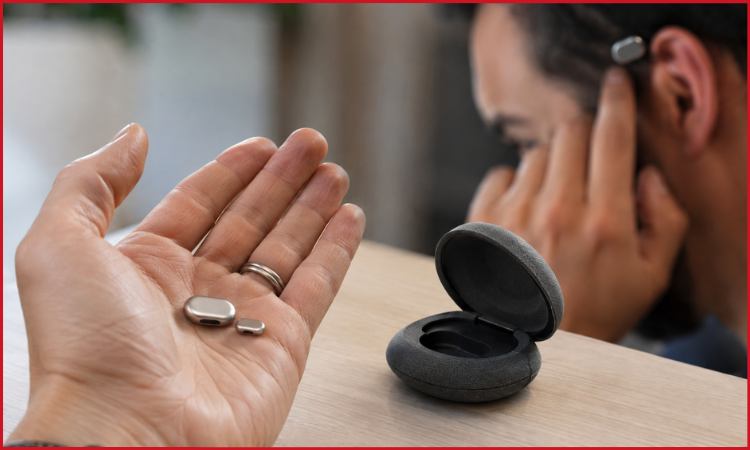
Deepinder Goyal has revealed a smaller version of Temple, the experimental health wearable being developed by his new venture. The device is now less than half the size of the model shown earlier, while pre-orders for a limited launch edition are expected to begin soon.
Goyal, the founder of Zomato and Eternal, shared images of the updated device alongside its carrying case. He said Temple would begin shipping before the end of 2026, although the company has not announced an exact preorder date.
Pricing, final specifications and the number of units planned for the first release also remain undisclosed.
Goyal described the redesigned Temple as the smallest wearable available by volume and claimed that it is the company’s most powerful version so far. However, Temple has not released measurements, performance data or comparisons with existing wearable devices to support those claims.
The announcement marks an important step for a product that was initially presented as an experimental research project. With a limited commercial release now planned, Temple is moving closer to being tested by consumers outside the company’s early-access programme.
What Is the Temple Wearable?
Temple is designed to be worn against the side of the head, around the temple region. Unlike smartwatches and fitness bands that collect information from the wrist, the device is being developed to read physiological signals from the head.
The company says this position allows the wearable to study changes connected with blood flow, metabolic demand and the body’s response to physical or mental strain.
Temple’s main measurement is a company-developed biomarker called “Entropy.” The startup describes it as a live reading of the metabolic and sympathetic demand placed on the body.
According to earlier information shared by Goyal, the Entropy reading changes during exercise, rest, sleep, meals, caffeine consumption, meditation and exposure to cold. Lower readings are intended to represent deeper rest, while higher readings indicate greater physical or cognitive demand.
Temple has also introduced two related measurements:
- Entropy Maxima, intended to represent the highest output reached during activity
- Entropy Minima, intended to indicate the lowest metabolic state achieved at rest
- A live Entropy score that changes as the user’s physical state changes
- Training and recovery information based on signals collected from the temple region
These measurements remain experimental. The company has not yet published detailed independent studies explaining how its scores are calculated or how consistently they perform across different users.
Temple also has not said whether the device will require regulatory approval for any health-related functions. Its final commercial positioning; whether as a fitness tracker, performance tool or broader health-monitoring product; has yet to be confirmed.
Smaller Design Moves Temple Closer to Launch
The size reduction is the most visible change in the latest version.
Earlier models appeared as relatively prominent modules worn on the side of the head. The new version is considerably smaller and is shown with a dedicated case, suggesting that the company is working on the product’s portability and everyday use.
Reducing the size of a head-worn wearable could be important for comfort. Unlike a watch or ring, a device placed near the temple must remain secure without distracting the user during exercise or extended periods of wear.
Temple has not disclosed the weight of the redesigned model, its dimensions or the materials used. Information about battery life, charging time, storage, wireless connectivity and compatibility with smartphones is also unavailable.
Goyal said that “living and training” with Temple could change how people understand their bodies. For now, however, the company has not provided enough technical information to compare the product directly with established health wearables.
The limited launch edition is likely to give Temple its first substantial set of real-world users. Feedback from that group could help the company refine the fit, software and interpretation of its health measurements before a wider release.
Price and Preorder Date Still Awaited
Temple has asked interested customers to join its mailing list for updates about pre-orders. Shipments are scheduled to begin before the end of 2026.
The company has not confirmed:
- The official price of the limited launch edition
- The markets where it will initially be sold
- The total number of devices available
- The exact preorder opening date
- Subscription charges, if any
- Warranty and after-sales support
- Full hardware and sensor specifications
Reports have previously suggested that Temple could be positioned as a premium wearable. Until the company announces official pricing, however, any figures should be treated as unconfirmed.
The decision to begin with a limited edition indicates that the first release may remain tightly controlled. That would allow Temple to monitor how the hardware performs while avoiding the manufacturing and support demands of a large consumer launch.
A Different Approach to Wearable Technology
The wearable market is dominated by watches, wristbands and smart rings that track heart rate, sleep, movement and blood-oxygen levels. Temple is taking a different route by collecting information from the side of the head and focusing on the body’s response to exertion and recovery.
That distinction gives the product an unusual position in the market, but it also places a greater burden on the company to demonstrate that its measurements are reliable and useful.
Temple will need to show how its Entropy score differs from existing indicators such as heart rate, heart-rate variability, sleep scores and estimated energy expenditure. Clear explanations of accuracy, user privacy and data handling will also be important before a wider launch.
Bottom Line
Deepinder Goyal’s Temple wearable is moving towards commercial availability after receiving a major reduction in size. Pre-orders for a limited launch edition are expected to open soon, with deliveries planned before the end of 2026.
The latest images offer the clearest look yet at the device and its case. Key information; including the price, exact launch date, battery life and complete specifications; has not been announced. Temple’s commercial prospects will depend on whether the company can support its ambitious health-tracking claims with transparent technical and validation data.