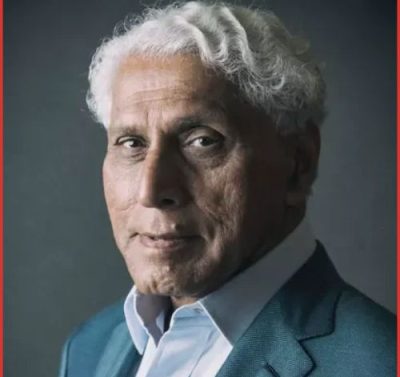
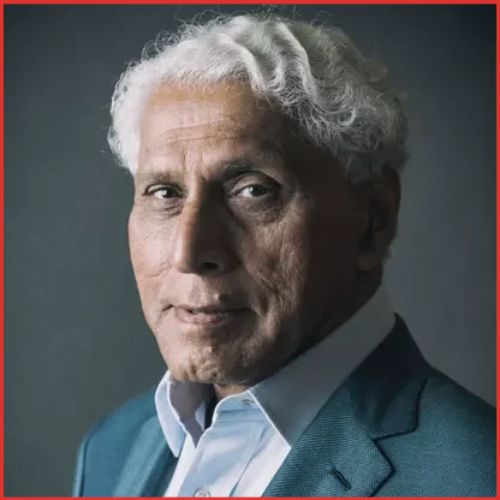
Romesh Wadhwani is an Indian-American entrepreneur who started with almost nothing in Pittsburgh and went on to build a software fortune, a private investment firm and one of the larger enterprise AI companies around. Most people know him today as the SymphonyAI founder and the chairman of Symphony Technology Group (STG).
This Romesh Wadhwani biography follows him from a childhood shaped by Partition to the boardrooms of Silicon Valley. It covers his education, his career, the Romesh Wadhwani business empire, his net worth and the philanthropy he has put real money behind. If you’re after a Romesh Wadhwani success story that isn’t just a list of dates, this one has plenty of detail worth sitting with.
What stands out is how practical his thinking has always been. He didn’t chase consumer fads. He picked boring, expensive problems inside big companies, built software to fix them, and then reinvested what he earned into the next round of businesses.
Romesh Wadhwani Biography at a Glance
| Detail | Information |
| Full name | Romesh T. Wadhwani |
| Born | 1947, Karachi (before Partition) |
| Nationality | American, born in India |
| Education | B.Tech in electrical engineering, IIT Bombay; master’s and PhD, Carnegie Mellon University |
| Profession | Entrepreneur, investor, philanthropist |
| Best known for | Founding Symphony Technology Group and SymphonyAI |
| Biggest exit | Aspect Development, sold to i2 Technologies in 2000 for about $9.3 billion |
| Industries | Enterprise software, artificial intelligence, data analytics, private equity |
| Philanthropy | Wadhwani Foundation, Wadhwani AI, Giving Pledge signatory |
| Honour | Padma Shri, 2020 |
Early Life and Education
Romesh Wadhwani was born in Karachi in 1947, just days before the Partition of India. His family left almost immediately and settled in Delhi as refugees. Money was tight, and by most accounts he also contracted polio as a toddler, which affected his mobility for the rest of his life. It’s hard to read that start and not see where the stubborn streak in his later career came from.
He turned out to be a strong student, especially in maths and engineering. That took him to the Indian Institute of Technology (IIT) Bombay, where he studied electrical engineering. Getting into an IIT back then was a serious achievement, and it gave him the technical base he’d lean on for decades.
In 1969 he flew to Pittsburgh to study at Carnegie Mellon University. Accounts of his arrival say he landed with only a couple of dollars in his pocket. He stayed on to finish a master’s degree and a PhD in electrical engineering, and the university exposed him to early work in computing, automation and artificial intelligence.
That last point matters more than it looks. Long before generative AI became a boardroom buzzword, Wadhwani was already thinking about how machines could see, decide and act. Everything in his later Romesh Wadhwani career traces back to that grounding.
Romesh Wadhwani Career: From Compuguard to Aspect Development
The Romesh Wadhwani career didn’t begin with one big idea. It began with a few smaller bets, each teaching him something the next one would use.
Compuguard (1972). His first company sold software for energy management and security in commercial buildings. Energy costs were a worry at the time, so the pitch was simple: use software to run a building more cheaply. He was learning how to sell, hire and manage while still a young engineer.
American Robot. Next came a venture built around machine vision and artificial intelligence for factories. The idea was to let robots recognise parts and their positions so they could pick, place and assemble them. It was early for the technology, but it planted his interest in industrial AI.
Aspect Development. This was the breakthrough. Aspect built business-to-business software that helped manufacturers manage product data and supply-chain purchasing. Anyone who has watched a large company juggle thousands of parts and suppliers knows how messy that gets, and Aspect made it manageable.
In 2000, i2 Technologies bought Aspect Development in a deal valued at roughly $9.3 billion. It was one of the biggest software deals of the dot-com era, and it turned Wadhwani into a proper Indian-American entrepreneur success story almost overnight.
A lot of founders would have stopped there. He didn’t. The money and the lessons from Aspect became the seed for what came next.
Symphony Technology Group and the Romesh Wadhwani Business Empire
In 2002, Wadhwani started Symphony Technology Group, a private investment firm that buys and grows software and technology-enabled services companies. This is where the Romesh Wadhwani business empire really took shape.
STG works differently from a startup. Instead of building every product from scratch, it looks for companies that already have good technology and loyal customers but need sharper operations, fresh investment or the right acquisitions. Then it helps them grow.
The group has described itself as reaching about $2.5 billion in combined revenue with roughly 15,000 employees across its portfolio. Those numbers explain why people talk about Symphony Technology Group as a platform and not a single company.
It also shaped his thinking about AI. After years inside enterprise software, Wadhwani knew where customers actually lost money, and that made it easier to see where AI could produce a measurable return instead of a flashy demo.
SymphonyAI Founder: Taking AI Into Enterprise Work
Wadhwani launched SymphonyAI in 2017. As the SymphonyAI founder, he bet that businesses would pay for AI built around their own industry rather than generic tools. The company sells software for retail, consumer goods, financial services, healthcare, manufacturing and enterprise IT.
The examples are practical. A retailer uses it to forecast demand and keep shelves stocked. A bank uses it to flag suspicious transactions. A factory uses it to spot a failing machine before it breaks down.
He also put his own money behind the idea, committing up to $1 billion of his personal capital to the AI business. Alongside it he built ConcertAI, which applies AI to healthcare and life sciences, and the wider SAIGroup platform.
The market is crowded, and SymphonyAI still has to prove itself on customer adoption, data quality and return on investment. But for a man in his late seventies, it’s a bold way to spend the next chapter.
Romesh Wadhwani Net Worth in 2026
Romesh Wadhwani’s net worth is estimated at about $5.5 billion in mid-2026, based on Forbes figures reported by American Bazaar and News24. In 2025, DNA India put it near $5 billion.
Treat any single figure with care. Much of his wealth sits in private companies, and valuations of private stakes move. Different outlets also use different methods, so you’ll see slightly different numbers depending on where you look.
What’s clear is where the money came from: the Aspect Development sale, the growth of Symphony Technology Group, and his stakes across the SymphonyAI group. His wealth isn’t tied to one product, which is a big part of the Romesh Wadhwani success story.
| Business | Year | Why it mattered |
| Compuguard | 1972 | First venture, building management software |
| Aspect Development | 1990s | Sold to i2 Technologies for about $9.3 billion in 2000 |
| Symphony Technology Group | 2002 | Investment platform for software businesses |
| SymphonyAI | 2017 | Industry-specific enterprise AI |
| ConcertAI | 2022 | AI for healthcare and life sciences |
Philanthropy, Awards and Recognition
Wadhwani doesn’t treat giving as an afterthought. He set up the Wadhwani Foundation around 2000 to back entrepreneurship, skills training and job creation, mainly in emerging economies like India. Its programmes help small businesses grow and help young people become employable.
With his brother Sunil, he also supports Wadhwani AI, which applies artificial intelligence to public health, education and agriculture. The aim is simple: make advanced technology useful for people who rarely get it. He has also signed the Giving Pledge, promising to give away a large share of his wealth.
In 2020, India honoured him with the Padma Shri for his contribution to trade and industry. Earlier, President Barack Obama appointed him to the board of trustees of the John F. Kennedy Center for the Performing Arts, which shows his reach goes beyond technology.
Lessons for Entrepreneurs
The Romesh Wadhwani success story offers a few lessons that hold up well beyond his industry.
- Pick problems that cost real money. Aspect worked because manufacturers were already losing time and cash on product data and suppliers.
- Pair technical skill with commercial sense. His engineering degrees opened doors, but finding customers and building teams made the companies work.
- Don’t stop after the first win. After selling Aspect, he moved into investing, then into enterprise AI.
- Play the long game. Symphony Technology Group and SymphonyAI both reward patience more than quick flips.
- Give back while you build. The foundation work runs alongside his companies instead of waiting until retirement.
For any aspiring Indian-American entrepreneur, or any founder at all, the common thread is staying curious and adapting as markets change.
Conclusion
This Romesh Wadhwani biography shows a long, steady climb: a refugee childhood, an IIT and Carnegie Mellon education, a multibillion-dollar exit with Aspect, and a second act in investing and AI. His career proves that patient, problem-first thinking can build a business empire, and his philanthropy shows he intends the benefits to travel well beyond his own bank balance.