Last year in 2025, ₹1 lakh bought nearly 10 grams of gold at the average July–September spot price. In the same quarter this year, it bought about 6.7 grams, before making charges and taxes. A family could walk into the same jeweller, spend the same amount on the same occasion and leave with roughly a third less gold.
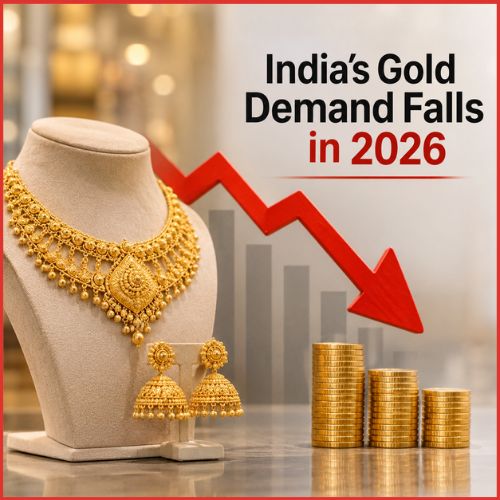
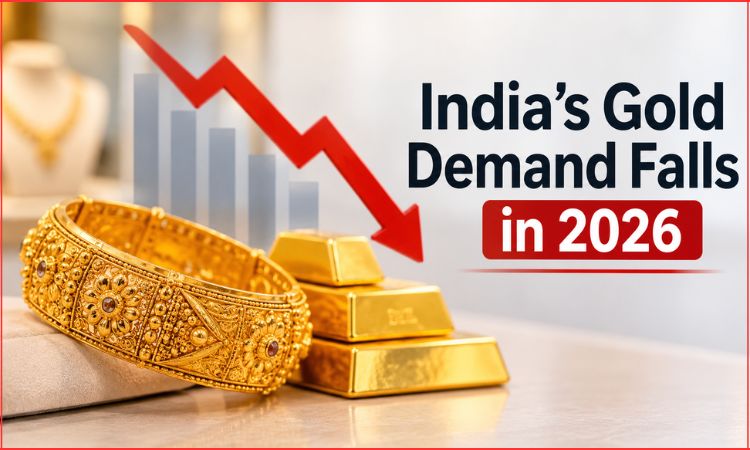
That arithmetic explains much of what is happening in India. In the first nine months of 2026, gold demand fell 12% to 443.9 tonnes, yet the rupee value of that demand rose 38% to about ₹6.67 lakh crore. Indians committed considerably more money to gold and still bought less of it.
Investor interest is real, particularly in gold exchange-traded funds (ETFs). But jewellery remains the larger market, and even among investors, people buying coins behaved differently from those buying fund units. The apparent contradiction starts to disappear once those purchases are counted separately.
Where Did India’s Gold Demand Actually Fall?
| Measure | Jan–Sep 2025 | Jan–Sep 2026 | Change |
| Jewellery demand | 295.4 tonnes | 241.1 tonnes | −18% |
| Bar and coin demand | 184.4 tonnes | 167.5 tonnes | −9% |
| Gold ETF demand | 19.7 tonnes | 28.8 tonnes | +47% |
| Total gold demand, including industrial use | 506.4 tonnes | 443.9 tonnes | −12% |
| Average domestic spot price per 10 grams | ₹93,513 | ₹1,50,247 | +61% |
The jewellery row explains most of the national decline. Buyers took home 54.3 fewer tonnes of jewellery than a year earlier. Across the entire market, the shortfall was 62.5 tonnes. Gold ETFs added 9.1 tonnes more than in the comparable period, a substantial increase for that segment, but nowhere near enough to make up for the missing jewellery purchases.
A Wedding Budget Buys a Lighter Piece
A wedding date is usually less flexible than the weight of a necklace. When gold becomes expensive, a family can keep the occasion and the gift while changing the design, choosing a lighter chain or bringing in an older piece for exchange. From the family’s point of view, the purchase went ahead. In the national figures, fewer grams changed hands.
The September quarter shows how wide that gap has become. India bought 99.9 tonnes of gold jewellery, down from 125 tonnes a year earlier. Yet the value of those purchases rose 16% to around ₹1.49 lakh crore. A jeweller reporting stronger sales revenue and a market report describing weaker jewellery demand can both be right.
There is evidence that shoppers are actively considering these trade-offs. In a consumer survey published with the quarterly figures, the share of respondents considering exchanging old gold rose from 70% to 76% between survey rounds.
That measures intentions, not completed exchanges. It does, however, capture a choice that sales figures miss: a customer may still want the new bangle without wanting to fund the whole purchase in cash.
Why ETF Inflows Can Rise While Investment Buying Slows
A gold ETF lets someone buy exposure to the metal through fund units. There is no particular weight of necklace to afford or coin denomination to choose. An investor putting aside a fixed rupee amount can continue doing so at a higher gold price, even though each contribution now represents less metal.
Indian gold ETFs attracted 28.8 tonnes of demand through September, up from 19.7 tonnes a year earlier. But bars and coins still accounted for 167.5 tonnes, nearly six times the ETF figure. Put those two investment channels together and demand was about 196 tonnes, down roughly 4% year on year. Investment held up much better than jewellery; it did not grow across the board.
The timing matters, too. Nearly 20 tonnes of the year’s ETF demand came in the first quarter alone. By July–September, ETF demand was 5.3 tonnes. Money was still coming in, but the strong nine-month figure owes much to decisions investors made at the start of the year.
Coin Buyers Had a Different Reason to Wait
Someone buying gold for a wedding has a deadline. Someone considering a bullion coin can look at the price on Saturday and decide to come back next month. That distinction mattered as the earlier price rally lost momentum.
The average Indian spot price in July–September was ₹1,48,891 per 10 grams. It was slightly below the preceding quarter’s average but still about 45% higher than a year earlier. A buyer waiting for prices to ease got some relief. A buyer remembering what a coin cost last year still faced a much larger bill.
The comparison was also unusually demanding. Indians bought 91.6 tonnes of bars and coins in the September quarter of 2025, against 55 tonnes this year. That produced a 40% annual drop, even though purchases actually rose 9% from the preceding quarter. The nine-percentage-point increase in gold import duty in May was another likely restraint on physical buying, although the figures cannot establish how many purchases the duty change alone displaced.
How Can India Still Be the World’s Largest Gold Jewellery Market?
India accounted for 32% of the world’s gold jewellery consumption in the September quarter, even as Indian buyers took home 20% less gold than a year earlier. The figures answer different questions. One compares India with other countries; the other compares Indian purchases with last year’s.
Buyers in mainland China, for instance, bought 65.7 tonnes during the quarter, down 22% from a year earlier. Indian shoppers bought 99.9 tonnes, about 34 tonnes more than their Chinese counterparts. India therefore kept its place as the largest jewellery market, even though higher prices put heavier pieces beyond the reach of many households.
Could Diwali and the Wedding Season Reverse the Decline?
The September figures stop before Diwali. Some festive buying that fell in the third quarter of 2025 moved into October–December this year, making the annual comparison look weaker. October market reports also pointed to improving seasonal demand after prices softened in September. Neither observation tells us how much gold households ultimately bought over Diwali.
Three measures will help distinguish a festive lift from a broader recovery:
- Grams sold alongside rupee sales. A higher festive turnover is more convincing evidence of a volume recovery if customers also take home more gold.
- Rural purchasing power. A weak monsoon can leave agricultural households with less income for a wedding purchase, even when the date and the intention to buy are unchanged.
- Bars and coins alongside ETF flows. Fund inflows show financial investors are buying. A sustained rebound in physical investment would make that recovery much broader.
The full-year estimate is around 650 tonnes, which would be the lowest since 2020 if it materialises. Reaching that figure would require roughly 206 tonnes in the final quarter. That allows for a sizeable festive rebound from the September quarter’s 162.5 tonnes while still leaving demand below the 261.9 tonnes recorded in the final quarter of 2025.
India’s gold buyers have not lost interest in the metal. What has changed most is the weight they can afford. The wedding customer choosing a lighter piece and the investor adding money to a gold ETF are both buying gold. In 2026, the extra tonnes bought through funds have covered only a fraction of the grams left behind at the jewellery counter.