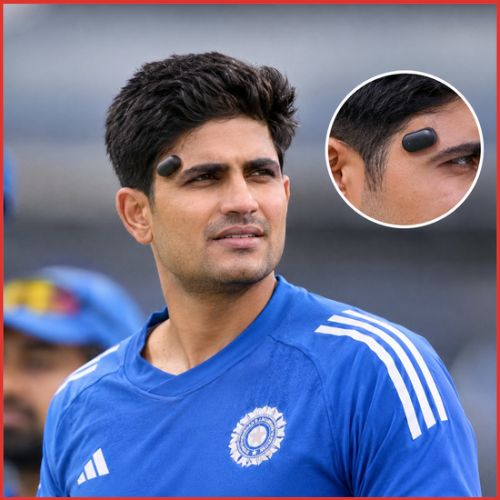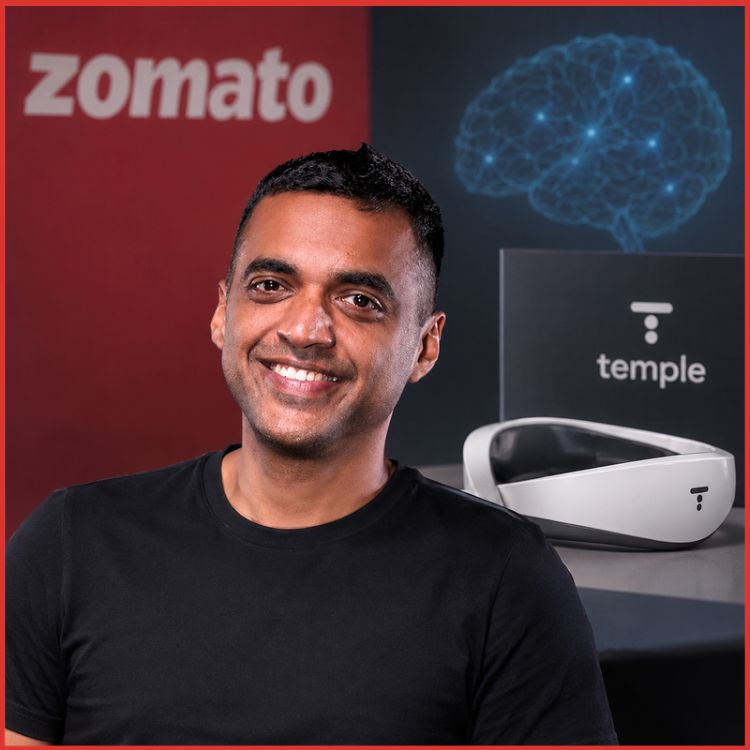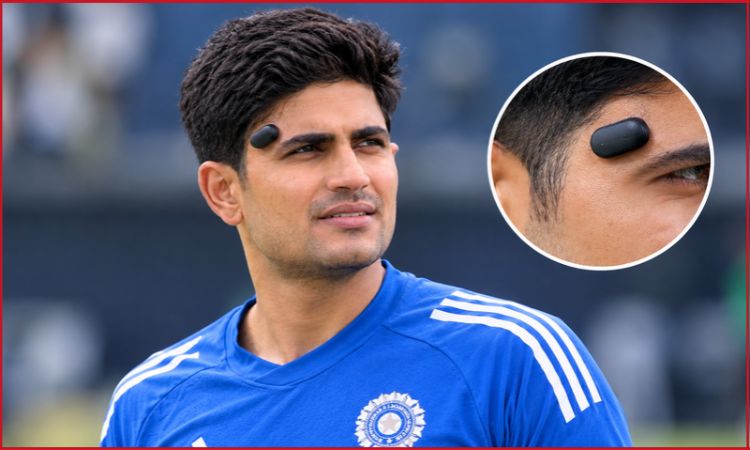
India captain Shubman Gill turned up for practice in Auckland on Thursday, October 29, with something unusual attached to his forehead. It wasn’t part of his cricket equipment. The small device was Temple, an unreleased fitness tracker developed by a venture founded by Zomato co-founder Deepinder Goyal.
Gill was seen wearing the Temple AI fitness device while batting in the nets at Eden Park. The wearable is designed to monitor changes in cerebral blood flow, nervous system responses and physiological stress during physical activity.
The sighting comes just days before India’s ODI series against New Zealand, which begins on November 4. While Gill has not publicly explained his decision to test the device, its appearance during an international training session has brought fresh attention to Goyal’s wearable technology venture.
Gill Tries Temple During Auckland Net Session
Gill joined the Indian squad in Auckland alongside KL Rahul and other players preparing for the upcoming 50-over matches. India had already established a commanding lead in the ongoing T20I series against New Zealand, with attention gradually moving towards the ODI fixtures.
During Thursday’s training session, Gill spent time discussing preparations with head coach Gautam Gambhir before heading into the nets.
He was also seen practising alongside Ishan Kishan and Rahul. The device attached near his right temple remained in place while he batted.
According to a report by RevSportz, Gill used the Deepinder Goyal Temple wearable throughout the session. Sources cited by the publication indicated that the Indian captain was impressed by the initial data and biofeedback produced during his training drills.
There has been no official statement from Gill confirming whether he intends to continue using Temple. The Board of Control for Cricket in India (BCCI) has also not announced its adoption as part of the team’s fitness-monitoring programme.
For now, the Auckland session appears to have been an opportunity to test the equipment under actual training conditions.
What Exactly Is Deepinder Goyal’s Temple Device?
Temple looks quite different from the fitness trackers people usually wear.
It is a compact, pill-shaped device positioned on the side of the forehead, close to the temple.
According to descriptions of the technology, it uses optical sensors to detect changes in blood flow and oxygenation in tissue around the temple region.
The collected measurements are intended to help users understand changes in physical and mental workload.
Temple’s monitoring system is also designed to consider factors such as sleep, exercise, stress and recovery.
For athletes, these measurements could offer another perspective on what happens during demanding practice sessions.
Whether Temple can measure these changes accurately enough to guide training decisions remains to be established through independent validation.
How Is Temple Different From Smartwatches?
Most consumer fitness devices collect information about movement, heart rate, sleep and everyday activity.
Products from companies such as Apple, Garmin and Whoop already provide users with various indicators of physical exertion and recovery.
Temple is attempting something different.
Its reported focus is on cerebral blood flow monitoring and other physiological signals that may reflect the body’s response to mental and physical demands.
The device uses light-based sensing technology to examine changes in blood volume around the temple. Its software then processes the signals into measurements intended to describe physiological strain.
That does not mean Temple can directly read thoughts or determine someone’s concentration with certainty. Changes in blood flow are not the same as a direct measurement of cognitive performance.
There is also a practical question about interpreting the readings. A fitness device may collect large quantities of information, but the value depends on whether that information is reliable and useful.
Temple remains a developing product, and detailed independent comparisons with established wearables have not yet been made publicly available.
PV Sindhu Was Also Seen Using Temple
Gill isn’t the first prominent Indian sportsperson to appear with the device.
Badminton star PV Sindhu was previously spotted wearing Temple, including during the BWF World Championships in August.
Her appearance attracted attention because the device was still under development and had not entered the wider consumer market.
Now, Gill’s use of the wearable during an international cricket practice session has put it before another sporting audience.
Cricket and badminton place different demands on athletes, but both require sustained concentration, rapid reactions and physical endurance.
A reliable system for monitoring physiological strain could potentially help athletes identify patterns associated with those demands.
Still, neither Sindhu’s nor Gill’s use of Temple establishes that the technology improves sporting performance.
Temple Moves Towards Commercial Availability
Goyal’s wearable venture is preparing to make Temple available beyond its early testing users.
Reports published ahead of the Auckland sighting indicate that customer pre-orders are scheduled to open on November 1, 2026.
Early-access invitations have reportedly mentioned a price of approximately ₹85,000, although the final retail price has not been officially confirmed.
The company is pursuing a limited initial release, with an emphasis on controlling production quality rather than manufacturing large volumes immediately.
Goyal has previously described the project as an effort to develop specialised monitoring technology for high-performance athletes.
Temple is intended for wellness and research use, not for diagnosing medical conditions.
That distinction is important as the device moves towards commercial availability. Its ability to provide physiological readings should not be confused with clinical assessment or proven improvements in athletic performance.
Can Temple Find a Place in Professional Cricket?
Gill’s appearance with the wearable has raised questions about how emerging monitoring technology might fit into professional cricket.
Sports teams already examine training workloads, fitness assessments and recovery schedules.
Temple’s reported focus on neurological and physiological signals makes it an interesting experiment.
But there are still unanswered questions about measurement accuracy, practical application and how coaches might interpret the results.
The Shubman Gill Temple device sighting offers an early glimpse of that experiment rather than evidence of a wider change in India’s training methods.
As India prepares for its ODI assignment against New Zealand, Gill’s immediate priority remains his performance on the field. Whether the small device seen on his forehead becomes a regular feature of his training is something that has yet to be established.