Steelmaking, fertilizer production and heavy transport are among the sectors looking for alternatives to fossil fuels. Green hydrogen offers one option because it can be produced using renewable electricity and water. India is working to develop this industry through government incentives, renewable energy projects and agreements with international buyers. Its success will depend on whether producers can supply green hydrogen and its derivatives at competitive prices and build the infrastructure needed for exports.
What is Green Hydrogen and How is it Produced?
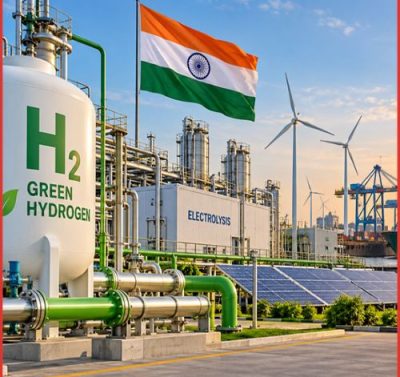
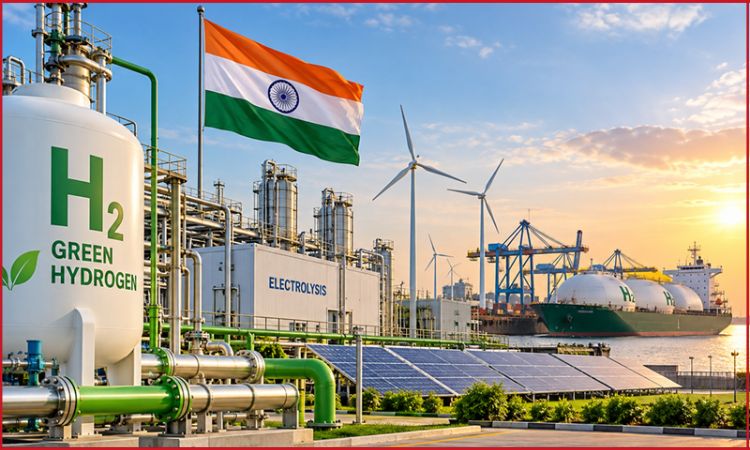
Green hydrogen is produced by using renewable electricity to split water into hydrogen and oxygen through a process called electrolysis. Its emissions depend on the electricity source and the wider production process. When renewable electricity powers the electrolyzer, emissions can be much lower than those from hydrogen produced using fossil fuels.
Hydrogen is difficult to transport over long distances in its gaseous form. Producers can convert it into carriers such as ammonia or, where a suitable carbon source is available, methanol. These products can be transported for use in industries, fertilizer manufacturing and shipping. However, converting hydrogen into another product and transporting it requires additional energy and infrastructure.
Why India Has Potential to Supply Global Markets
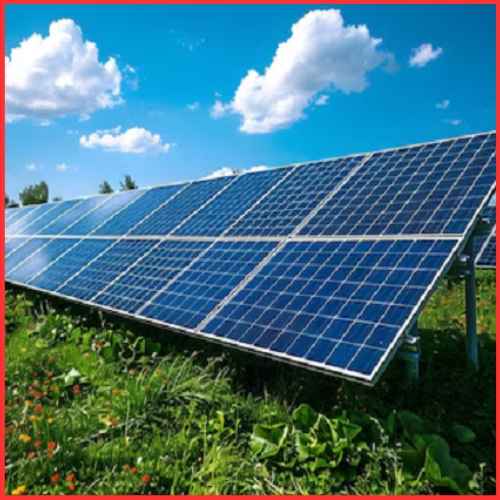
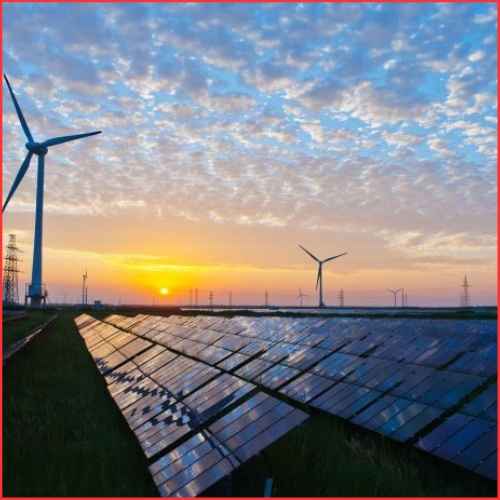
India has substantial solar and wind resources that can support renewable electricity generation for electrolysis. Its National Green Hydrogen Mission also identifies exports and domestic use as important parts of the country’s hydrogen strategy.
India’s renewable energy potential and government support are attracting international interest in green hydrogen and its derivatives. Indian companies have signed agreements to supply green ammonia and methanol to Japanese buyers, including annual supply commitments of 405,000 tonnes and 300,000 tonnes of green ammonia. Avaada Group plans to invest ₹40,000 crore in green ammonia and green methanol facilities in Odisha and Maharashtra, respectively. The Gopalpur ammonia project is targeted for commissioning around 2030, while the Nagpur methanol project remains at the planning stage. These developments signal export potential, though planned capacity is not yet operational.
Government Support for Green Hydrogen Production
The government approved the National Green Hydrogen Mission in January 2023 with an outlay of ₹19,744 Crore. Its target is to develop at least 5 million metric tonnes of annual green hydrogen production capacity by 2030, supported by around 125 GW of additional renewable energy capacity.
The mission’s Strategic Interventions for Green Hydrogen Transition (SIGHT) programme supports domestic electrolyzer manufacturing and green hydrogen production. By February 2026, incentives had been awarded for 3,000 MW of annual electrolyzer manufacturing capacity and 8.62 lakh tonnes of annual green hydrogen production capacity. These are awarded capacities, not proof that all the facilities are operational.
The government is also creating demand within India. By March 2026, green ammonia supply agreements covering approximately 6.7 lakh tonnes per year had been finalized for domestic use. Fertilizer plants can use green ammonia as an alternative to ammonia produced from fossil fuels.
| Policy measure | Target or reported progress |
| Mission outlay | ₹19,744 Crore |
| Green hydrogen production target by 2030 | 5 million tonnes per year |
| Electrolyzer manufacturing capacity awarded | 3,000 MW per year |
| Green hydrogen production capacity awarded | 8.62 lakh tonnes per year |
| Commissioned green hydrogen capacity by February 2026 | Around 8,000 tonnes per year |
The gap between awarded and commissioned capacity highlights the work still required to turn policy support into large-scale production.
Building Renewable Energy and Export Infrastructure
Green hydrogen production requires a reliable supply of renewable electricity, water and electrolyzers. When producers also manufacture ammonia, they need additional processing facilities, storage systems and transport links. Locating these facilities near renewable power sources and ports can help reduce some supply-chain costs, although the overall benefits depend on the project design.
For example, Avaada Group is developing a green hydrogen and green ammonia project at Gopalpur Industrial Park in Odisha through an agreement with Tata Steel Special Economic Zone Limited. The group has also announced plans for ammonia storage infrastructure in partnership with Gopalpur Port. These initiatives illustrate how production and port facilities can be developed together to support future supply to export markets.
Challenges India Must Address
India’s export ambitions depend on more than production targets. Renewable electricity is a major part of hydrogen production costs, so projects need reliable power at competitive rates. Renewable electricity can account for around 50% to 70% of green hydrogen production costs.
Producers must also develop suitable storage and port facilities, meet importing countries’ emissions and certification requirements and bring announced projects into operation. International price-support schemes, including Japan’s Contract for Difference mechanism, can help make early supply agreements commercially viable.
Conclusion
India has established a policy framework, awarded production and manufacturing capacity and secured important agreements for green ammonia and methanol supplies. These developments provide a foundation for its ambition to become a global green hydrogen export hub. The next step is to commission projects, secure reliable renewable power, develop port infrastructure and meet international standards at competitive costs. Progress on these fronts will determine how much of India’s planned capacity can translate into regular exports.