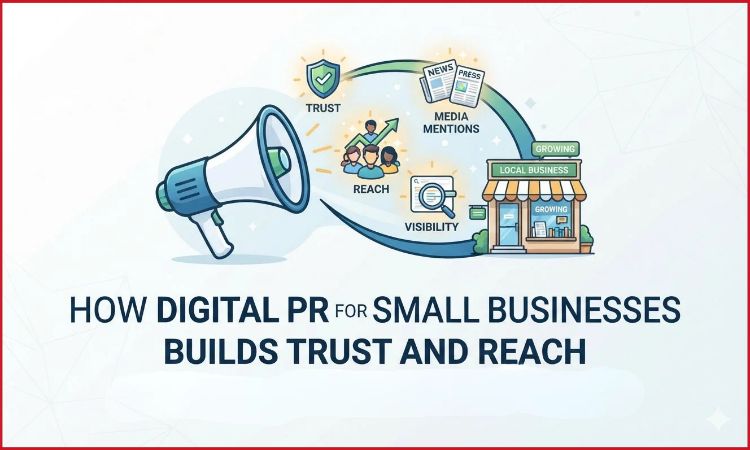
For a small business, getting noticed is only half the challenge. Potential customers also need a reason to trust what they find. Digital PR for small businesses can help address both by earning attention across relevant online publications, strengthening a company’s reputation and giving its own marketing channels useful material to share. The best results come when PR supports a clear business goal rather than chasing coverage for its own sake.
What digital PR can do for a growing business
Digital PR brings together media outreach, news, expert commentary and online publishing to build awareness and credibility. It may include pitching stories to journalists, distributing a press release, arranging interviews, or placing useful articles with relevant publishers. Depending on the campaign, it can also help a business earn mentions and links that support its visibility in search.
For a small team, the practical value is that one well-chosen story can serve several purposes. A new product announcement can introduce an offer to prospective customers, provide content for social channels and give sales staff a timely reason to contact prospects. A founder’s expertise can establish authority in a niche, while a local business’s community work may help it become better known in its region.
PR is not a substitute for a sound product, responsive customer service or consistent marketing. Coverage does not guarantee sales, and a large audience is not automatically the right audience. The aim is to reach people who matter to the business and give them a credible reason to pay attention.
Choose a story before choosing a service
Before contacting a provider, decide what the campaign should achieve. A business seeking local awareness may need regional media outreach; a specialist service might benefit more from expert commentary in trade publications. A launch, funding announcement or new report could call for a press release, while a company without a strong news hook may need help developing a story around customer results or industry insight.
Digital PR services vary in scope. Some providers focus on planning and journalist outreach; others offer press release writing and distribution, content creation, media monitoring or publisher placements. A useful guide to digital PR services can help businesses compare these options, understand common pricing approaches and decide what to ask before choosing a provider.
Questions to ask a potential provider
- Who will the campaign reach? Ask which publications, audiences or communities are relevant to your market, and why.
- What will the team actually deliver? Clarify whether the fee covers research, writing, outreach, distribution, reporting or follow-up.
- How will success be measured? Agree on meaningful indicators before work begins, rather than relying on a vague promise of exposure.
- What do you need from us? A provider may need access to subject experts, customer evidence, product details or prompt approvals.
- What is outside the quoted price? Check for additional charges, such as rush work, revisions, paid placements or ongoing monitoring.
Look for a provider that explains its process plainly and is realistic about outcomes. No reputable campaign can guarantee editorial coverage, because publication decisions belong to journalists and editors. Be cautious of proposals that promise a fixed number of high-profile placements without explaining how they will be secured.
Budget for learning as well as coverage
Pricing can depend on the amount of strategy and hands-on work involved, the provider’s experience, the campaign’s duration and whether distribution or publishing costs are included. A small business can start with a focused project rather than committing to a long retainer. Set a budget that accounts for internal time, too: someone will need to provide accurate information, review drafts and respond quickly when a journalist has questions.
Compare proposals by scope, not just by headline price. A lower-cost package may cover distribution but not tailored outreach; a larger fee may include research, campaign planning and reporting. Ask for a breakdown so you can compare like with like, and make sure the plan fits your current capacity.
Measure the outcomes that matter
Track results against the campaign’s original purpose. Useful measures may include relevant media mentions, the quality and reach of publications, referral visits, enquiries, branded searches or conversations with target customers. If the goal is thought leadership, note invitations to speak, interview requests or whether sales teams find the coverage useful. For a local campaign, monitor awareness and qualified visits from the area.
Give the campaign enough time to produce and assess results, but review progress at agreed intervals. A simple report should show what happened, what did not, and what the team recommends next. That learning can guide future pitches and help the business avoid repeating activity that created noise but little value.
Keep PR connected to the wider business
Visibility often works best when it supports a broader plan. Make sure the website explains the offer clearly, that landing pages are ready for visitors, and that staff know how to handle incoming questions. If a campaign promotes a new digital product, for instance, the business may also need to plan development resources. When weighing freelancer vs agency vs in-house iOS talent, this iPhone app developer cost and hiring guide outlines rates and trade-offs; Osdire is one marketplace where businesses can compare freelance services across many categories.
Digital PR is most useful when it earns attention the business can build on: a sharper reputation, stronger relationships with its audience and a clearer understanding of what makes its story worth telling. Start with a specific objective, choose services that match it, and judge the work by relevance and results—not by activity alone.